View methods side by side.
Choose up to four methods. Add them using the search and share the comparison by copying its link.
| Criterion | 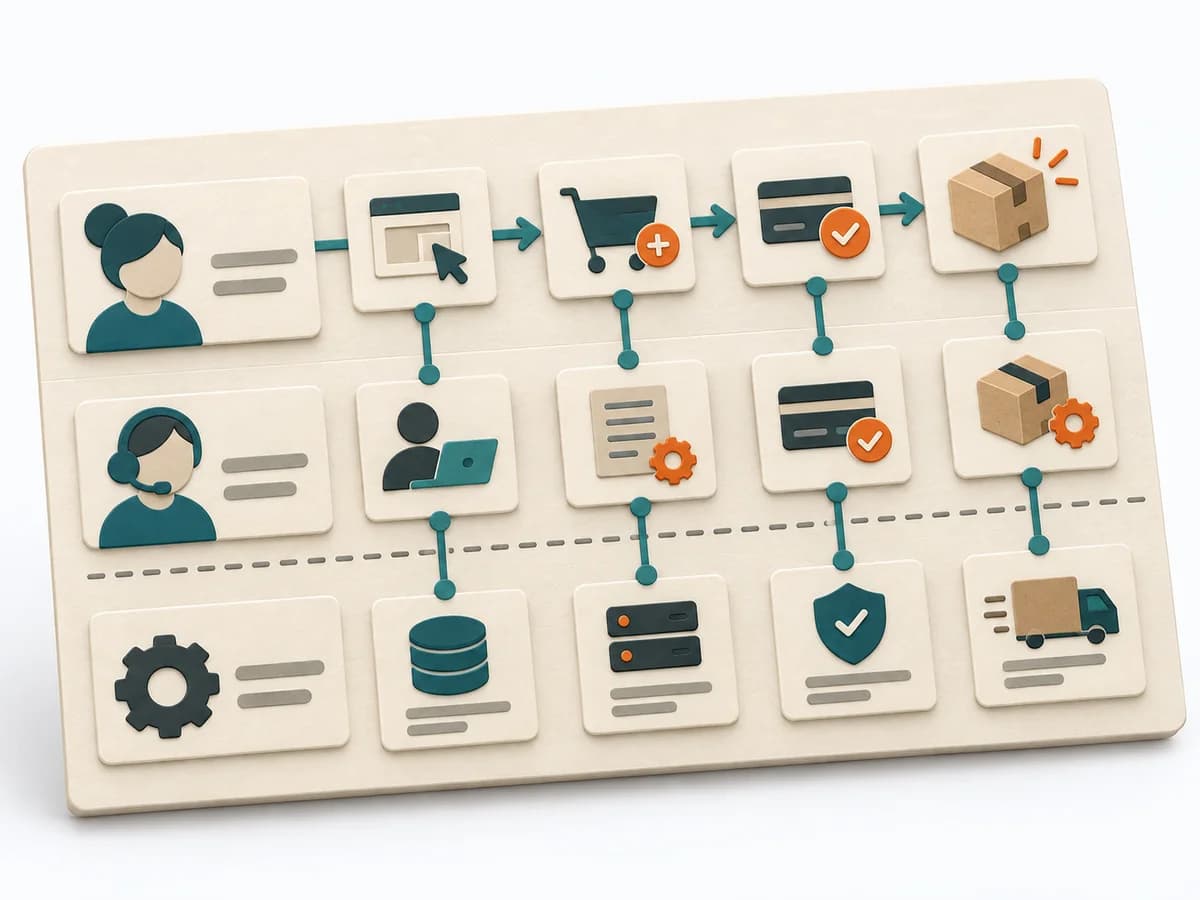 UX Design Service Blueprinting |  Facilitation Team Charter |  Facilitation Stakeholder Mapping |  Facilitation Power Interest Grid |
|---|---|---|---|---|
Purposedifferent | When a service experience is spread across several touchpoints, it brings frontstage and backstage together. It shows where user contact and internal responsibility must fit. | When a team is starting fresh or working past each other, Team Charter clarifies the shared working basis. It visibly sets out how collaboration, decision paths, and mutual conduct should work day to day. | When an initiative depends on many people, interests, and power dynamics, Stakeholder Mapping systematically orders the environment. It shows who influences, who is affected, and where relationship management or safeguarding matters first. | When many stakeholders compete for attention at once, the Power Interest Grid sorts them by influence and stake. It turns individual contributions into a visible selection. The result is captured as a Power Interest Grid and a stakeholder-specific strategy. |
Complexitydifferent | High | Medium | Low | Low |
Timedifferent | 0.5-2 Tage | 2-4 h | 60–90 min | 30-60 min |
Participantsdifferent | 6-12 | 3-12 | 2-8 | 2-8 |
Formatdifferent | Workshop | Workshop | Workshop + async | Workshop |
Outputdifferent | Service Blueprint, Fail Points, Ownership Map | Team Charter, Working Norms, Role Notes | Stakeholder Map, Engagement Plan, Risk Notes | Power Interest Grid, Strategy per Stakeholder |
Tagsno overlap | Service designOperationsJourneyBlueprint | TeamAlignmentCollaboration | StakeholdersAlignmentFacilitationChange | StakeholdersFacilitationAlignmentPlanning |