View methods side by side.
Choose up to four methods. Add them using the search and share the comparison by copying its link.
| Criterion | 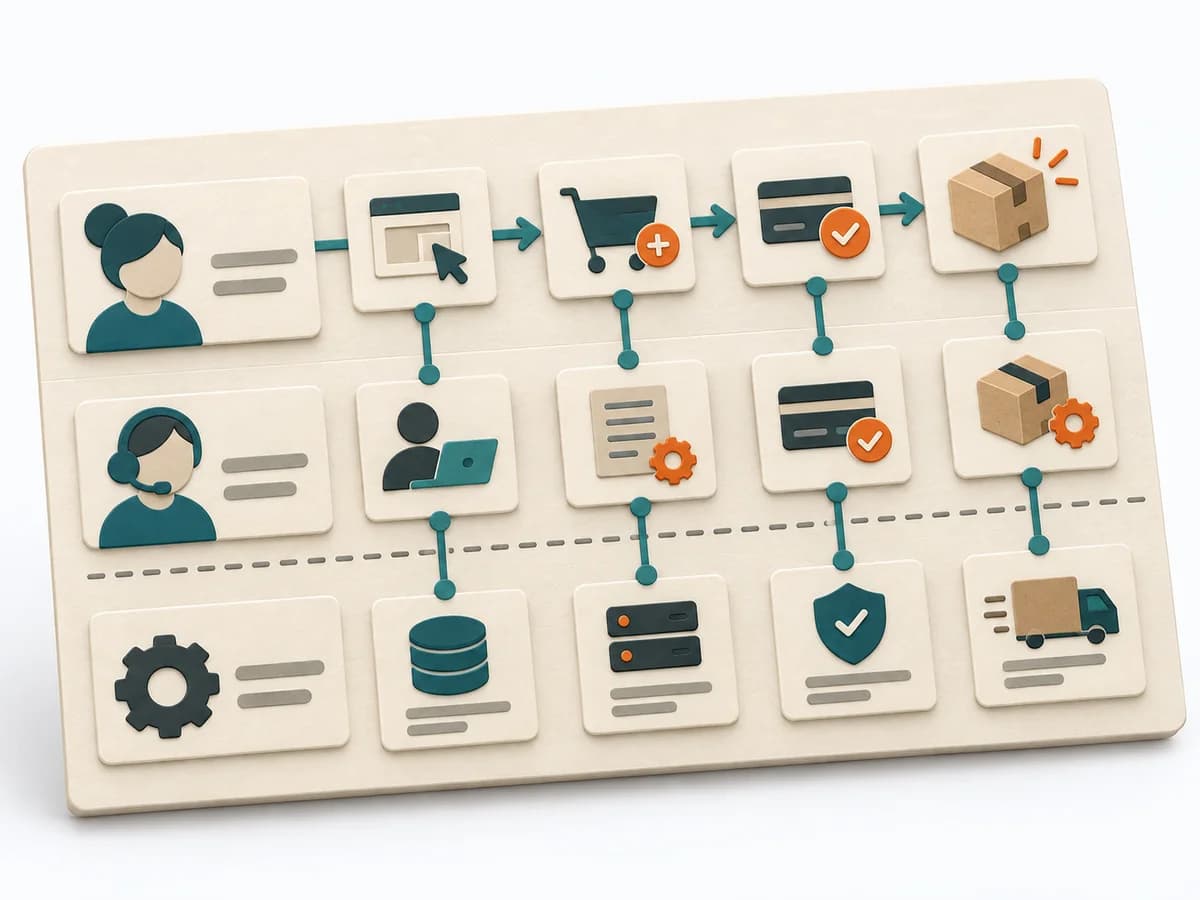 UX Design Service Blueprinting |  Knowledge Modeling Knowledge Mapping |  Decision Making Assumption Surfacing |  UX Research Customer Journey Mapping |
|---|---|---|---|---|
Purposedifferent | When a service experience is spread across several touchpoints, it brings frontstage and backstage together. It shows where user contact and internal responsibility must fit. | Knowledge Mapping makes knowledge, gaps, and transfer paths visible across a field. It fits when expertise should not just exist but also be findable and transferable. | Plans often contain assumptions that were never openly stated and remain dangerous precisely because of that. Assumption Surfacing makes these silent premises visible and prioritizes which of them carry the initiative or could sink it. | When a user journey falls apart across many touchpoints, customer journey mapping makes the experience visible as a coherent arc. Phases, emotions, and breaks become legible enough to prioritize critical moments deliberately. |
Complexitydifferent | High | Medium | Low | Medium |
Timedifferent | 0.5-2 Tage | 1-3 h | 45-90 min | 2-4 h |
Participantsdifferent | 6-12 | 3-12 | 2-8 | 4-10 |
Formatdifferent | Workshop | Workshop | Workshop + async | Workshop |
Outputdifferent | Service Blueprint, Fail Points, Ownership Map | Knowledge Map, Critical Knowledge Areas, Transfer Plan | Assumption List, Critical Assumptions, Learning Plan | Journey Map, Pain-point List, Opportunity Backlog |
Tagsno overlap | Service designOperationsJourneyBlueprint | KnowledgeMappingRisk | AssumptionsRiskDecisionDiscovery | JourneyServiceService design |