View methods side by side.
Choose up to four methods. Add them using the search and share the comparison by copying its link.
| Criterion | 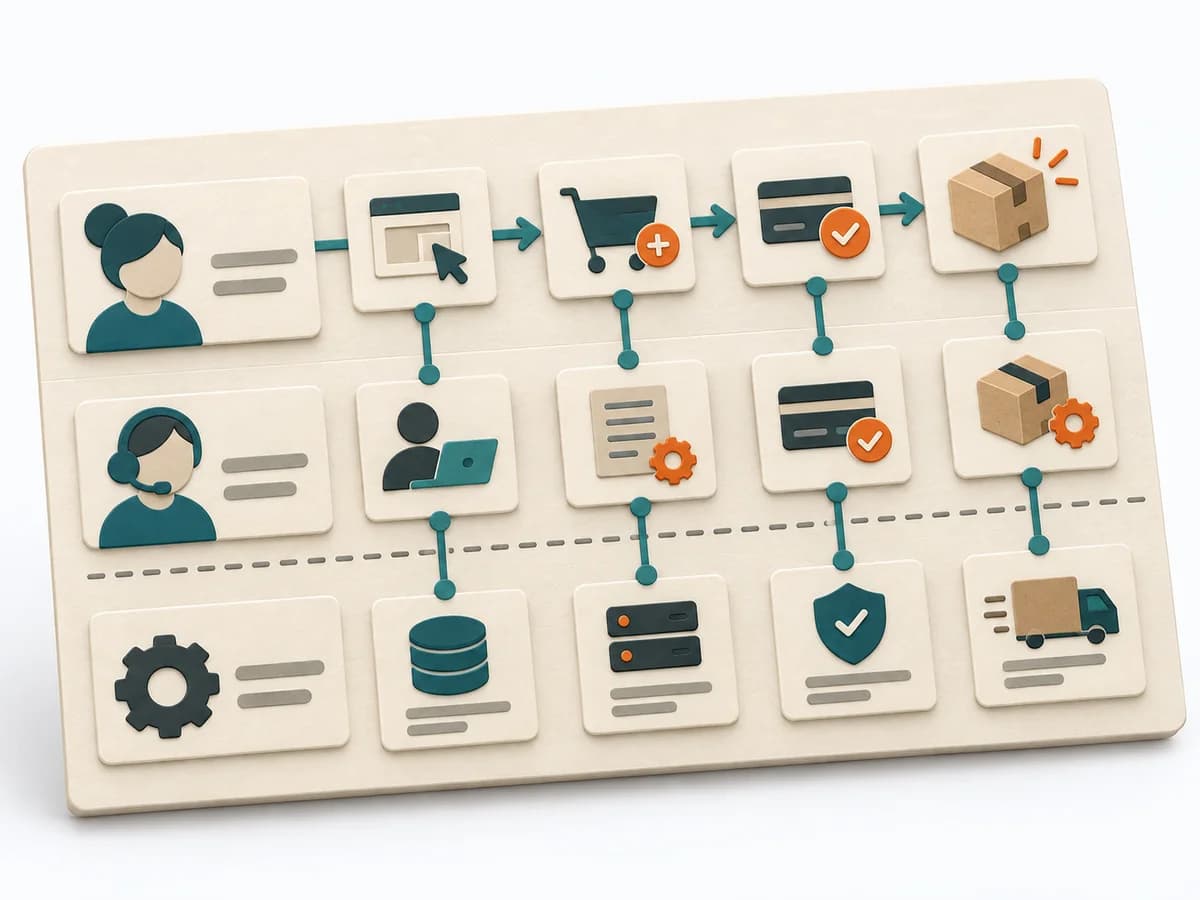 UX Design Service Blueprinting | 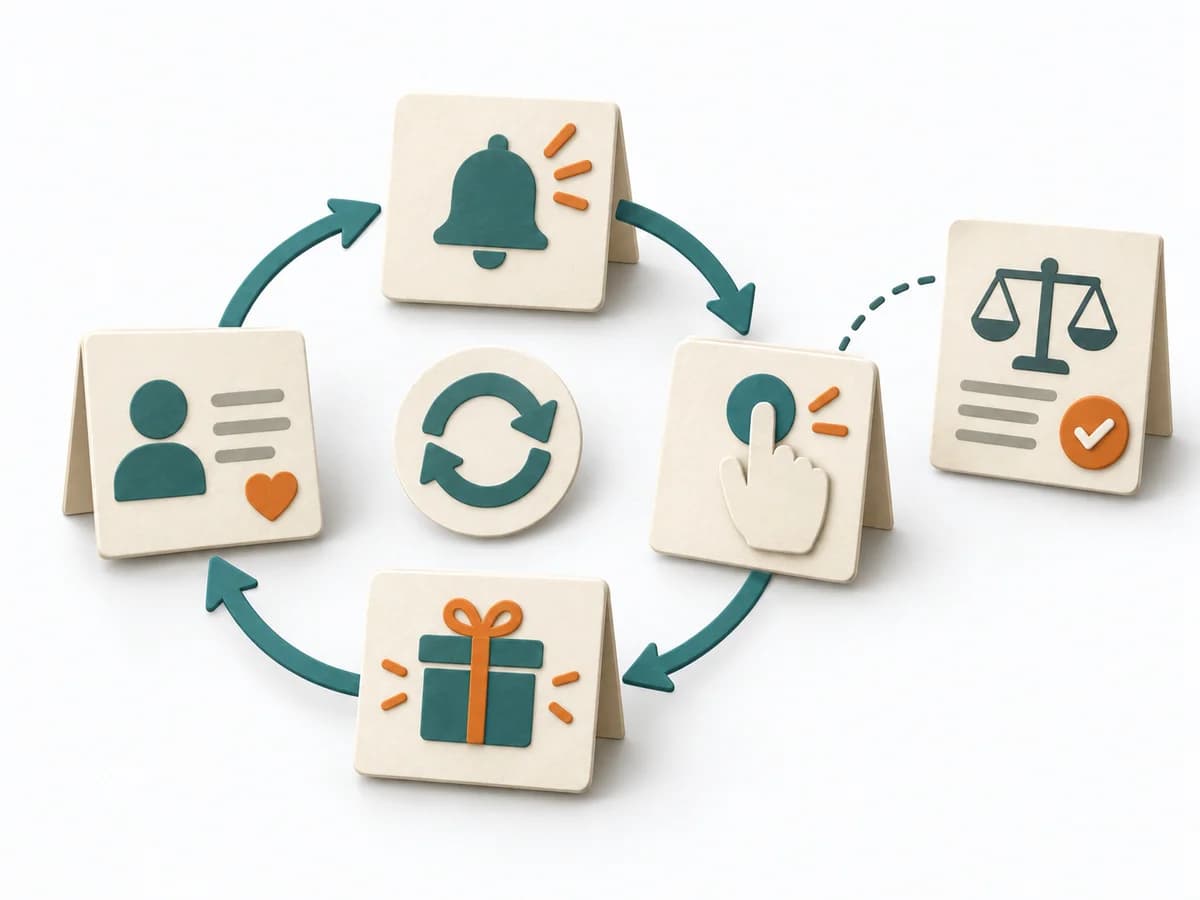 Growth Hooked Model | 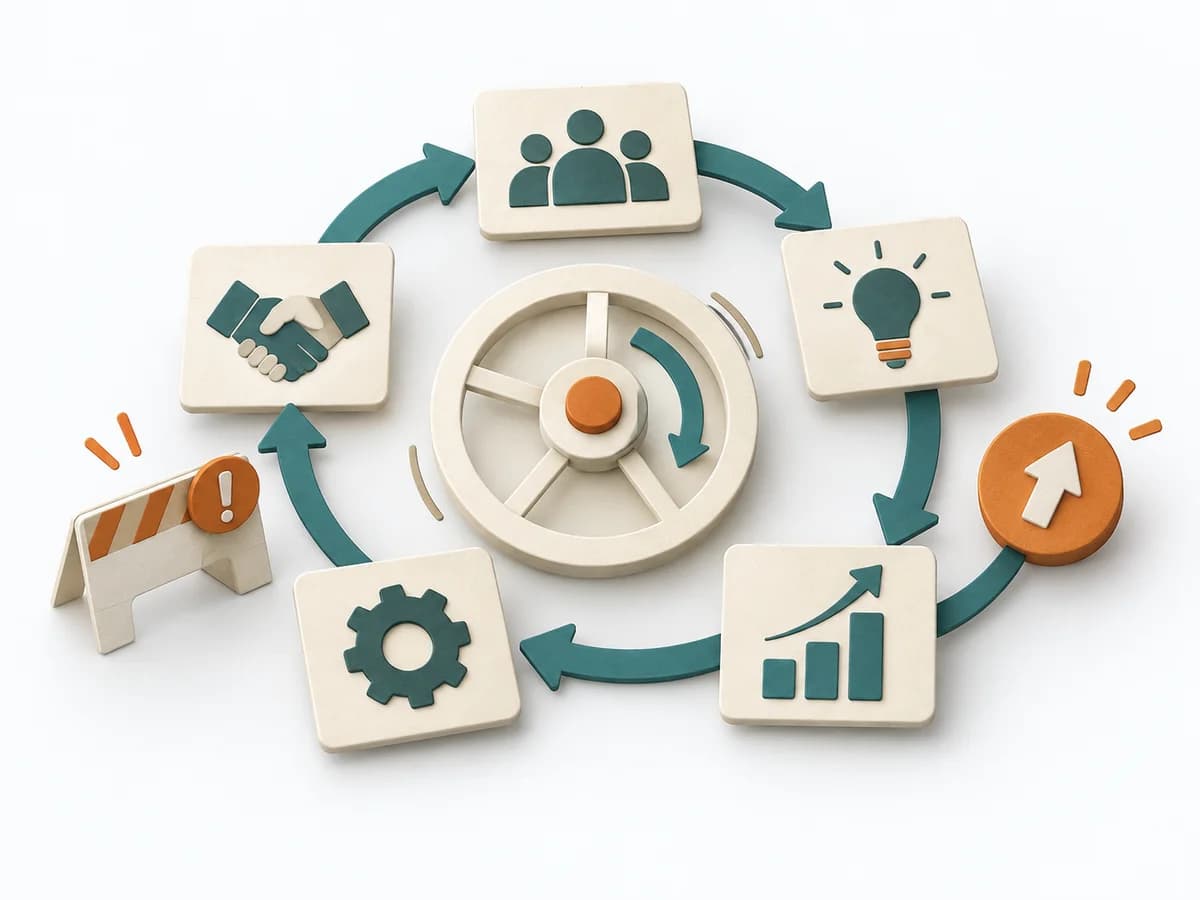 Growth Flywheel | 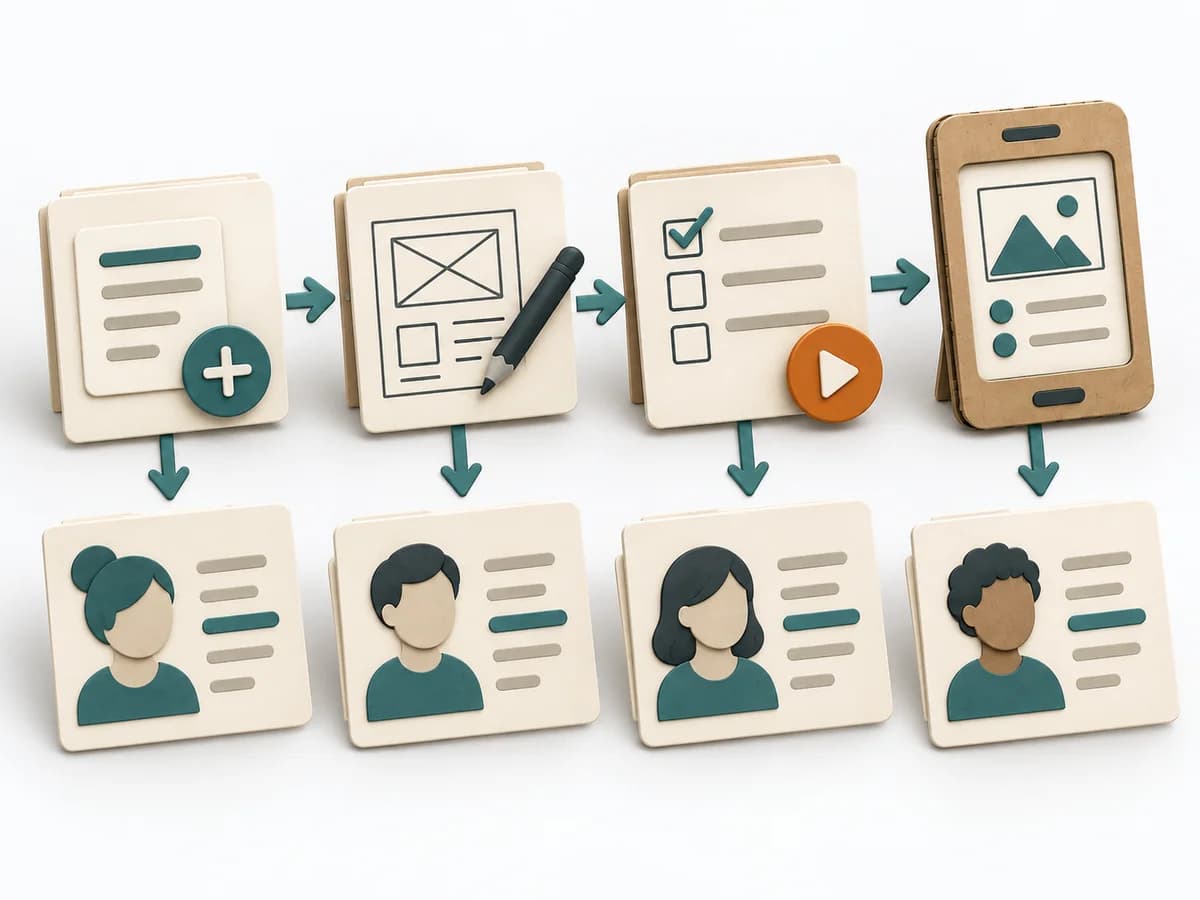 Knowledge Modeling Event Modeling |
|---|---|---|---|---|
Purposedifferent | When a service experience is spread across several touchpoints, it brings frontstage and backstage together. It shows where user contact and internal responsibility must fit. | The Hooked Model helps clarify engagement loops, user behavior, and experiments. It makes repeat behavior measurable and captures the result as a hooked loop, trigger map, and reward design. | Growth often breaks down where a reinforcing mechanism builds up too much friction. A Flywheel shows the cycle of value, repetition, and reinforcement meant to sustain growth. | Event Modeling connects business workflows with commands, events, and views into one coherent mental model. It helps design behavior, UI, and technical slices from the same underlying logic. |
Complexitydifferent | High | Medium | Medium | Medium |
Timedifferent | 0.5-2 Tage | Multiple workshops over several weeks | 60-120 min | 2-6 h |
Participantsdifferent | 6-12 | 2-8 | 3-8 | 2-8 |
Formatdifferent | Workshop | Workshop + async | Workshop | Workshop + async |
Outputdifferent | Service Blueprint, Fail Points, Ownership Map | Hooked loop, Trigger map, Reward design, Ethics check | Flywheel Map, Friction Points, Growth Levers, Experiment Backlog | Event Model, UI Flow, Commands, Read Models |
Tagsno overlap | Service designOperationsJourneyBlueprint | GrowthBehaviorRetention | GrowthRetentionConversion | EventsBlueprintDomain-Driven DesignBehavior |