View methods side by side.
Choose up to four methods. Add them using the search and share the comparison by copying its link.
Selected:Service BlueprintingExpectation MappingTeam Topologies Interaction ModesCustomer Journey Canvas
| Criterion | 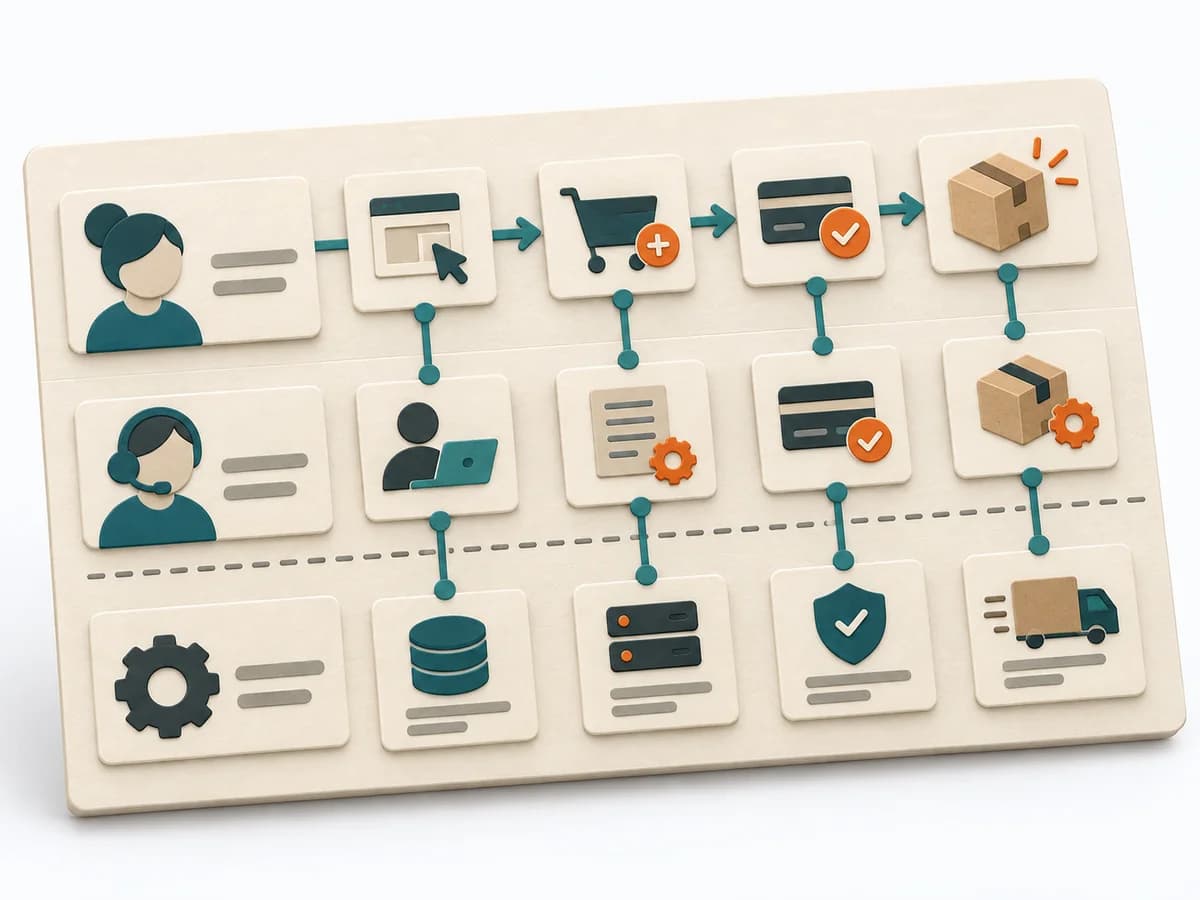 UX Design Service Blueprinting |  Facilitation Expectation Mapping | 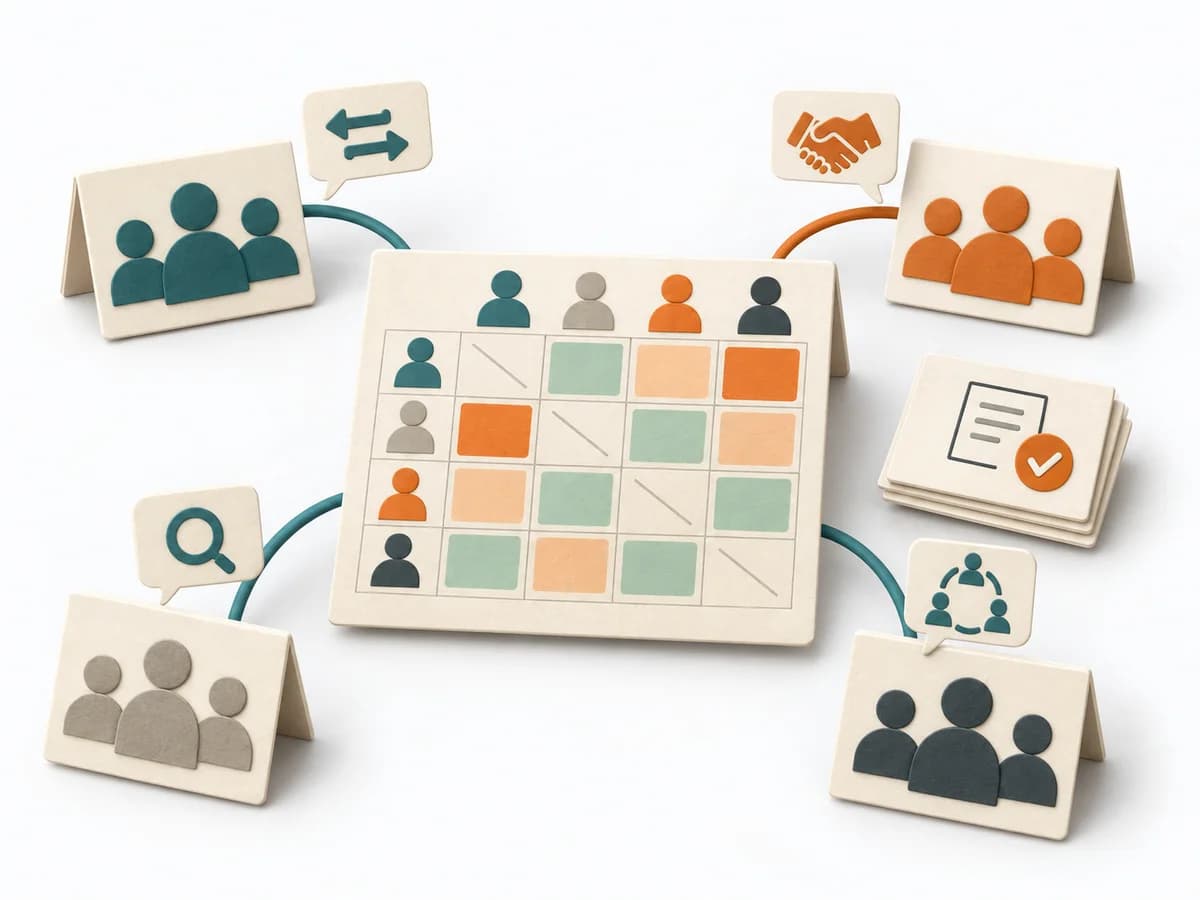 Team Design Team Topologies Interaction Modes | 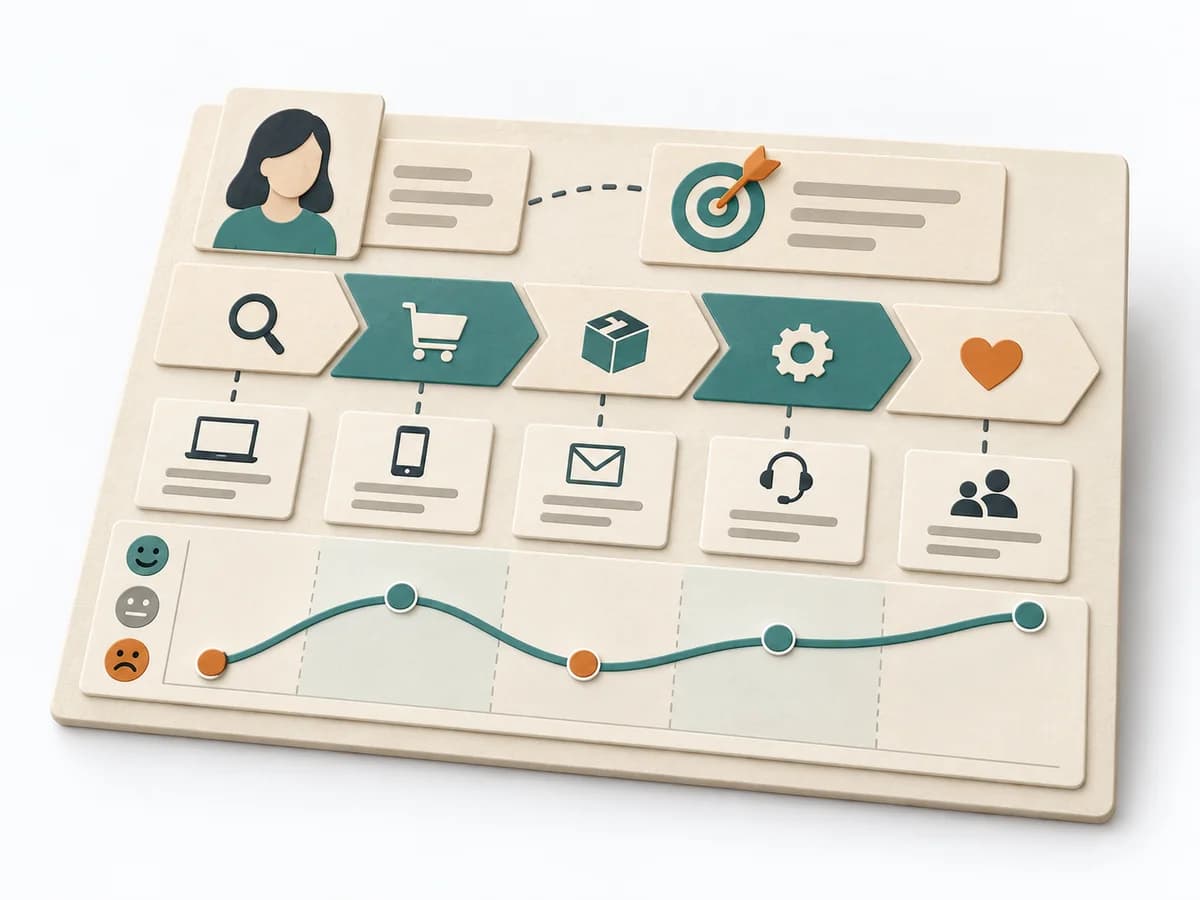 UX Design Customer Journey Canvas |
|---|---|---|---|---|
Purposedifferent | When a service experience is spread across several touchpoints, it brings frontstage and backstage together. It shows where user contact and internal responsibility must fit. | When roles, interfaces, or projects fail because of differing expectations, Expectation Mapping surfaces these differences. It shows what each side takes for granted and where the pictures diverge. | When several teams collaborate repeatedly, it describes the right interaction mode for each interface between them. It clarifies responsibility, interaction, and load between teams. The result is captured as an interaction heat map and pairwise agreements. | When a journey needs to be understood across several phases, it arranges experience, touchpoints, and opportunities into one picture. It makes gaps and friction along the user path clear. |
Complexitydifferent | High | Low | Medium | Medium |
Timedifferent | 0.5-2 Tage | 45-90 min | Half day | 1-3 h |
Participantsdifferent | 6-12 | 3-12 | Team-Leads plus Architecture | 3-10 |
Formatsame | Workshop | Workshop | Workshop | Workshop |
Outputdifferent | Service Blueprint, Fail Points, Ownership Map | Expectation Map, Alignment Notes, Agreements | Interaction Heat Map, Agreements per Pair | Customer Journey Canvas, Pain Points, Experience Opportunities |
Tagsno overlap | Service designOperationsJourneyBlueprint | AlignmentStakeholdersTeam | TeamAlignmentCollaborationOrganization | JourneyCustomerService designCanvas |