View methods side by side.
Choose up to four methods. Add them using the search and share the comparison by copying its link.
| Criterion | 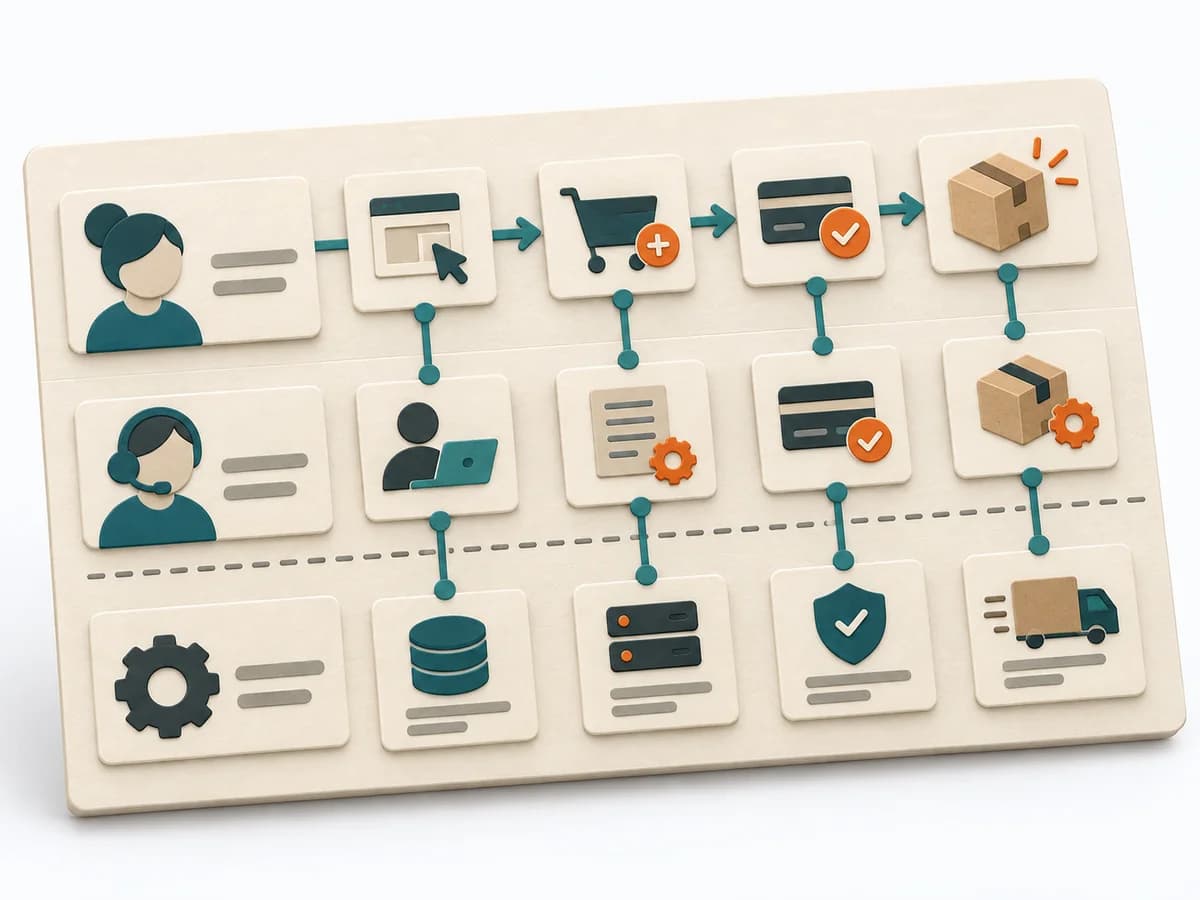 UX Design Service Blueprinting |  UX Research Empathy Mapping |  Operations 5 Whys |  Operations Root Cause Analysis |
|---|---|---|---|---|
Purposedifferent | When a service experience is spread across several touchpoints, it brings frontstage and backstage together. It shows where user contact and internal responsibility must fit. | When a lot is assumed about a target group but little is seen jointly, empathy mapping makes knowledge and gaps directly comparable. The picture also shows which assumptions hold up and where evidence is missing. | For a single, hard-to-explain deviation, the method exposes the causal chain behind the visible symptom. It keeps the cause open until a controllable condition emerges instead of a mere description. | When a problem keeps recurring and the cause stays unclear, the method exposes the underlying mechanism. It separates symptom, guess, and robust explanation from one another. |
Complexitydifferent | High | Low | Low | Medium |
Timedifferent | 0.5-2 Tage | 30–60 min | 15-30 min | 1-4 h |
Participantsdifferent | 6-12 | 4-8 | 2-6 | 3-8 |
Formatdifferent | Workshop | Workshop | Workshop | Workshop + async |
Outputdifferent | Service Blueprint, Fail Points, Ownership Map | Empathy Map, Assumptions List, Research Gaps | Root cause notes, Countermeasures | Problem Statement, Cause Hypotheses, Confirmed Causes, Action Plan |
Tagsno overlap | Service designOperationsJourneyBlueprint | SynthesisQualitativeWorkshop | Root causeIncidentLeanProblem solving | Root causeProblem solvingQualityIncident |