View methods side by side.
Choose up to four methods. Add them using the search and share the comparison by copying its link.
| Criterion | 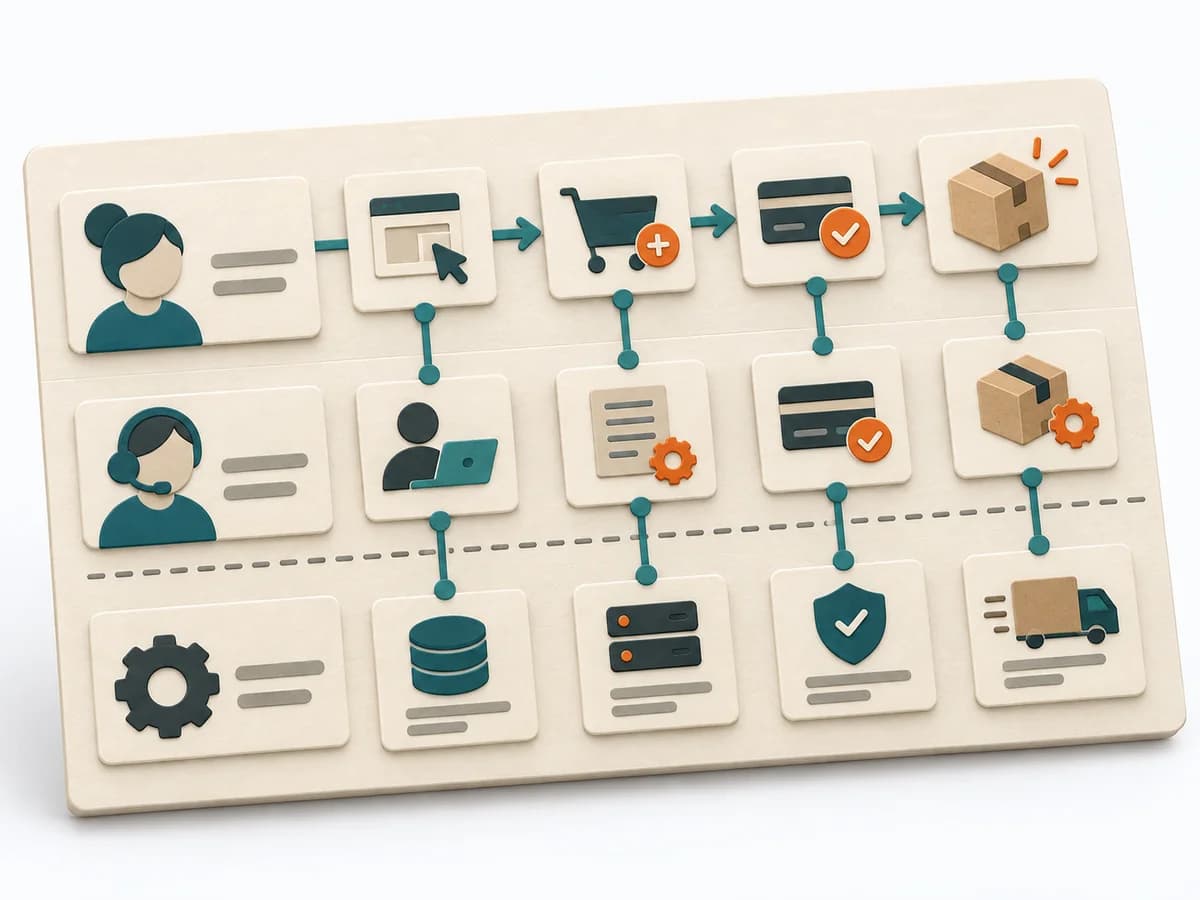 UX Design Service Blueprinting |  Decision Making Delphi Method | 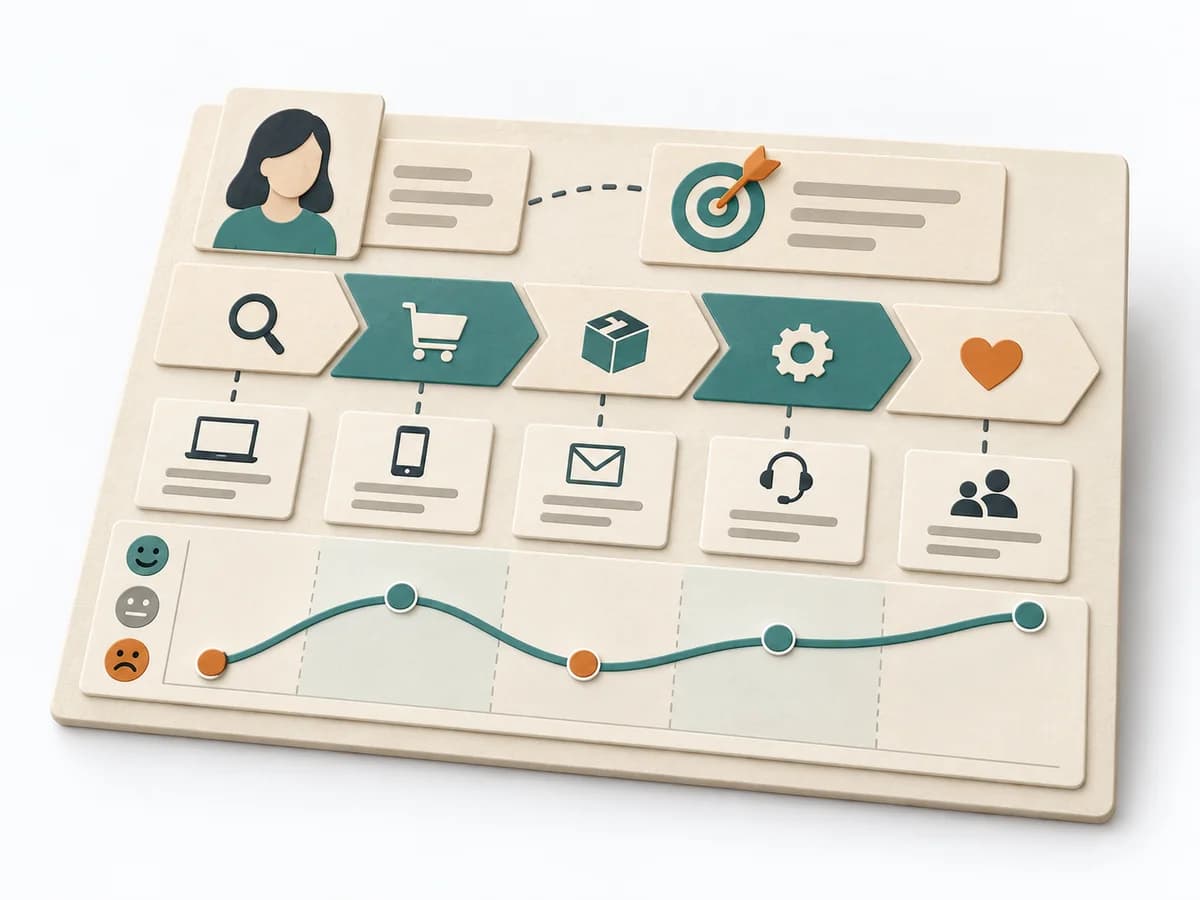 UX Design Customer Journey Canvas |  Product Strategy DIBB |
|---|---|---|---|---|
Purposedifferent | When a service experience is spread across several touchpoints, it brings frontstage and backstage together. It shows where user contact and internal responsibility must fit. | When knowledge is distributed and direct dominance should be avoided, groups quickly fall under the sway of their opinion leaders. The Delphi Method gathers assessments iteratively and gradually brings expert judgments closer together. | When a journey needs to be understood across several phases, it arranges experience, touchpoints, and opportunities into one picture. It makes gaps and friction along the user path clear. | DIBB helps clarify target groups, value, goals, and priorities by making the logic behind a decision explicit. It captures results as a DIBB document, belief list, bet list, and learning report. |
Complexitydifferent | High | High | Medium | Low |
Timedifferent | 0.5-2 Tage | 1-4 Wochen | 1-3 h | 1-2 h |
Participantsdifferent | 6-12 | 6-30 Experten | 3-10 | 2-8 |
Formatdifferent | Workshop | Async | Workshop | Workshop + async |
Outputdifferent | Service Blueprint, Fail Points, Ownership Map | Expert Forecast, Consensus Range, Assumption Notes | Customer Journey Canvas, Pain Points, Experience Opportunities | DIBB document, Belief list, Bet list, Learning report |
Tagsno overlap | Service designOperationsJourneyBlueprint | ForecastingExpertsDecisionStrategy | JourneyCustomerService designCanvas | StrategyDecisionAssumptionsHypothesis |