View methods side by side.
Choose up to four methods. Add them using the search and share the comparison by copying its link.
| Criterion | 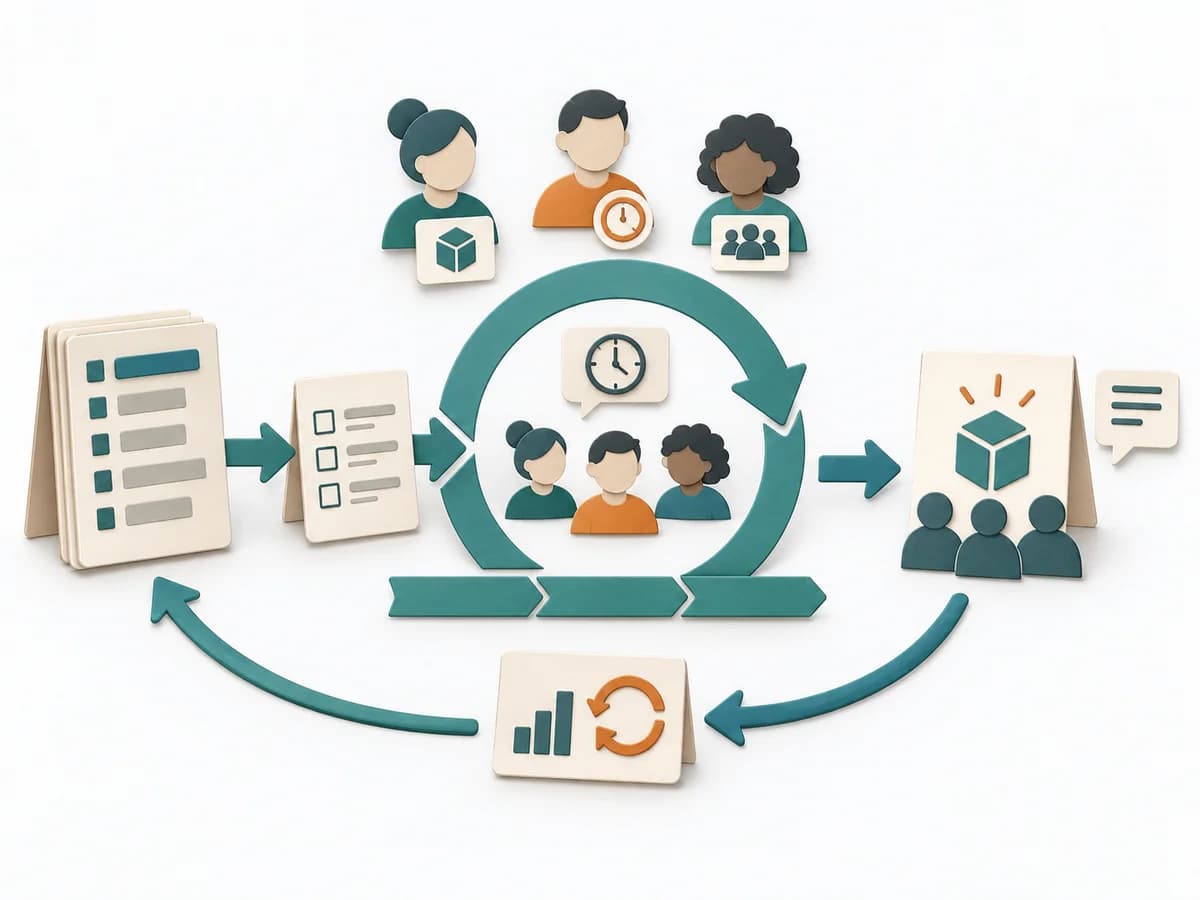 Agile Scrum | 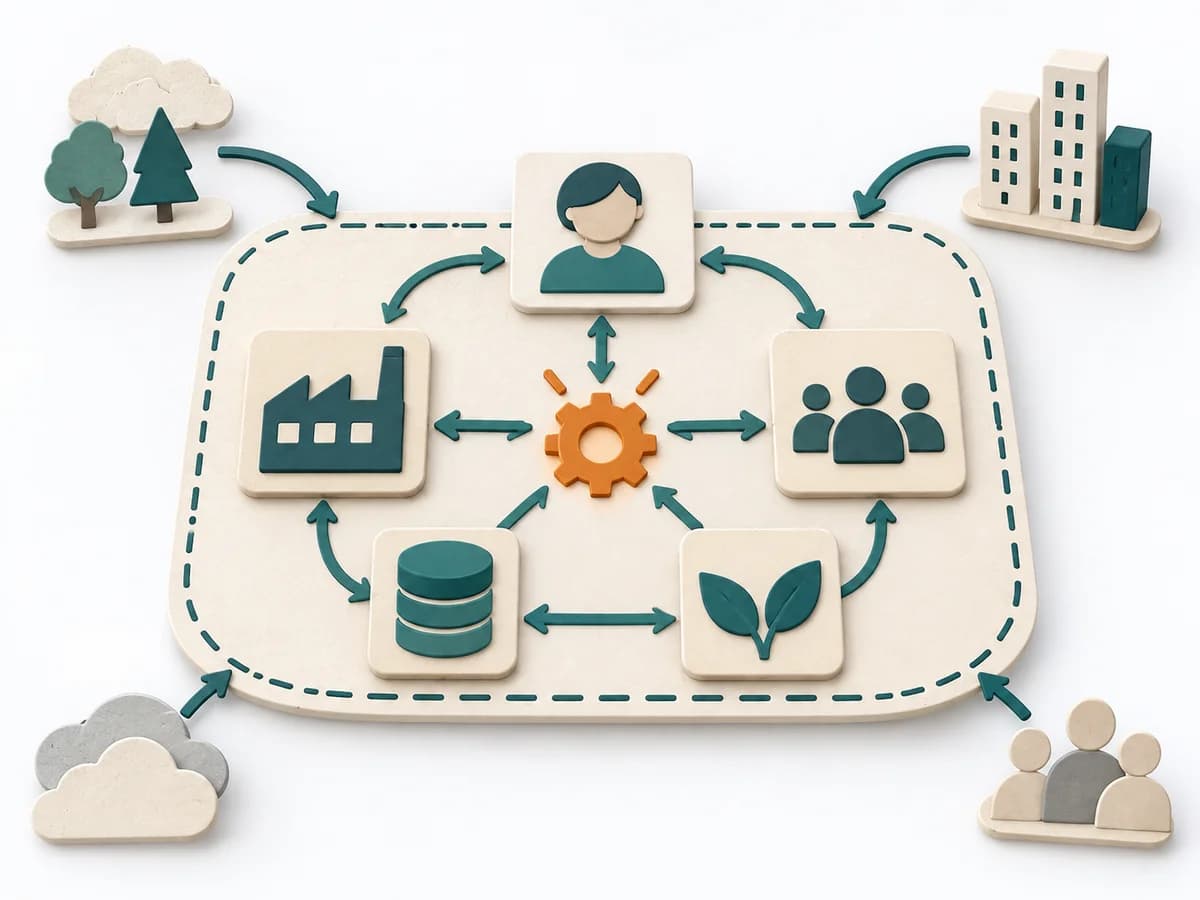 Systems Thinking Systems Mapping | 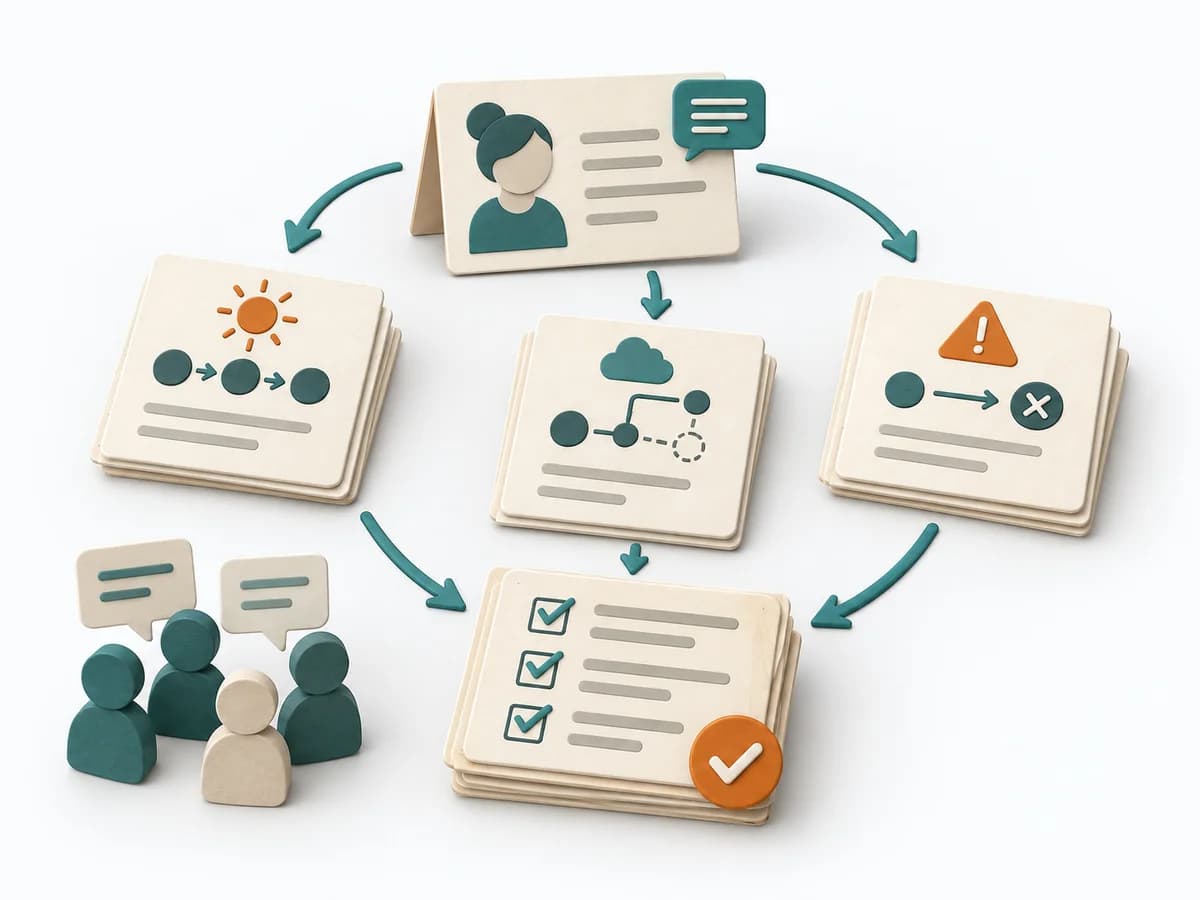 Agile Acceptance Criteria Workshop | 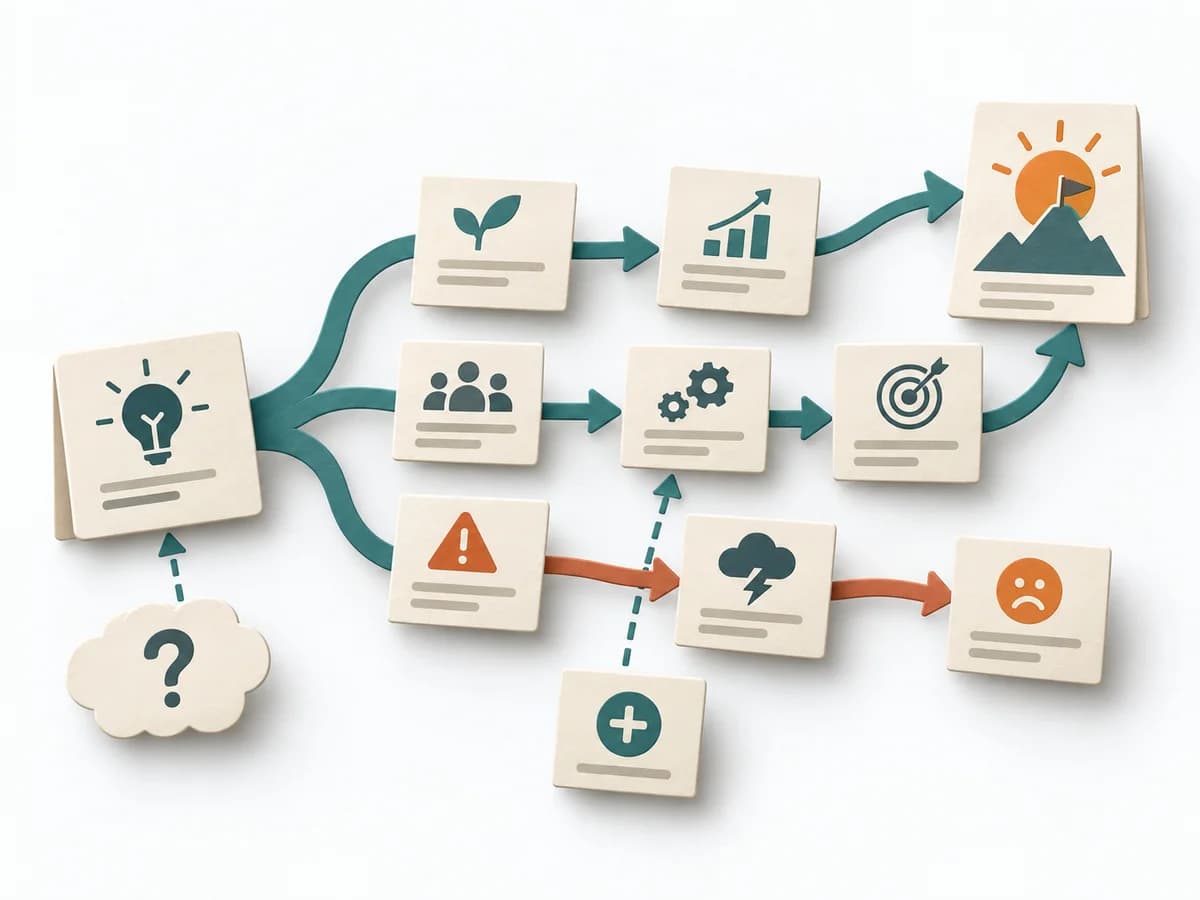 Systems Thinking Future Reality Tree |
|---|---|---|---|---|
Purposedifferent | When a team needs to work in a fixed delivery rhythm, it stabilizes cadence, responsibility, and feedback loops. It makes collaboration reliable across sprint boundaries. | Systems Mapping arranges elements, relationships, and boundaries so a complex field becomes legible at a glance. The overview stabilizes the overall picture before detail work or steering begins. | When a story needs clear checkpoints before implementation, it sharpens expectation and scope together. It sorts work by value, risk, and delivery ability. The result is captured as Acceptance Criteria and a Story Update. | A Future Reality Tree shows how desired actions are meant to lead to a better system state. The method checks whether a path of change holds together logically before time flows into implementation. |
Complexitydifferent | Medium | Medium | Low | High |
Timedifferent | 1-4 Wochen je Sprint, laufend | 1-3 h | 20-40 min pro Story | 2-4 h |
Participantsdifferent | 3-10 (Scrum Team) | 3-12 | 3-6 | 3-8 |
Formatdifferent | Workshop + async | Workshop + async | Workshop | Workshop |
Outputdifferent | Product Backlog, Sprint Backlog, Increment, Sprint Goal | System Map, Dependencies, Leverage Points | Acceptance Criteria, Story Update | Future Reality Tree, Negative Branches, Assumption List, Improved Injections |
Tagsno overlap | AgileIterationCadence | Systems thinkingMappingBoundariesChange | AgileRequirementsRefinementBehavior-Driven Development | Theory of ConstraintsSystems thinkingChange |