View methods side by side.
Choose up to four methods. Add them using the search and share the comparison by copying its link.
| Criterion | 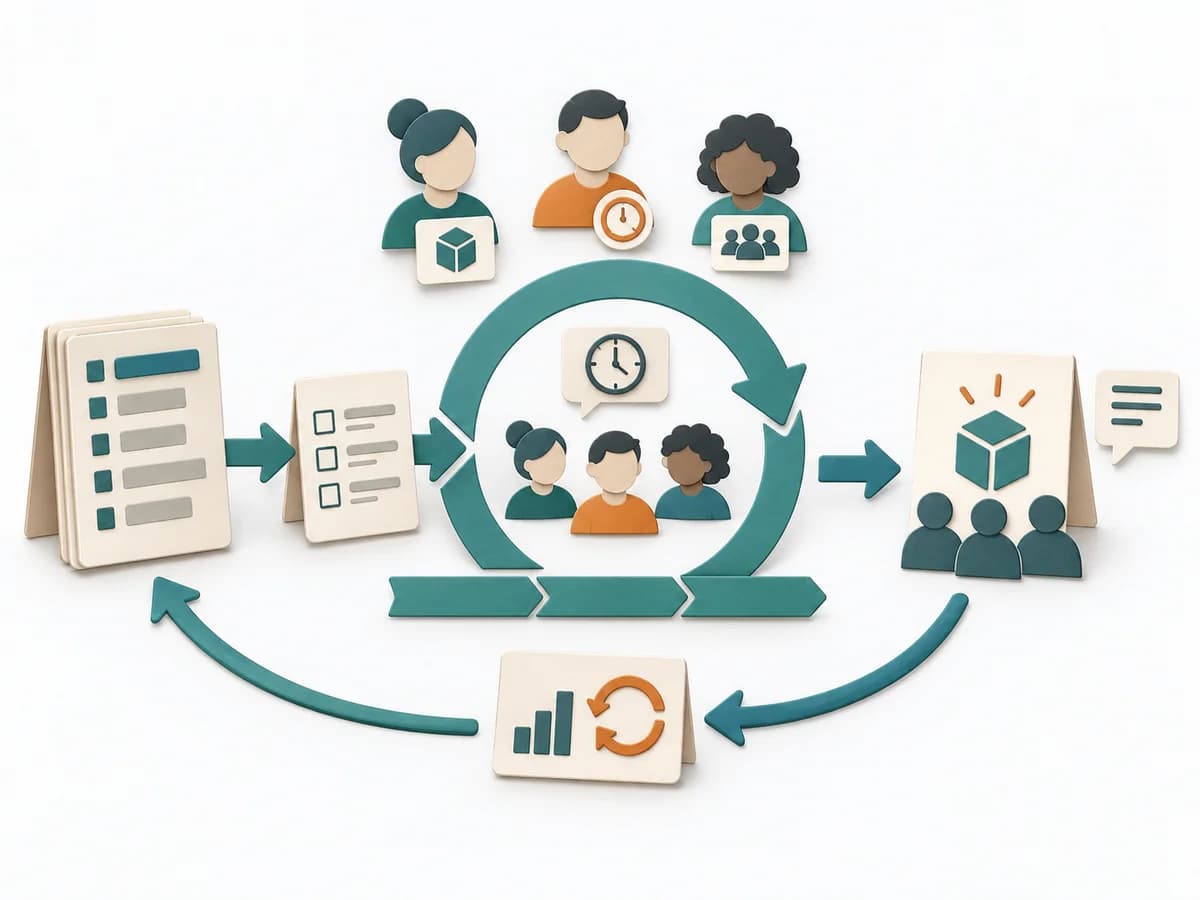 Agile Scrum |  Business Strategy Strategy Execution Loop |  Decision Making Force Field Analysis |  Business Strategy Balanced Scorecard |
|---|---|---|---|---|
Purposedifferent | When a team needs to work in a fixed delivery rhythm, it stabilizes cadence, responsibility, and feedback loops. It makes collaboration reliable across sprint boundaries. | The Strategy Execution Loop helps avoid treating strategy as a one-off document. It makes visible how strategic decisions are turned into objectives, initiatives, operational work, measurement, and learning. | In change initiatives, supporting and restraining forces sit at the table at the same time. Force Field Analysis makes these tensions explicit and shows where change can be pushed forward by strengthening or relieving. | Balanced Scorecard translates strategy into a few interconnected perspectives and metrics. It holds impact, steering, and learning together in daily work instead of narrowing strategy down to financial figures. |
Complexitydifferent | Medium | High | Low | High |
Timedifferent | 1-4 Wochen je Sprint, laufend | Initial 3-6 h, then monthly or quarterly reviews | 45-90 min | Halber Tag bis mehrere Wochen |
Participantsdifferent | 3-10 (Scrum Team) | 5-12 | 3-12 | 4-12 |
Formatdifferent | Workshop + async | Workshop + async | Workshop | Workshop + async |
Outputdifferent | Product Backlog, Sprint Backlog, Increment, Sprint Goal | Execution Loop, Review Cadence, Strategic Learning Log | Force Field Map, Change Levers, Risk Notes | Balanced Scorecard, Strategic Measures, Initiative Map |
Tagsno overlap | AgileIterationCadence | ExecutionCadenceLearningGovernance | ChangeDecisionStrategy | StrategyMetricsExecution |