View methods side by side.
Choose up to four methods. Add them using the search and share the comparison by copying its link.
| Criterion |  Agile Scrum |  Delivery RAID Log | 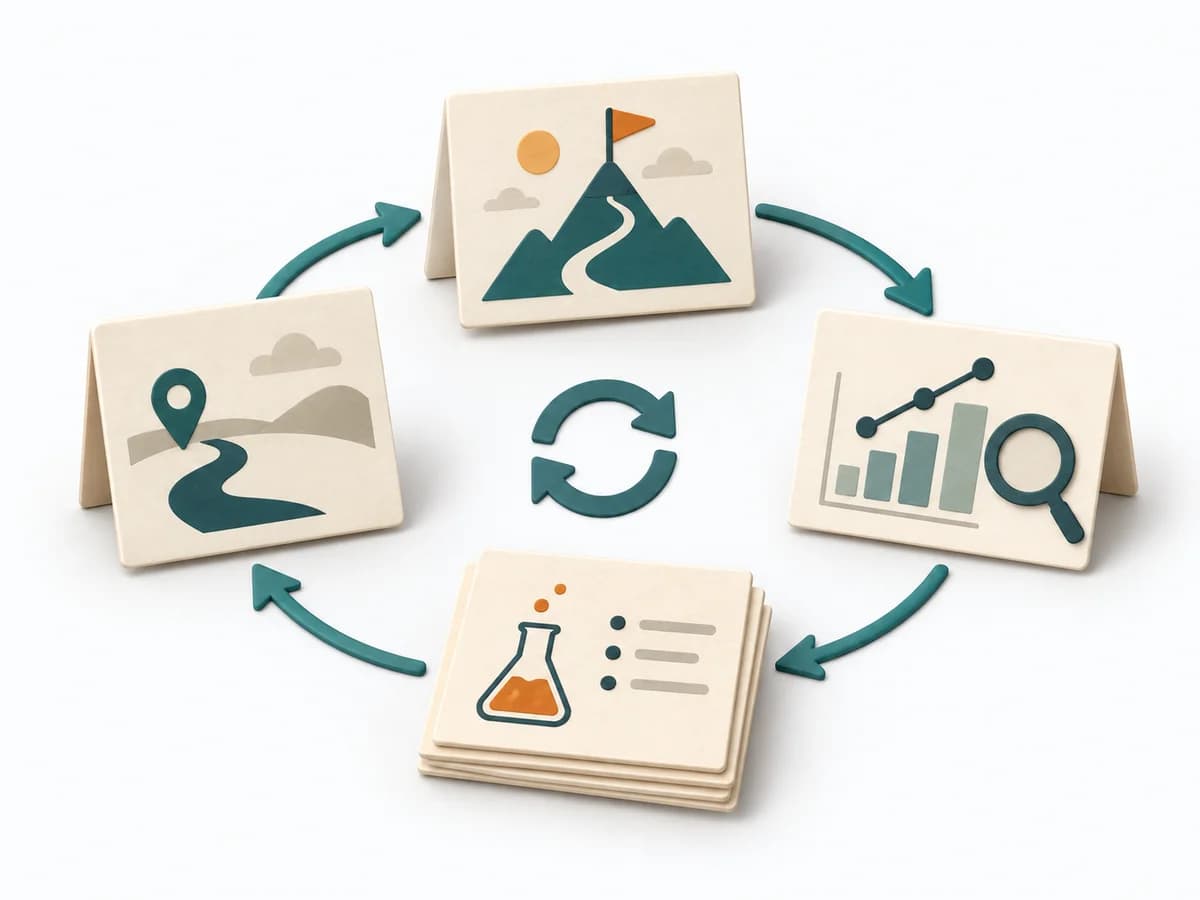 Product Discovery Product Kata |  Decision Making Assumption Surfacing |
|---|---|---|---|---|
Purposedifferent | When a team needs to work in a fixed delivery rhythm, it stabilizes cadence, responsibility, and feedback loops. It makes collaboration reliable across sprint boundaries. | Helps clarify scope, sequence, and delivery flow in concrete terms. It makes work, boundaries, and order steerable. The result is captured as a RAID Log and a source for status reporting. | Product Kata helps clarify customer problems, solution ideas, and evidence through a repeatable improvement routine. It captures direction, current metric, target metric, experiment notes, and learning. | Plans often contain assumptions that were never openly stated and remain dangerous precisely because of that. Assumption Surfacing makes these silent premises visible and prioritizes which of them carry the initiative or could sink it. |
Complexitydifferent | Medium | Low | Medium | Low |
Timedifferent | 1-4 Wochen je Sprint, laufend | 30 min Setup, dann laufend | 1-2 Wochen je Loop | 45-90 min |
Participantsdifferent | 3-10 (Scrum Team) | 1-3 maintaining, briefing for everyone | 3-10 | 2-8 |
Formatdifferent | Workshop + async | Async | Workshop + async | Workshop + async |
Outputdifferent | Product Backlog, Sprint Backlog, Increment, Sprint Goal | RAID Log, Status Report Source | Direction, Current metric, Target metric, Experiment note, Learning report | Assumption List, Critical Assumptions, Learning Plan |
Tagsno overlap | AgileIterationCadence | RiskTrackingStakeholdersGovernance | OutcomesDiscoveryLearningIterationCoaching | AssumptionsRiskDecisionDiscovery |