View methods side by side.
Choose up to four methods. Add them using the search and share the comparison by copying its link.
| Criterion | 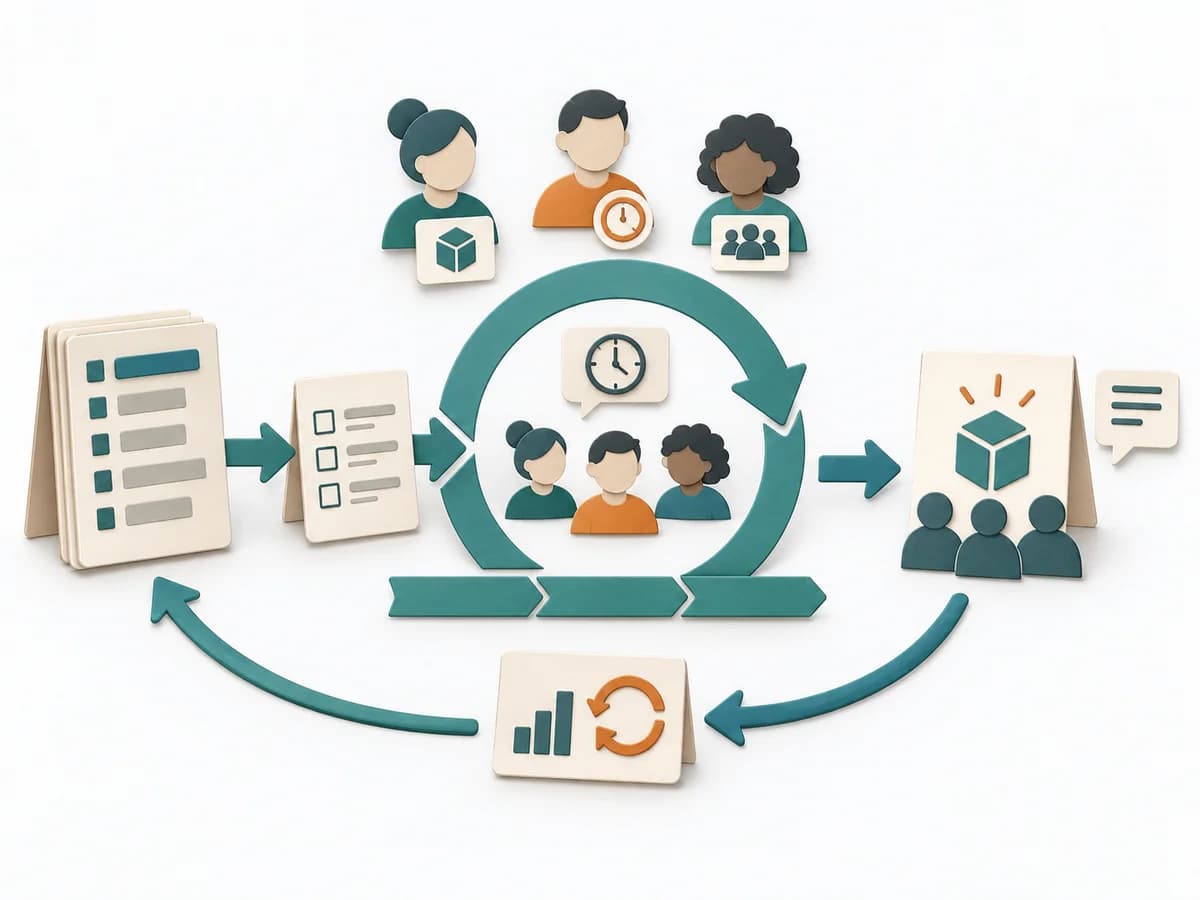 Agile Scrum | 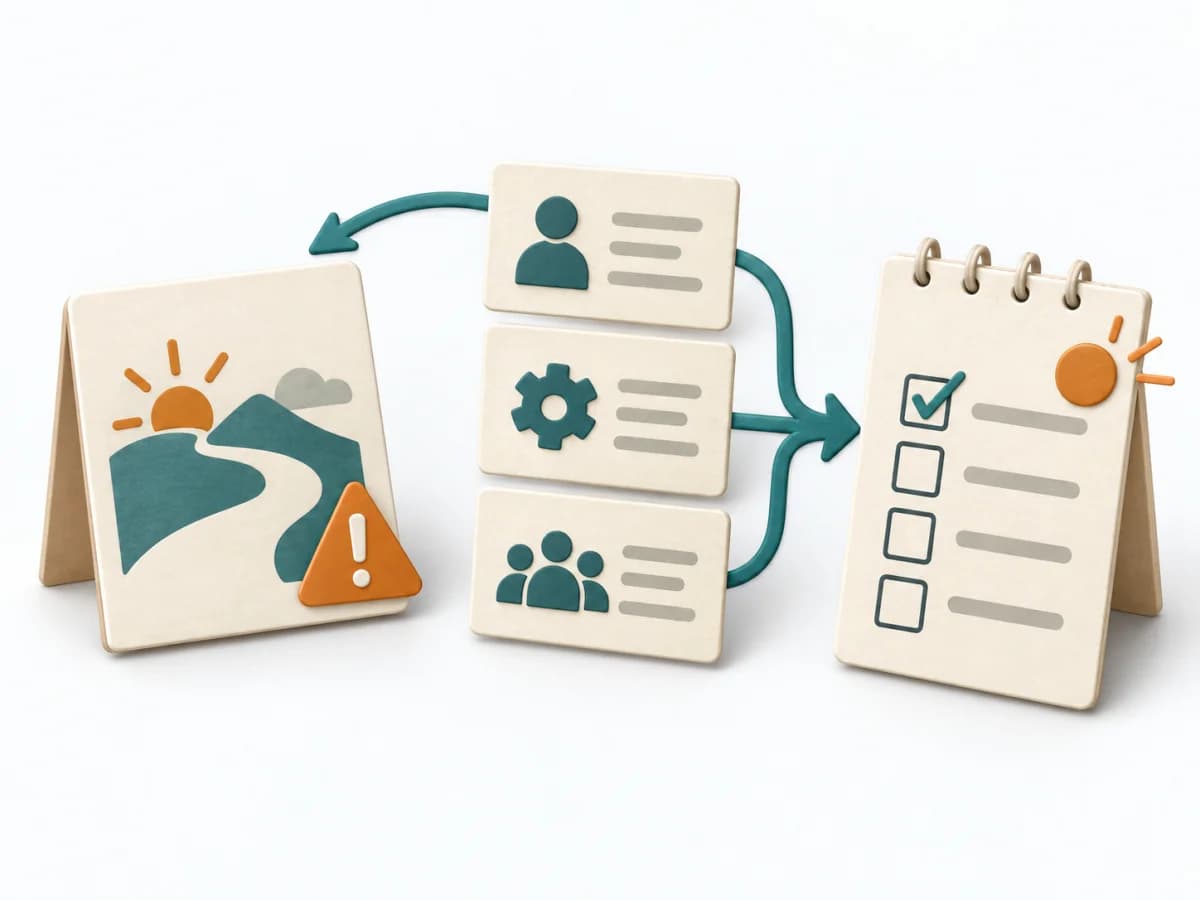 Decision Making Pre-Mortem |  Product Discovery Assumption Mapping |  Decision Making Constraint Analysis |
|---|---|---|---|---|
Purposedifferent | When a team needs to work in a fixed delivery rhythm, it stabilizes cadence, responsibility, and feedback loops. It makes collaboration reliable across sprint boundaries. | In early initiatives with many uncertainties, planning quickly turns too optimistic. A pre-mortem makes the expected failure visible in advance and sharpens the view of causes, gaps, and countermeasures. | When assumptions still sit unordered in the room, it weighs uncertainty against leverage. It makes visible which hypotheses should be checked first. | When an initiative stalls, the limit often lies not in the idea but in hard or soft boundary conditions. Constraint Analysis separates these limits and shows which of them can actually be shaped. |
Complexitydifferent | Medium | Low | Medium | Low |
Timedifferent | 1-4 Wochen je Sprint, laufend | 20–45 min | 45-60 min | 30-90 min |
Participantsdifferent | 3-10 (Scrum Team) | Small cross-functional group | 2-8 | 2-8 |
Formatdifferent | Workshop + async | Workshop | Workshop + async | Workshop + async |
Outputdifferent | Product Backlog, Sprint Backlog, Increment, Sprint Goal | Risk list, Mitigation plan, Assumption log | Assumption map, Test backlog, Risk ranking | Constraint List, Hard/Soft Classification, Option Impact Notes, Decision Boundaries |
Tagsno overlap | AgileIterationCadence | RiskDecisionFailurePlanning | AssumptionsRiskExperimentsValidation | ConstraintsDecisionPlanningOptions |