View methods side by side.
Choose up to four methods. Add them using the search and share the comparison by copying its link.
| Criterion | 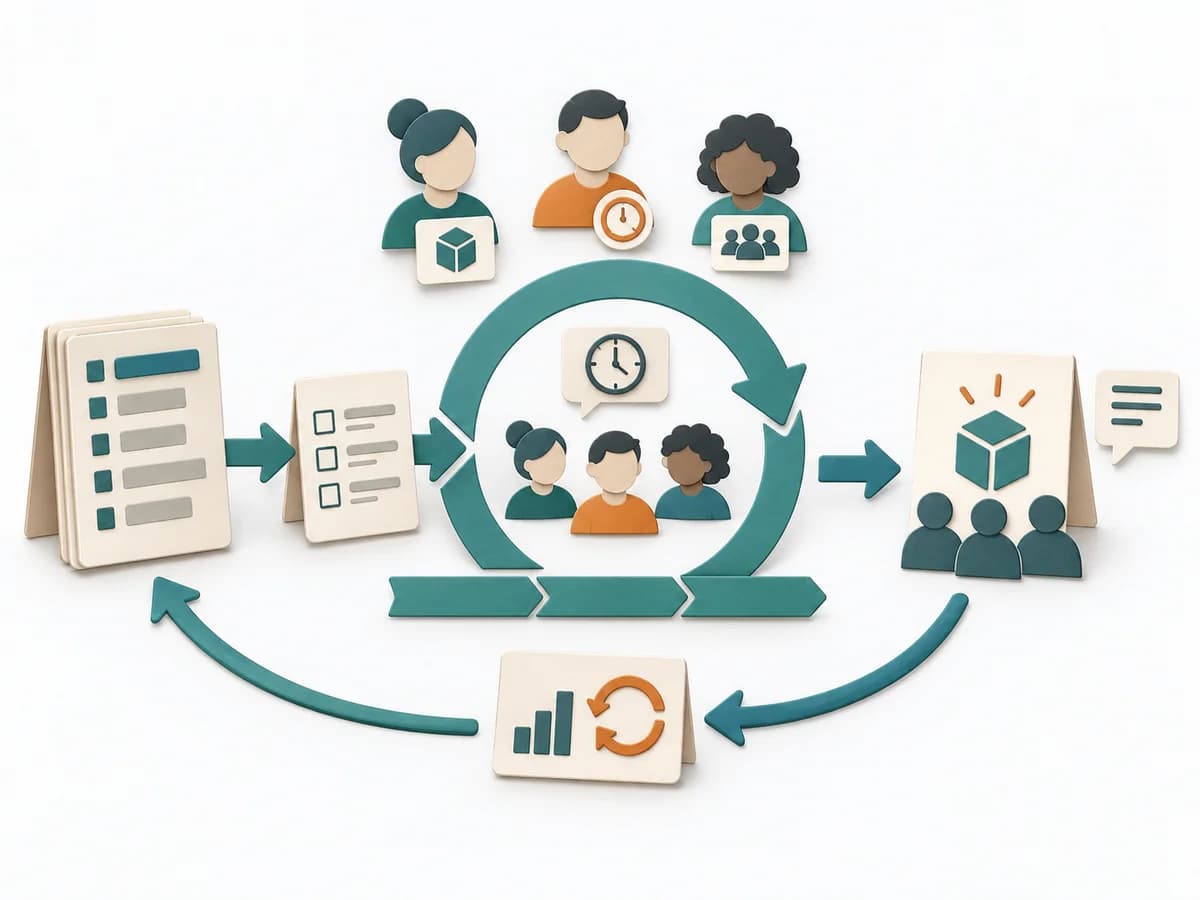 Agile Scrum | 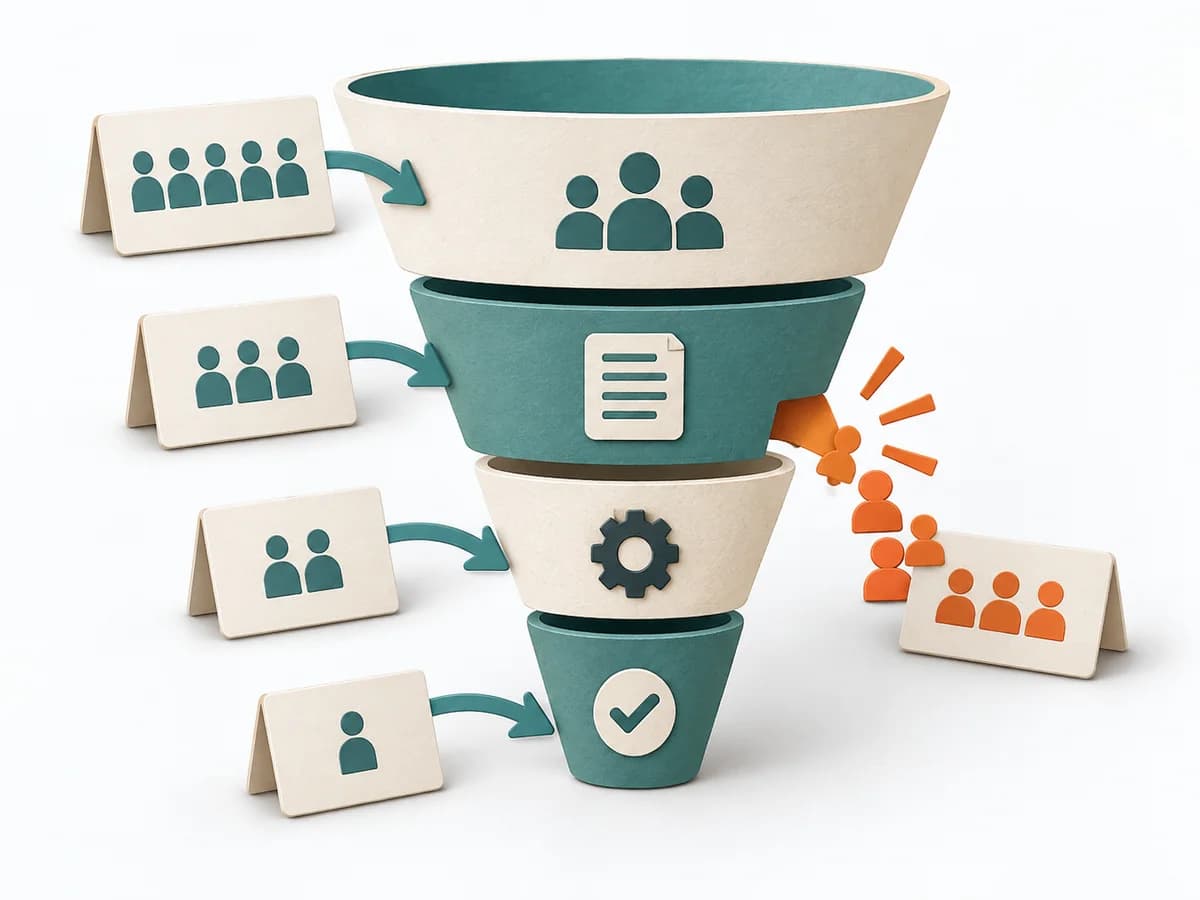 Growth Funnel Analysis |  Decision Making Assumption Surfacing | 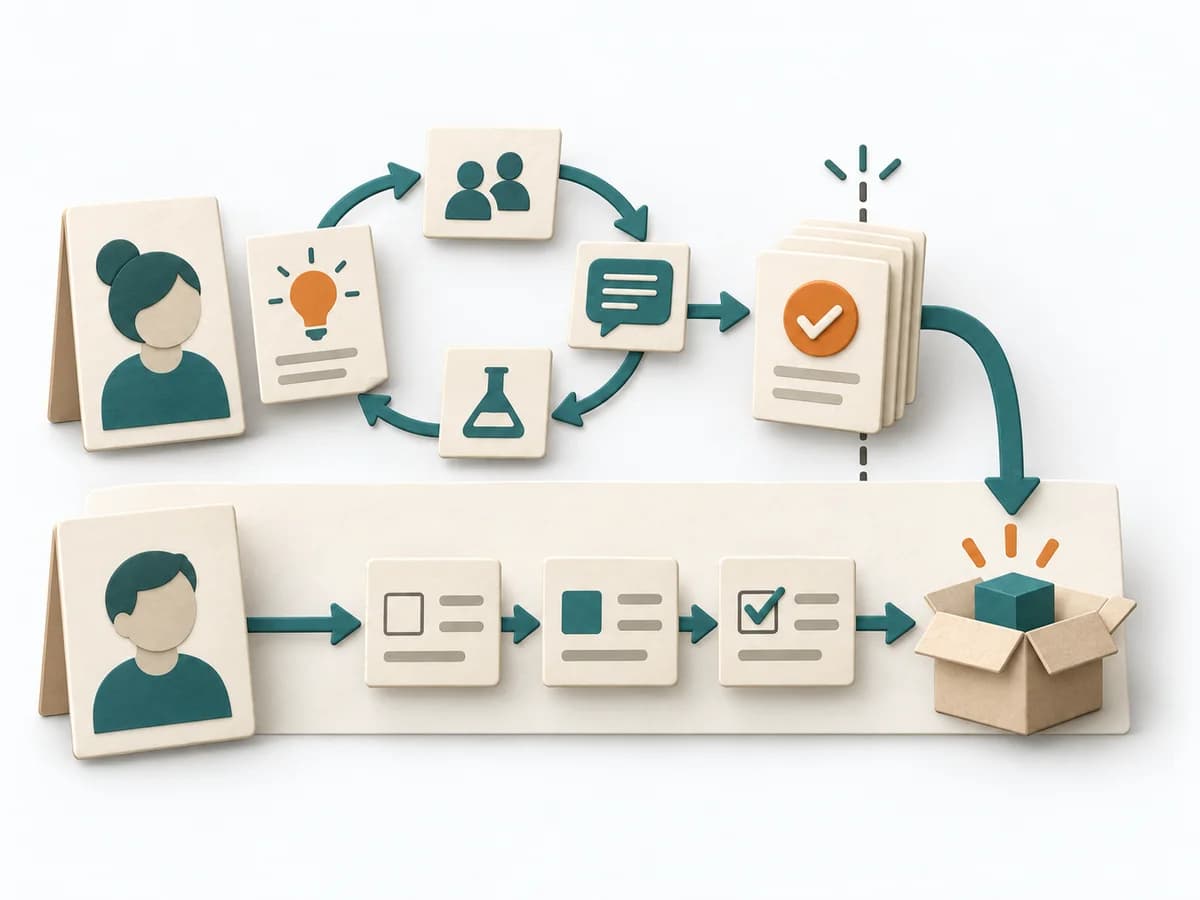 Product Discovery Dual-Track Agile |
|---|---|---|---|---|
Purposedifferent | When a team needs to work in a fixed delivery rhythm, it stabilizes cadence, responsibility, and feedback loops. It makes collaboration reliable across sprint boundaries. | When many visitors or users drop off along the way, the reason behind the number often stays hidden. Funnel Analysis exposes these transitions and makes visible exactly where the path collapses. | Plans often contain assumptions that were never openly stated and remain dangerous precisely because of that. Assumption Surfacing makes these silent premises visible and prioritizes which of them carry the initiative or could sink it. | When uncertainty and delivery run in parallel, it separates learning work from implementation while keeping both connected. It prevents unvalidated ideas from falling directly into the delivery stream. |
Complexitydifferent | Medium | Medium | Low | Medium |
Timedifferent | 1-4 Wochen je Sprint, laufend | 1-3 h | 45-90 min | Laufend, Wochen bis Monate |
Participantsdifferent | 3-10 (Scrum Team) | 1-5 | 2-8 | 4-10 |
Formatdifferent | Workshop + async | Async | Workshop + async | Workshop + async |
Outputdifferent | Product Backlog, Sprint Backlog, Increment, Sprint Goal | Funnel report, Drop-off analysis, Optimization hypotheses | Assumption List, Critical Assumptions, Learning Plan | Discovery Backlog, Delivery Backlog, Experiment-Ergebnisse, Validierte Stories |
Tagsno overlap | AgileIterationCadence | AnalyticsConversionGrowth | AssumptionsRiskDecisionDiscovery | AgileDiscoveryDelivery |