View methods side by side.
Choose up to four methods. Add them using the search and share the comparison by copying its link.
| Criterion | 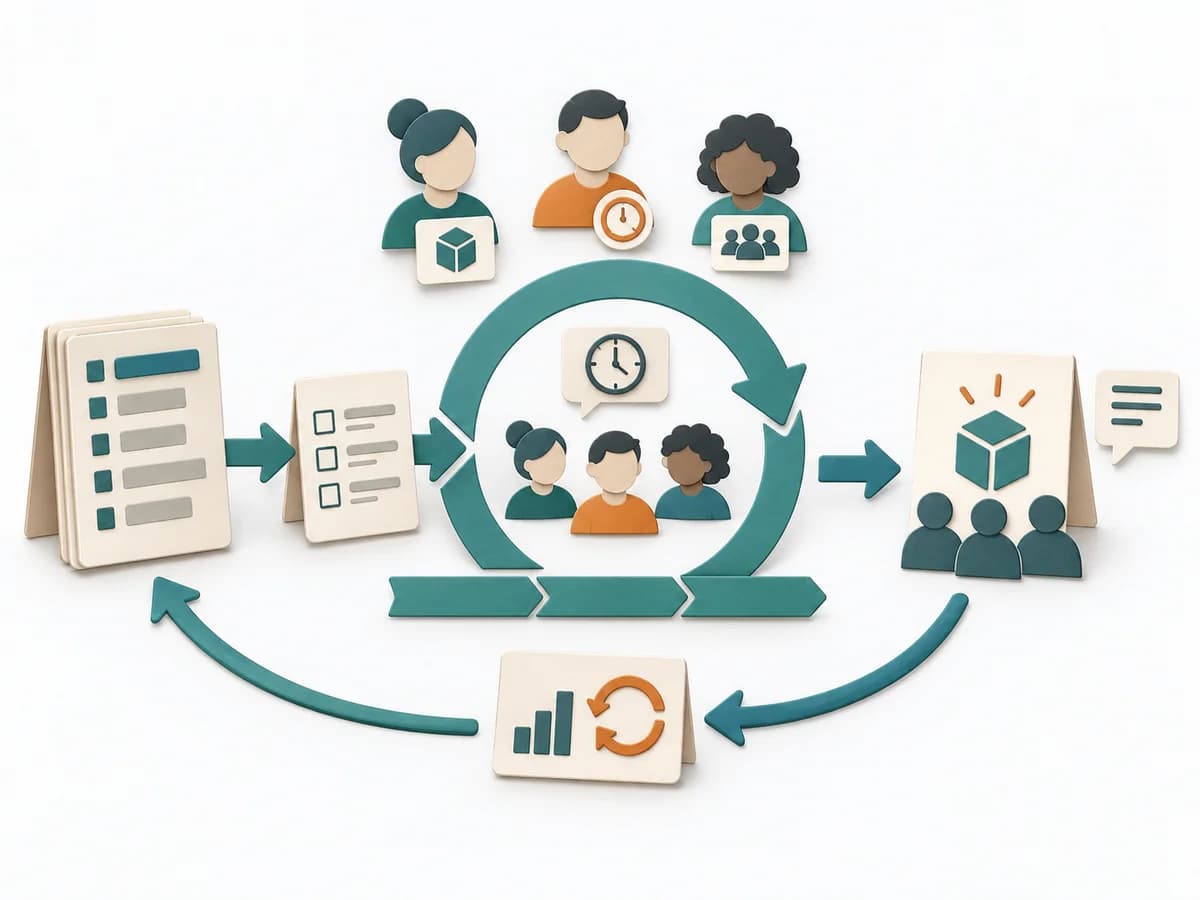 Agile Scrum | 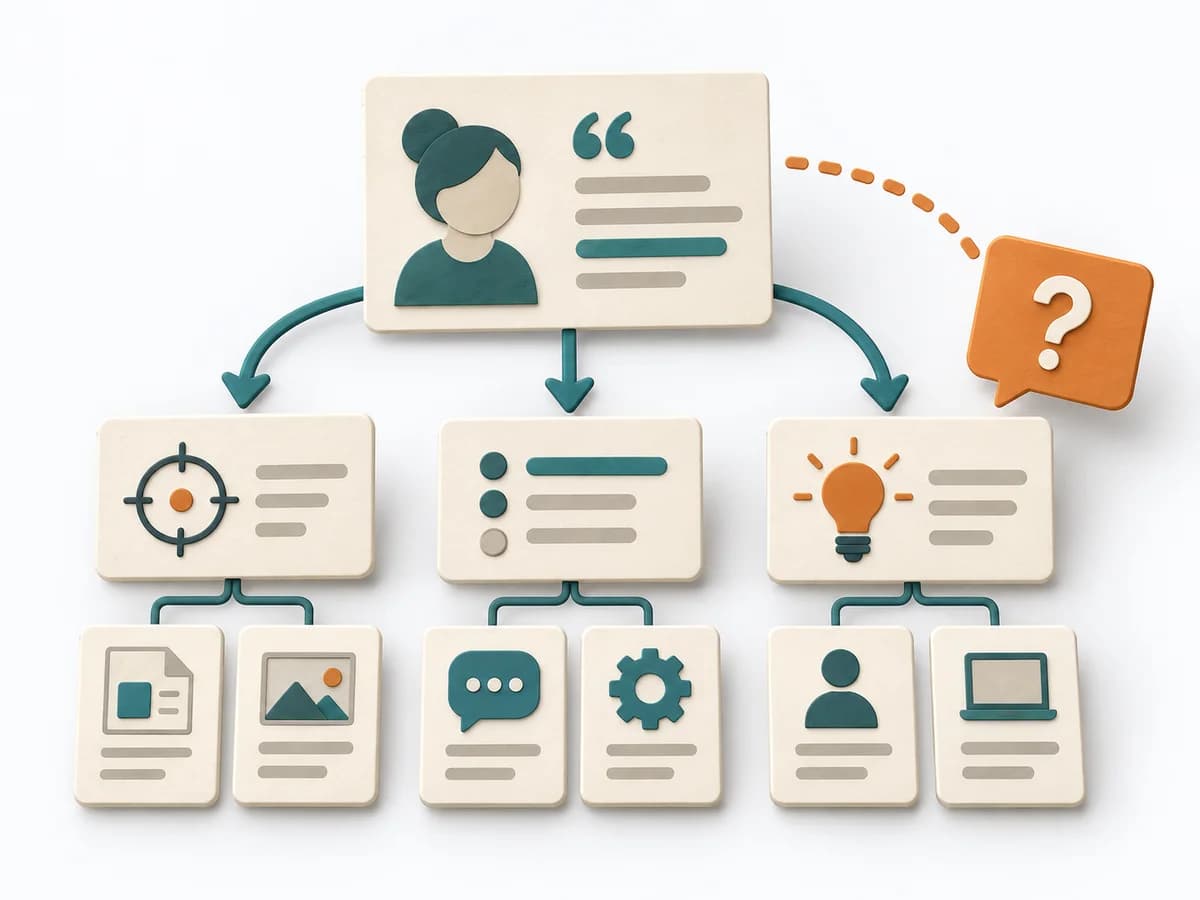 Agile Example Mapping | 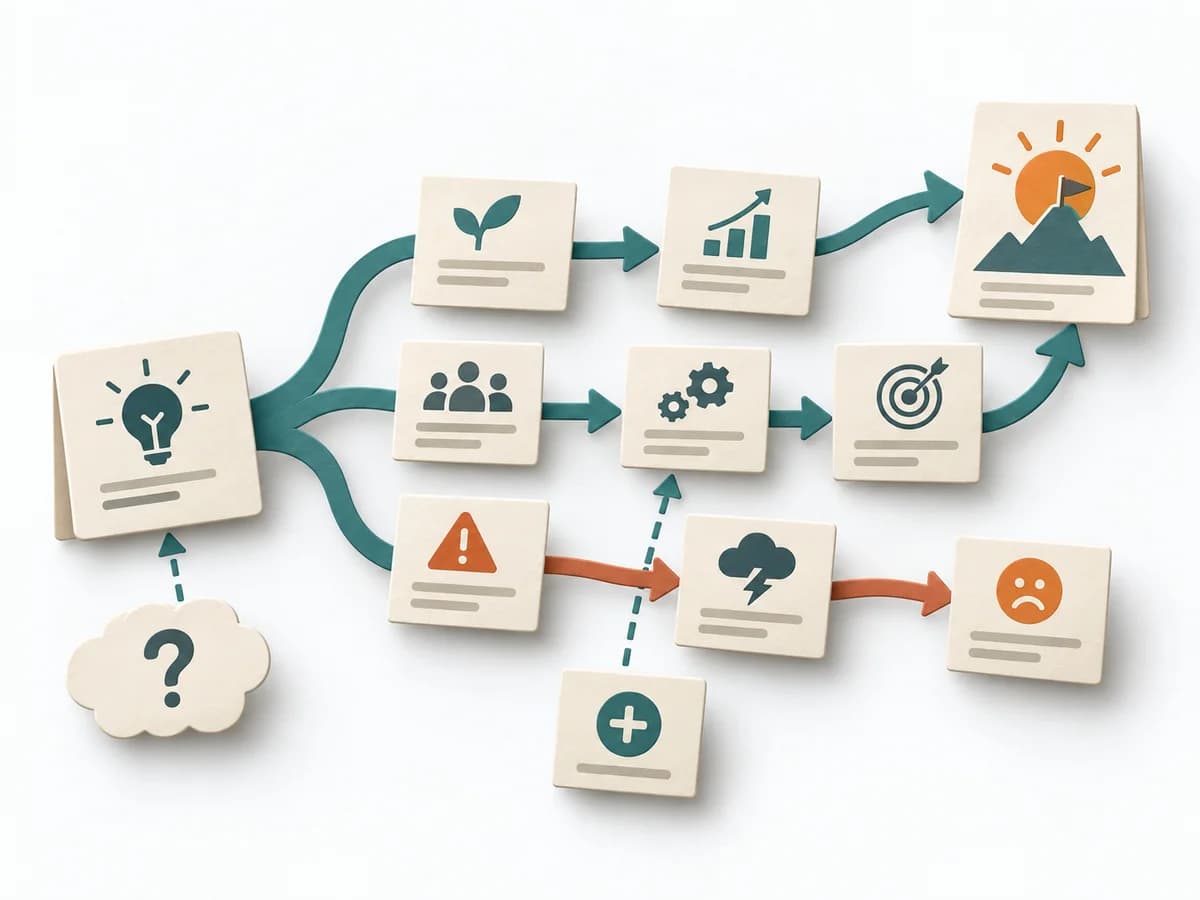 Systems Thinking Future Reality Tree |  Agile Specification by Example |
|---|---|---|---|---|
Purposedifferent | When a team needs to work in a fixed delivery rhythm, it stabilizes cadence, responsibility, and feedback loops. It makes collaboration reliable across sprint boundaries. | When a story carries business rules and exceptions, it brings clarity before implementation. It makes examples, open questions, and boundaries visible enough that the logic becomes jointly sound. | A Future Reality Tree shows how desired actions are meant to lead to a better system state. The method checks whether a path of change holds together logically before time flows into implementation. | When business rules need to become precise, it ties language, example, and test together. It sorts work by value, risk, and delivery ability. The result is captured as an Example Table and Acceptance Tests. |
Complexitydifferent | Medium | Low | High | Medium |
Timedifferent | 1-4 Wochen je Sprint, laufend | 30-60 min | 2-4 h | 60-90 min pro Feature |
Participantsdifferent | 3-10 (Scrum Team) | 3-7 | 3-8 | 3-6 |
Formatdifferent | Workshop + async | Workshop | Workshop | Workshop |
Outputdifferent | Product Backlog, Sprint Backlog, Increment, Sprint Goal | Example Map, Acceptance Criteria, Open Questions | Future Reality Tree, Negative Branches, Assumption List, Improved Injections | Example Table, Acceptance Tests |
Tagsno overlap | AgileIterationCadence | Behavior-Driven DevelopmentRequirementsExamplesRefinement | Theory of ConstraintsSystems thinkingChange | AgileRequirementsExamplesBehavior-Driven Development |