View methods side by side.
Choose up to four methods. Add them using the search and share the comparison by copying its link.
| Criterion | 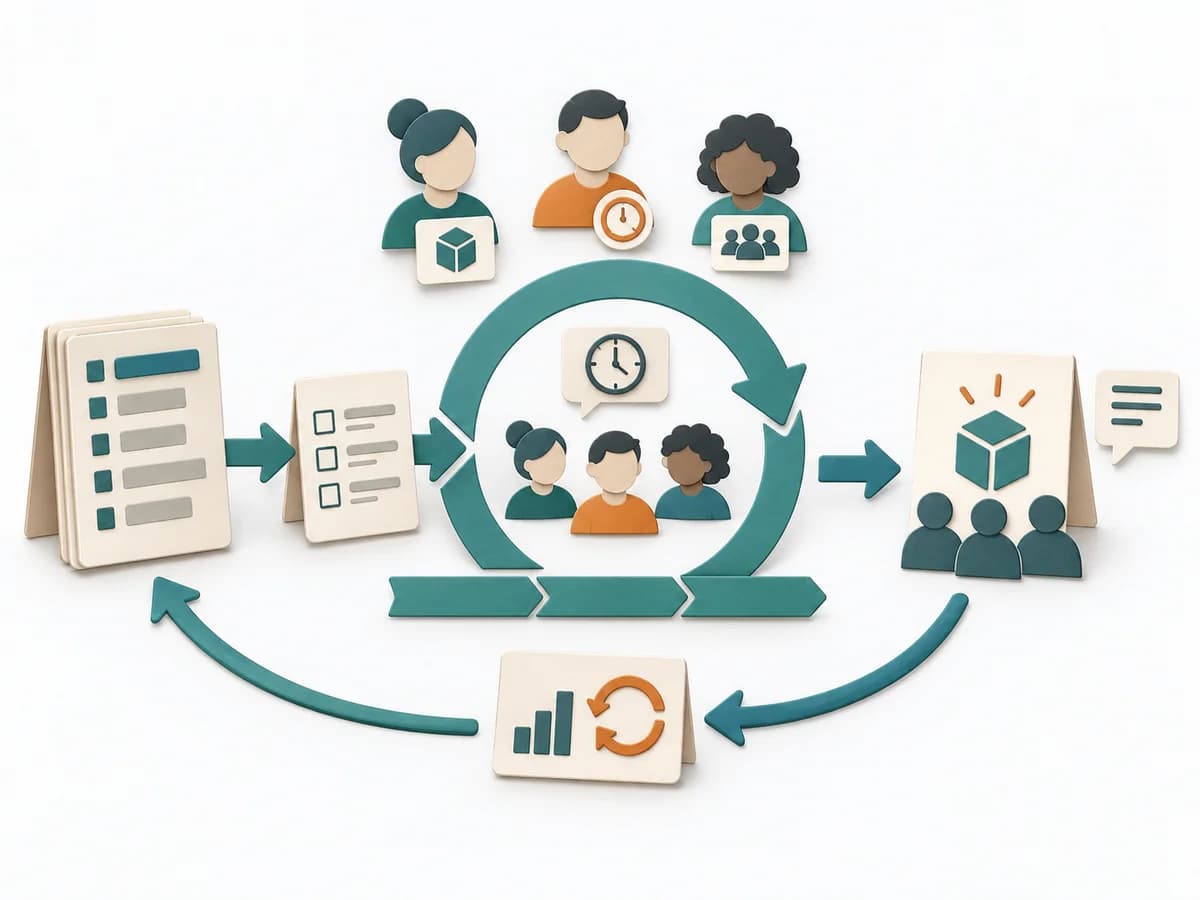 Agile Scrum |  Decision Making Decision Tree | 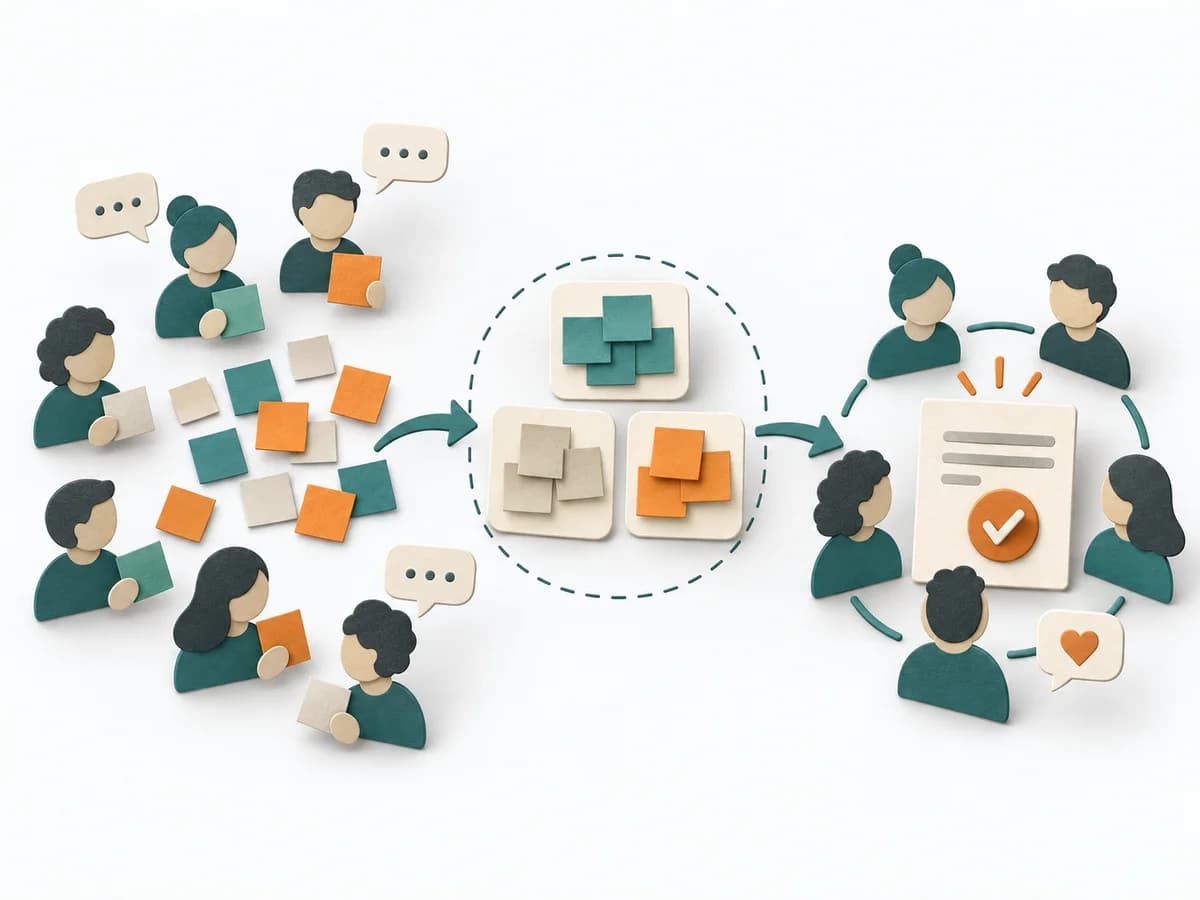 Facilitation Consensus Workshop |  Facilitation Alignment Mapping |
|---|---|---|---|---|
Purposedifferent | When a team needs to work in a fixed delivery rhythm, it stabilizes cadence, responsibility, and feedback loops. It makes collaboration reliable across sprint boundaries. | For decisions with follow-on paths and dependencies, a linear comparison is often not enough. A Decision Tree shows how options branch under conditions and which consequences hang on each branch. | When a group needs a solid decision without outvoting individual factions, a Consensus Workshop creates a negotiable common ground. It makes agreement, reservations, and open tensions discussable at the same time. | When several people work toward one goal but hold different mental maps, Alignment Mapping makes the discrepancies visible. It arranges goals, assumptions, and priorities so shared direction becomes verifiable. |
Complexitysame | Medium | Medium | Medium | Medium |
Timedifferent | 1-4 Wochen je Sprint, laufend | 30-90 min | 1-3 h | 1-2 h |
Participantsdifferent | 3-10 (Scrum Team) | 1-6 | 5-30 | 4-12 |
Formatdifferent | Workshop + async | Workshop + async | Workshop | Workshop |
Outputdifferent | Product Backlog, Sprint Backlog, Increment, Sprint Goal | Decision Tree, Option Map, Assumption List | Consensus Clusters, Theme Titles, Priority Areas | Alignment Map, Open Issues, Decision Questions |
Tagsno overlap | AgileIterationCadence | DecisionTreeOptions | FacilitationConsensusWorkshopAlignment | AlignmentStakeholdersStrategyFacilitation |