View methods side by side.
Choose up to four methods. Add them using the search and share the comparison by copying its link.
| Criterion | 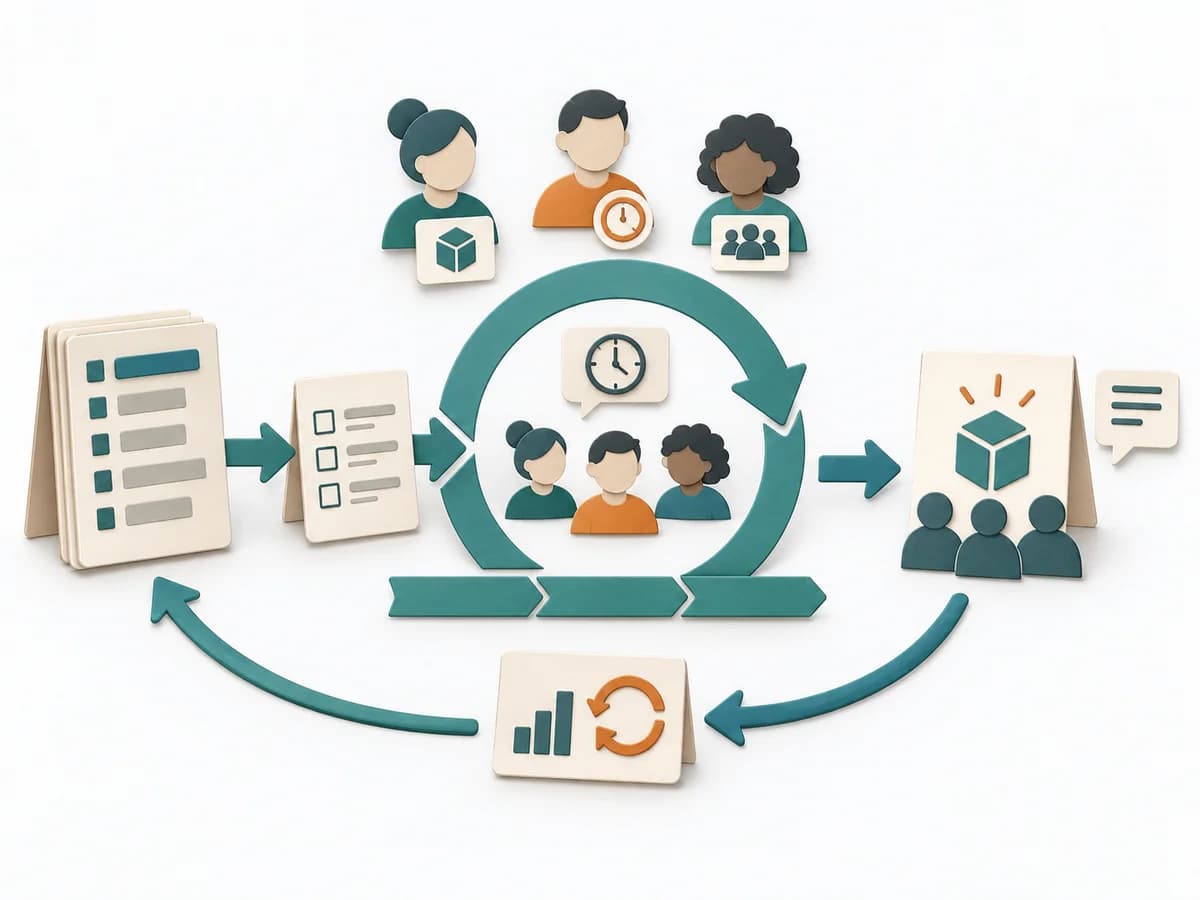 Agile Scrum |  DevOps Blameless Postmortem |  UX Design Lean UX Canvas | 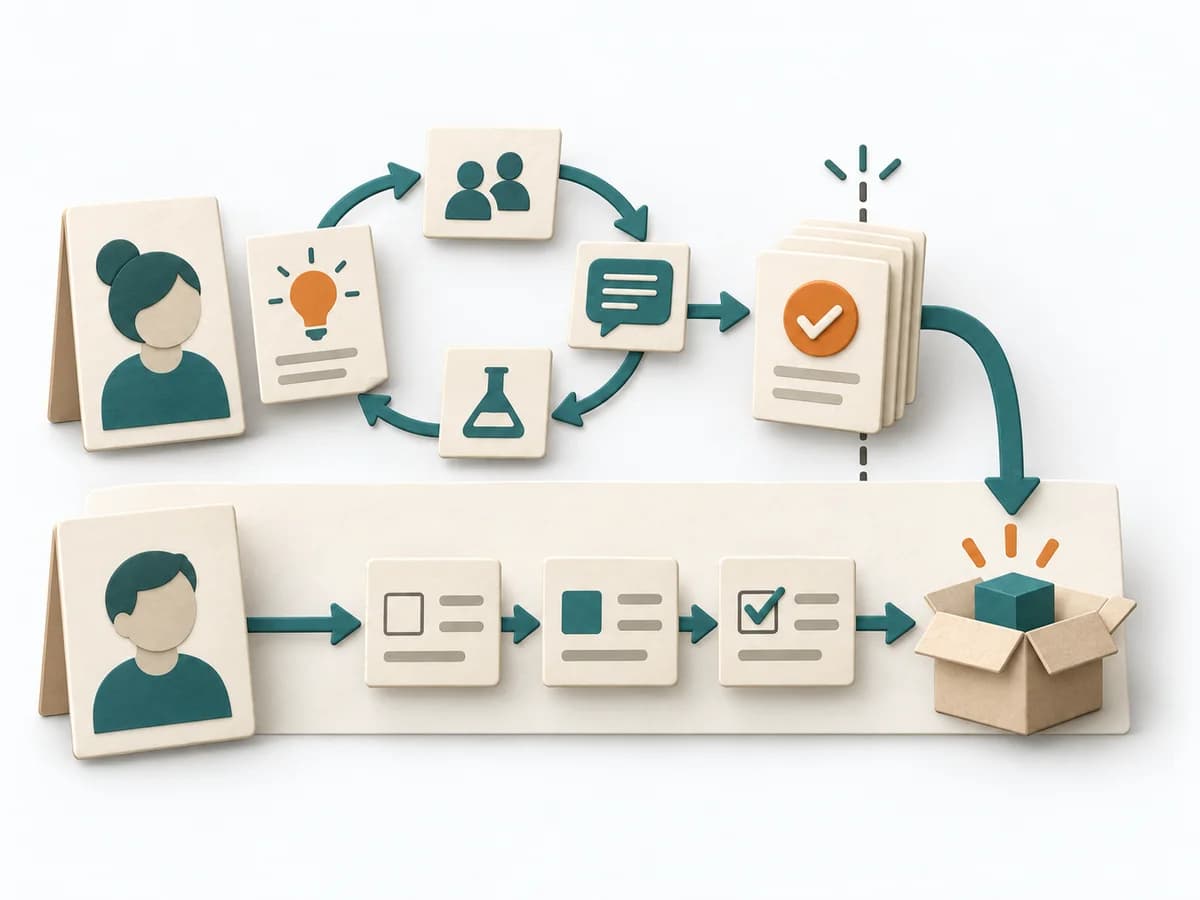 Product Discovery Dual-Track Agile |
|---|---|---|---|---|
Purposedifferent | When a team needs to work in a fixed delivery rhythm, it stabilizes cadence, responsibility, and feedback loops. It makes collaboration reliable across sprint boundaries. | After an incident with damage or a near miss, the method creates a sober field for learning without assigning blame. It directs attention to the course of events, conditions, and effective countermeasures. | The Lean UX Canvas helps clarify user behavior, touchpoints, and concept decisions. It makes assumptions and desired outcomes visible and captures the result as a completed canvas, hypothesis list, and first experiment. | When uncertainty and delivery run in parallel, it separates learning work from implementation while keeping both connected. It prevents unvalidated ideas from falling directly into the delivery stream. |
Complexitysame | Medium | Medium | Medium | Medium |
Timedifferent | 1-4 Wochen je Sprint, laufend | 30-90 min | 2-3 h | Laufend, Wochen bis Monate |
Participantsdifferent | 3-10 (Scrum Team) | 3-12 | 3-8 | 4-10 |
Formatsame | Workshop + async | Workshop + async | Workshop + async | Workshop + async |
Outputdifferent | Product Backlog, Sprint Backlog, Increment, Sprint Goal | Postmortem Doc, Action Items, Timeline | Completed Lean UX Canvas, Hypothesis list, First experiment | Discovery Backlog, Delivery Backlog, Experiment-Ergebnisse, Validierte Stories |
Tagsno overlap | AgileIterationCadence | Site Reliability EngineeringIncidentLearningReliability | CanvasHypothesisOutcomesDiscovery | AgileDiscoveryDelivery |