View methods side by side.
Choose up to four methods. Add them using the search and share the comparison by copying its link.
| Criterion | 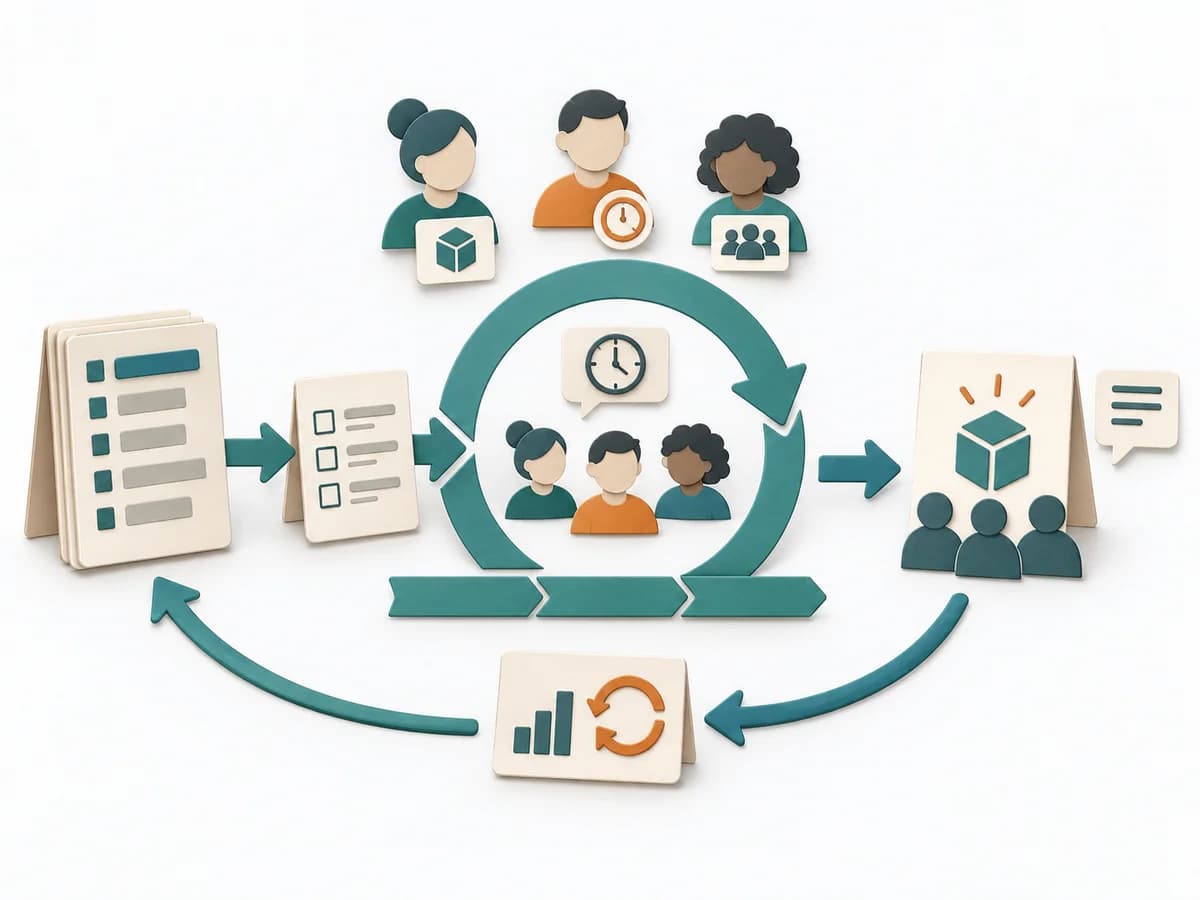 Agile Scrum |  Facilitation Alignment Mapping |  Decision Making Force Field Analysis |  Business Strategy McKinsey 7S |
|---|---|---|---|---|
Purposedifferent | When a team needs to work in a fixed delivery rhythm, it stabilizes cadence, responsibility, and feedback loops. It makes collaboration reliable across sprint boundaries. | When several people work toward one goal but hold different mental maps, Alignment Mapping makes the discrepancies visible. It arranges goals, assumptions, and priorities so shared direction becomes verifiable. | In change initiatives, supporting and restraining forces sit at the table at the same time. Force Field Analysis makes these tensions explicit and shows where change can be pushed forward by strengthening or relieving. | McKinsey 7S checks whether Strategy, Structure, Systems, Shared Values, Skills, Style, and Staff fit together. Organizational misalignments become visible across multiple levers as a result. |
Complexitydifferent | Medium | Medium | Low | Medium |
Timedifferent | 1-4 Wochen je Sprint, laufend | 1-2 h | 45-90 min | 2-4 h |
Participantsdifferent | 3-10 (Scrum Team) | 4-12 | 3-12 | 3-12 |
Formatdifferent | Workshop + async | Workshop | Workshop | Workshop |
Outputdifferent | Product Backlog, Sprint Backlog, Increment, Sprint Goal | Alignment Map, Open Issues, Decision Questions | Force Field Map, Change Levers, Risk Notes | 7S Assessment, Alignment Gaps, Change Actions |
Tagsno overlap | AgileIterationCadence | AlignmentStakeholdersStrategyFacilitation | ChangeDecisionStrategy | OrganizationStrategyAlignmentChange |