View methods side by side.
Choose up to four methods. Add them using the search and share the comparison by copying its link.
| Criterion | 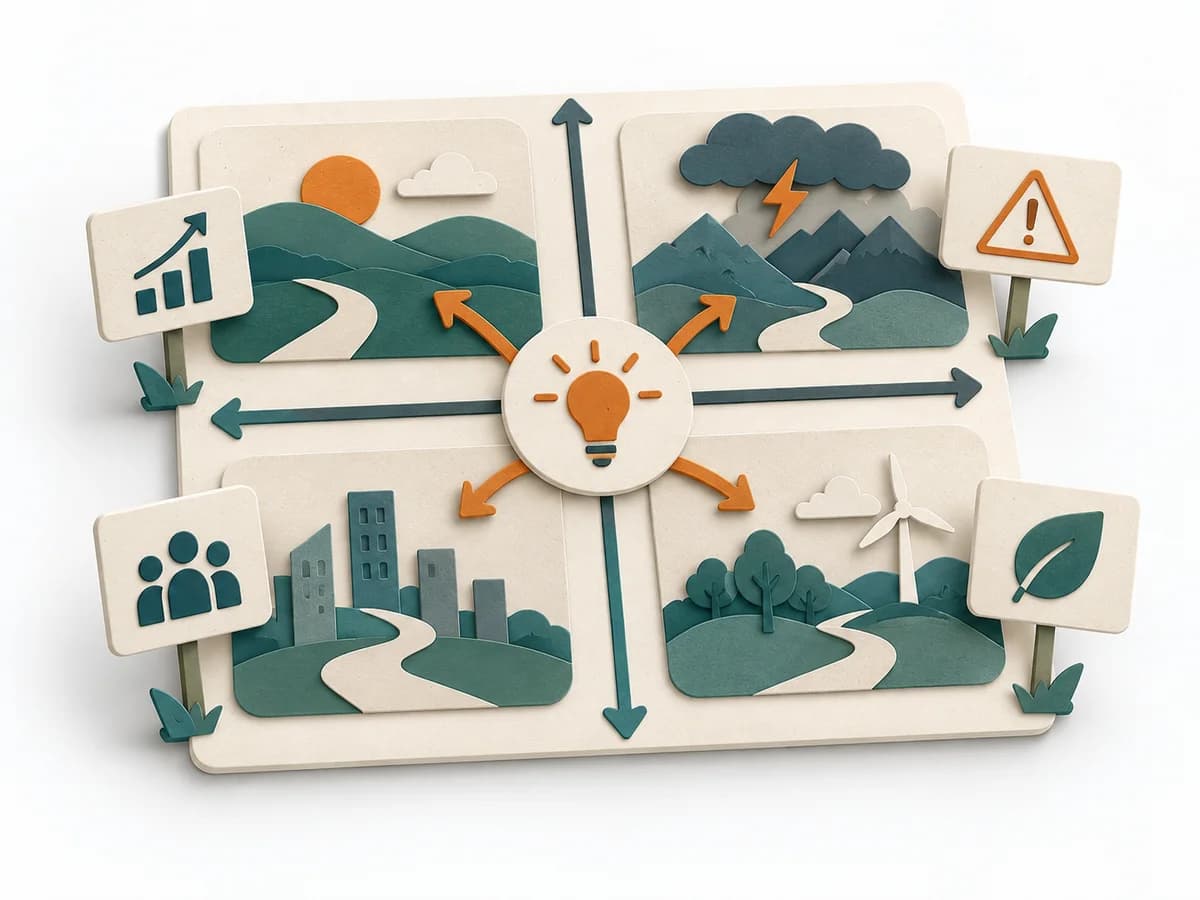 Business Strategy Scenario Planning | 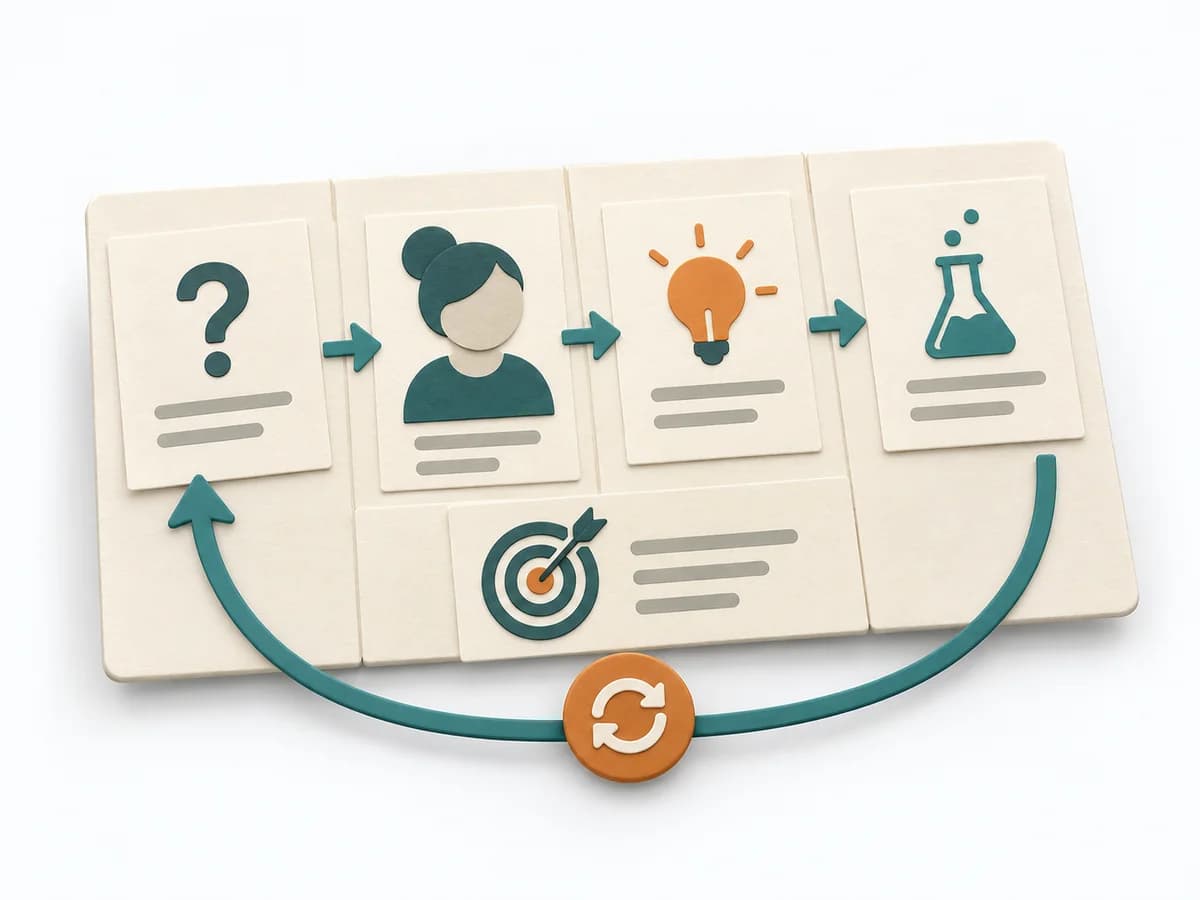 UX Design Lean UX Canvas | 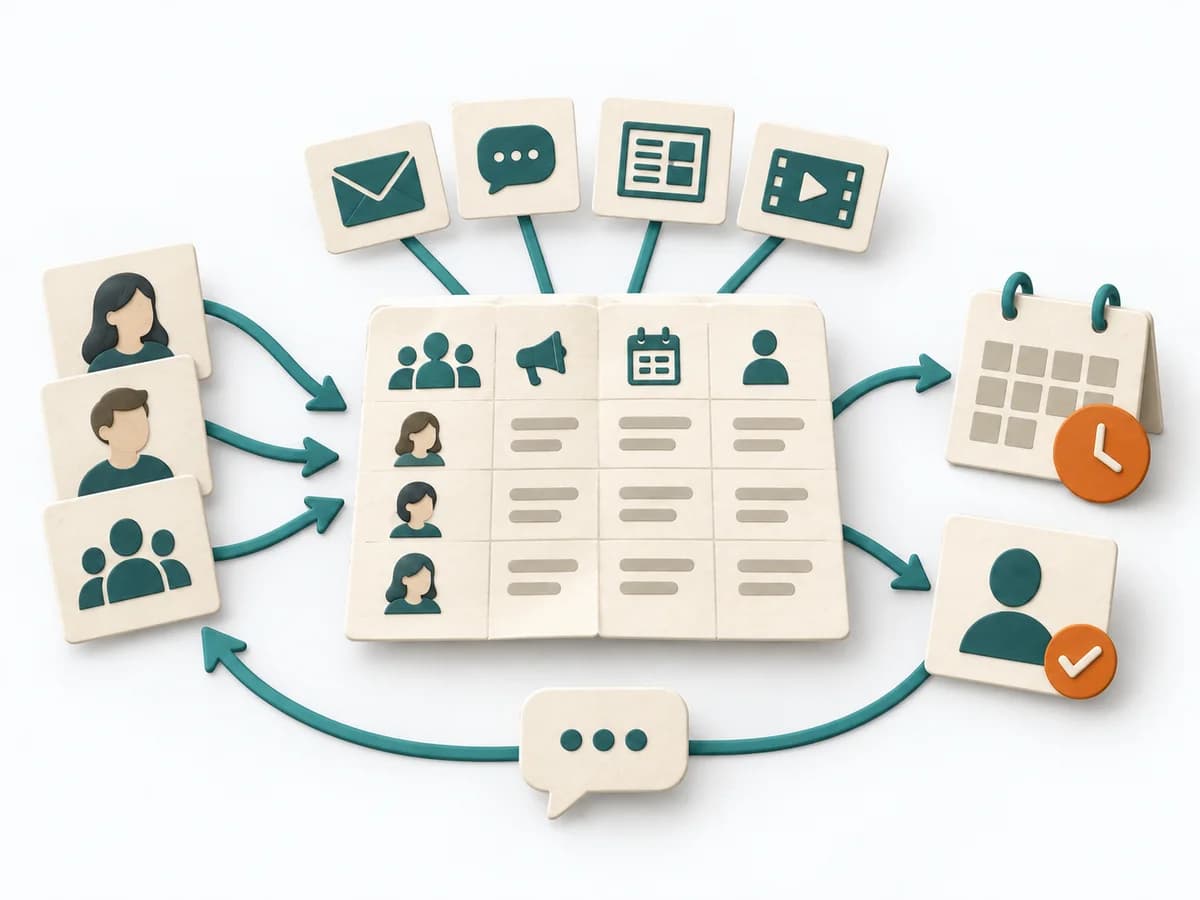 Delivery Communication Plan |  Product Strategy DIBB |
|---|---|---|---|---|
Purposedifferent | Scenario Planning opens the view to several plausible futures instead of a single forecast. The method protects strategies from depending on too narrow an expected path. | The Lean UX Canvas helps clarify user behavior, touchpoints, and concept decisions. It makes assumptions and desired outcomes visible and captures the result as a completed canvas, hypothesis list, and first experiment. | When many people need to be informed in parallel and messages would otherwise arrive unevenly or too late, a Communication Plan orders communication reliably. Channels, audiences, and cadences interlock so important information doesn't get lost. | DIBB helps clarify target groups, value, goals, and priorities by making the logic behind a decision explicit. It captures results as a DIBB document, belief list, bet list, and learning report. |
Complexitydifferent | High | Medium | Low | Low |
Timedifferent | 0.5-2 Tage | 2-3 h | 45-90 min | 1-2 h |
Participantsdifferent | 4-12 | 3-8 | 2-6 | 2-8 |
Formatdifferent | Workshop | Workshop + async | Workshop + async | Workshop + async |
Outputdifferent | Scenario Set, Strategic Implications, Robust Options | Completed Lean UX Canvas, Hypothesis list, First experiment | Communication Plan, Channel Matrix, Message Cadence | DIBB document, Belief list, Bet list, Learning report |
Tagsno overlap | StrategyUncertaintyPlanning | CanvasHypothesisOutcomesDiscovery | CommunicationStakeholdersDeliveryPlanning | StrategyDecisionAssumptionsHypothesis |