View methods side by side.
Choose up to four methods. Add them using the search and share the comparison by copying its link.
| Criterion |  Business Strategy Scenario Planning | 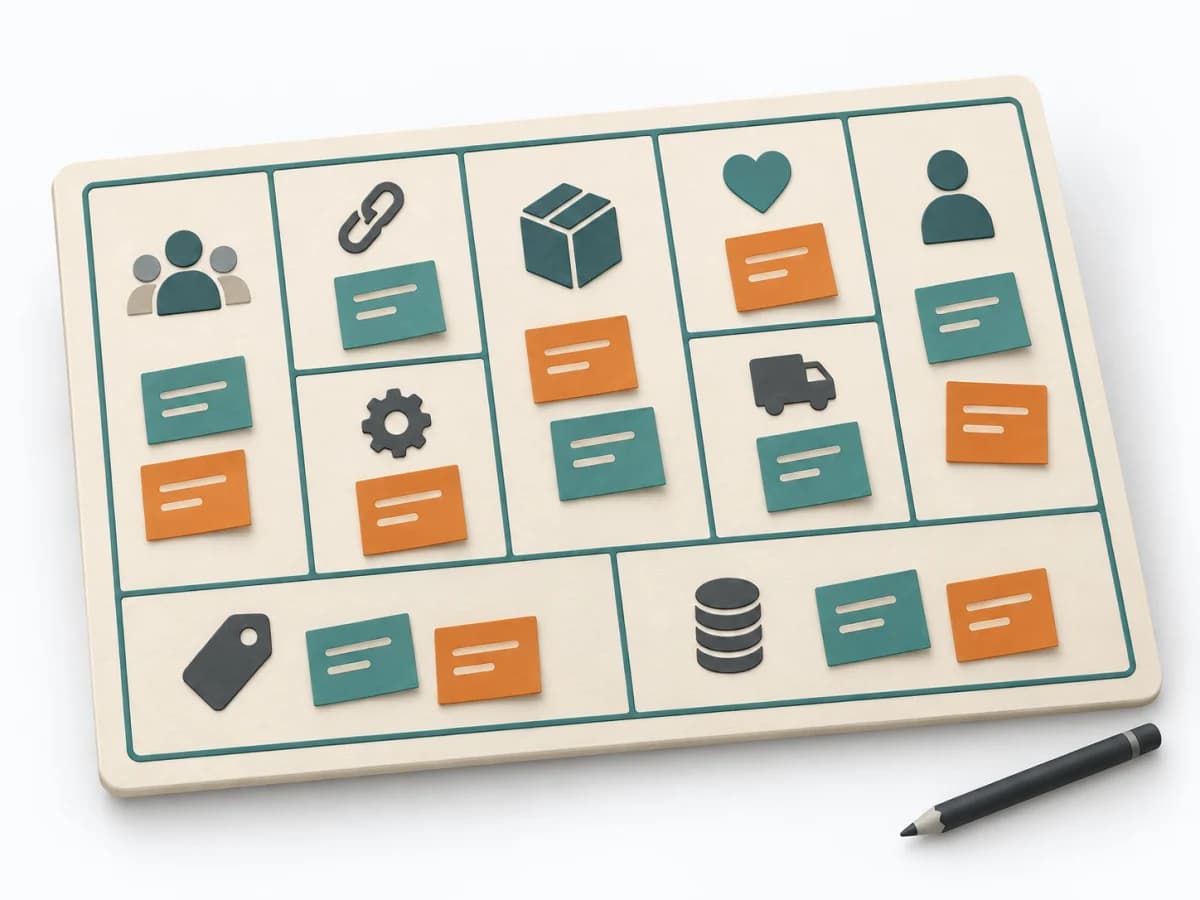 Business Strategy Business Model Canvas | 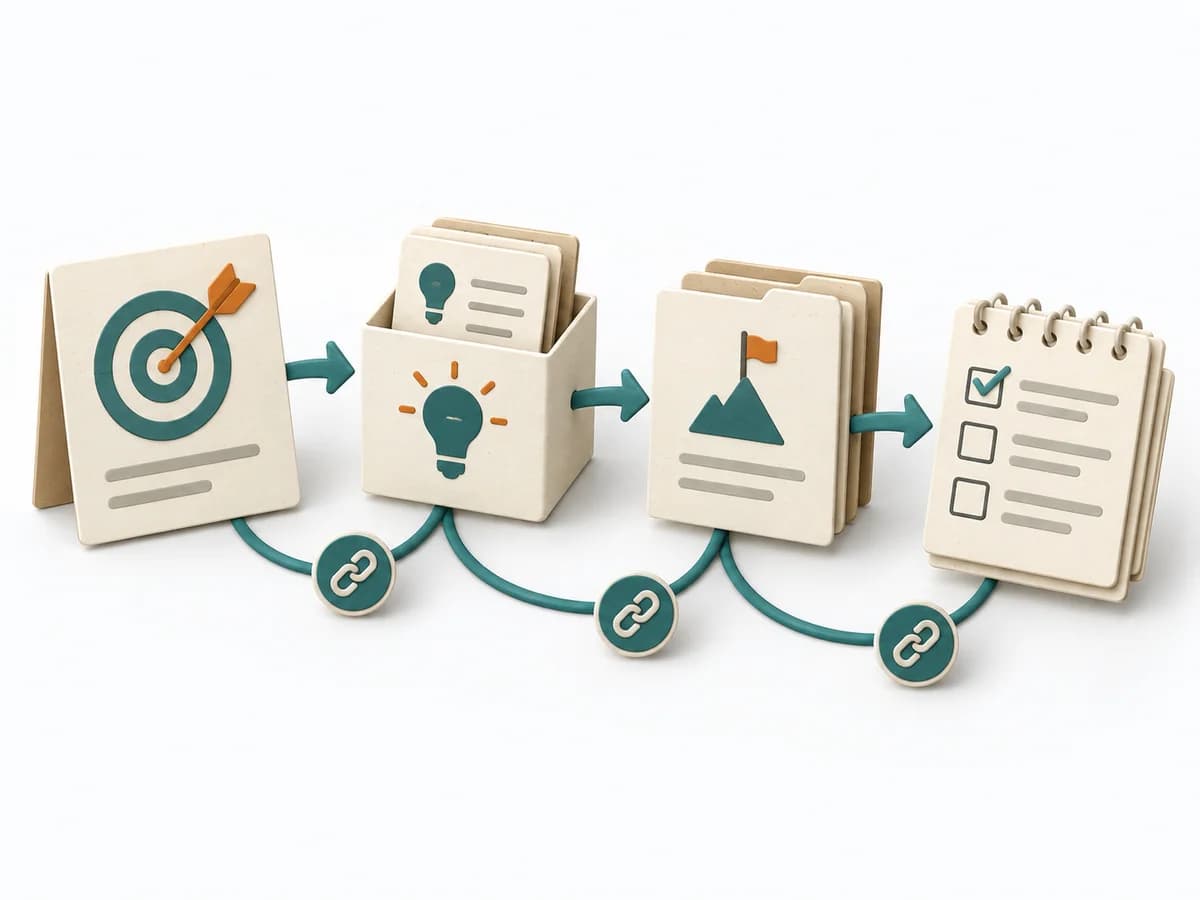 Product Strategy GIST Planning | 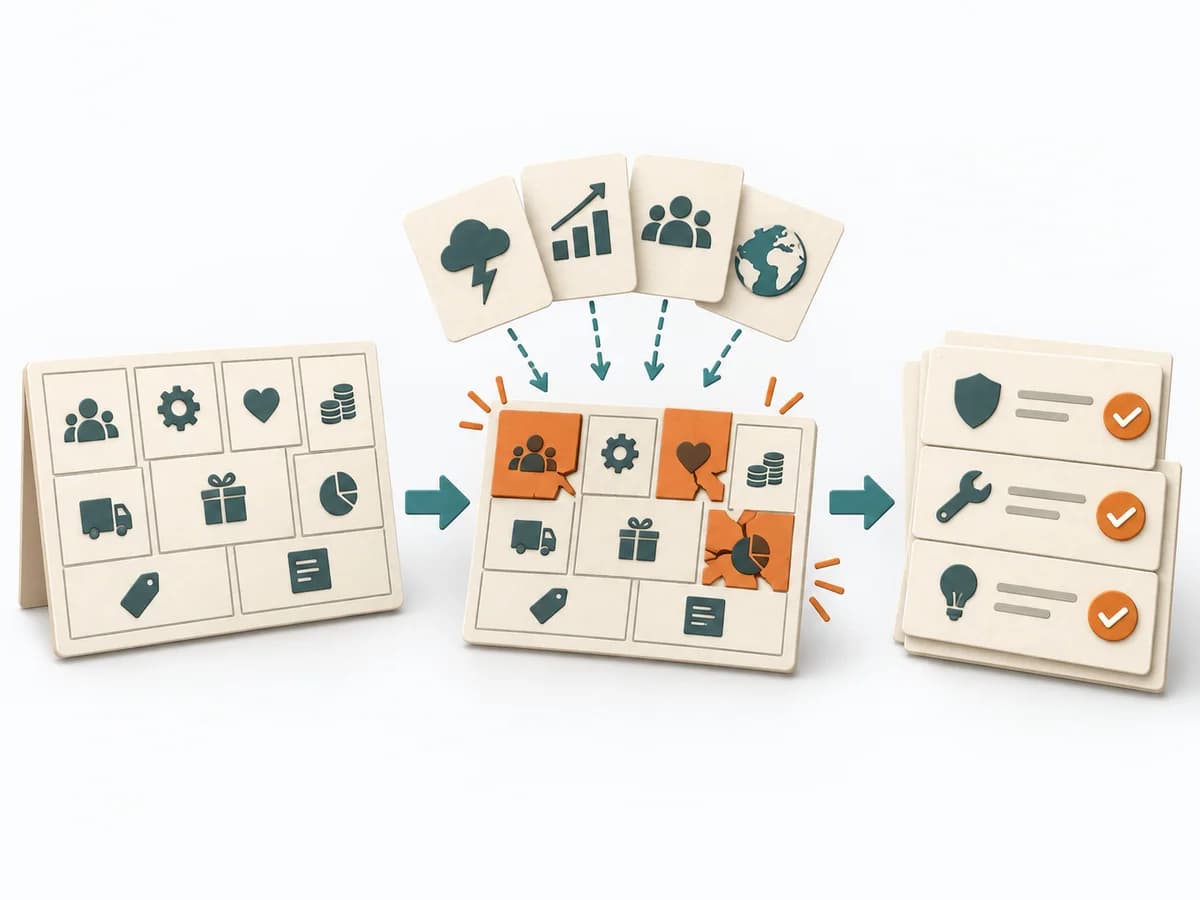 Business Strategy Business Model Stress Test |
|---|---|---|---|---|
Purposedifferent | Scenario Planning opens the view to several plausible futures instead of a single forecast. The method protects strategies from depending on too narrow an expected path. | The Business Model Canvas condenses a business model to its key building blocks and assumptions. It makes variants quickly comparable and reveals gaps before validation or implementation begins. | GIST Planning helps clarify target groups, value, goals, and priorities. It links customer value, product logic, and decision priorities, and captures the result as goals, an idea bank, and a step-project list. | A Business Model Stress Test checks how well a business model holds up under pressure and headwinds. It compares strengths, risks, market logic, and courses of action. The result is captured as a stress-test report and action plan per scenario. |
Complexitydifferent | High | Medium | Medium | High |
Timedifferent | 0.5-2 Tage | 1-2 h | Wochen bis Monate je Goal | Half day |
Participantsdifferent | 4-12 | 2-8 | 3-10 | 3-8 |
Formatdifferent | Workshop | Workshop + async | Workshop + async | Workshop |
Outputdifferent | Scenario Set, Strategic Implications, Robust Options | Business Model Canvas, Assumption List, Business Hypotheses | Goals, Idea bank, Step-project list, Tasks, Learning reports | Stress Test Report, Action Plan per Scenario |
Tagsno overlap | StrategyUncertaintyPlanning | Business modelStrategyValueInnovation | RoadmapOutcomesPlanningExperiments | StrategyBusiness modelRiskDiagnosis |