View methods side by side.
Choose up to four methods. Add them using the search and share the comparison by copying its link.
Selected:SAAM (Software Architecture Analysis Method)Cost of DelayICE ScoringATAM (Architecture Tradeoff Analysis Method)
| Criterion |  Architecture SAAM (Software Architecture Analysis Method) | 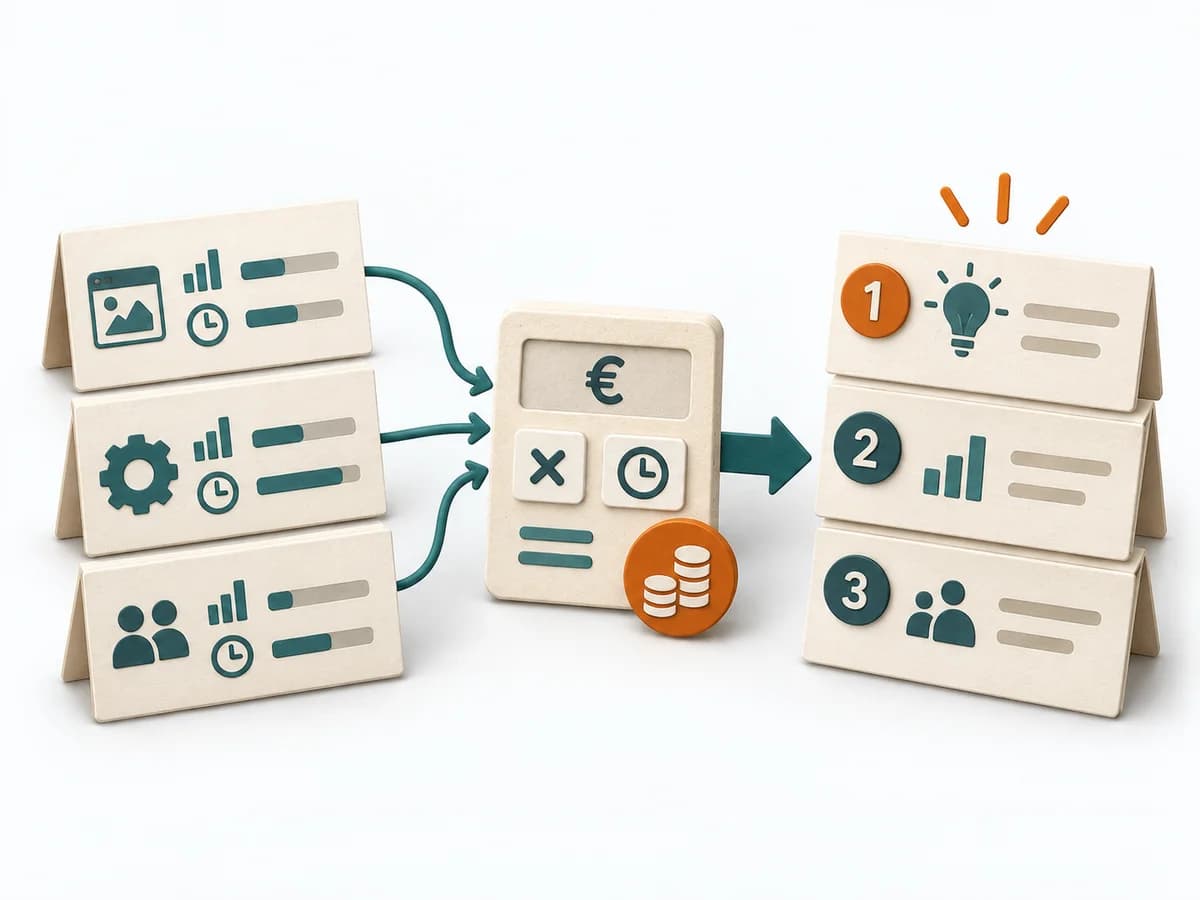 Delivery Cost of Delay | 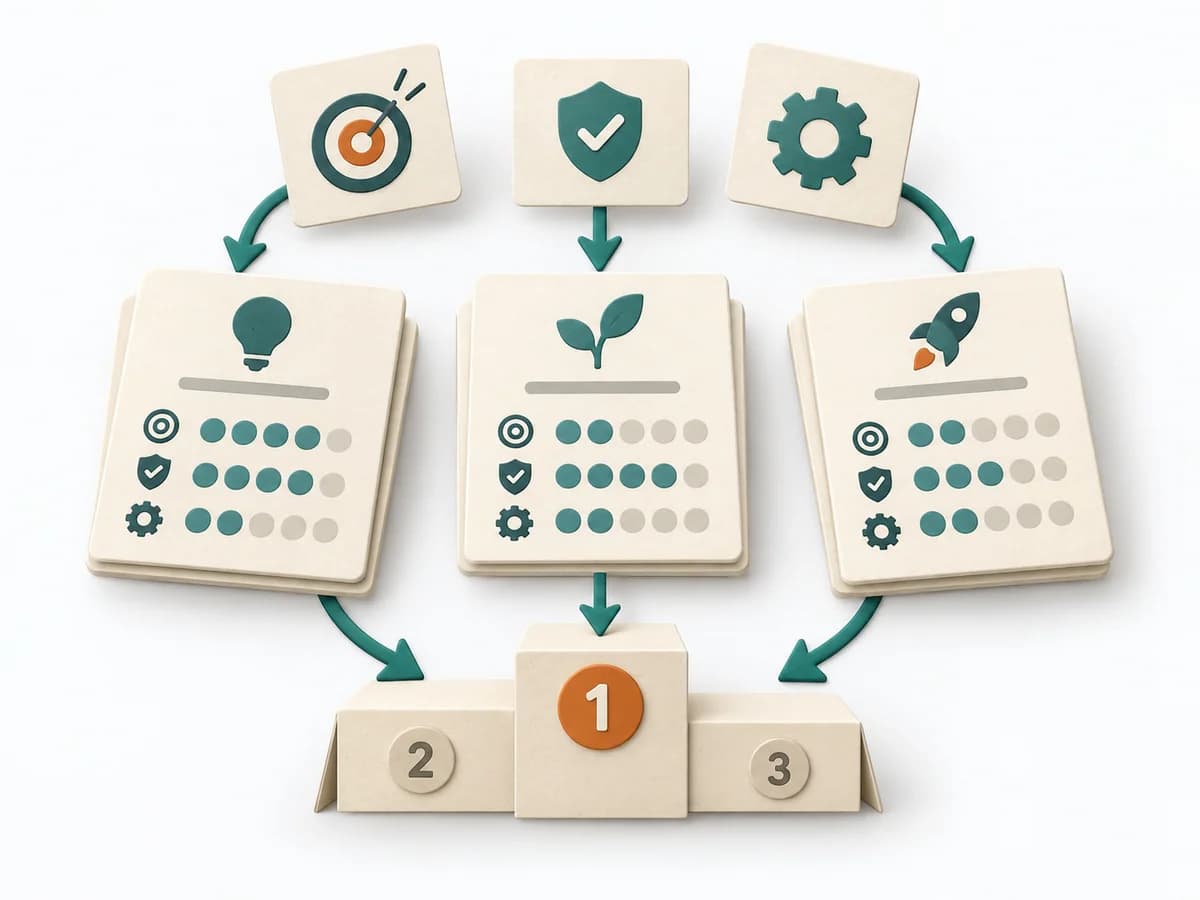 Product Strategy ICE Scoring |  Architecture ATAM (Architecture Tradeoff Analysis Method) |
|---|---|---|---|---|
Purposedifferent | SAAM helps teams judge an architecture’s suitability for selected tasks and changes. It is particularly useful for examining modifiability and comparing architecture alternatives with clear reasoning. | Helps clarify scope, order, and delivery flow in concrete terms. It makes work, constraints, and sequence manageable. The result is captured as a Cost of Delay table and prioritization sequence. | When ideas need sorting quickly, it condenses impact, confidence, and effort into one compact score. It connects customer value, product logic, and decision priorities. The result is captured as an ICE table and top-ideas list. | ATAM helps teams weigh architecture decisions when quality goals compete. The team considers business goals, stakeholder expectations, and technical decisions together. The evaluation shows which risks need further investigation. |
Complexitydifferent | High | High | Low | High |
Timedifferent | Preparation, scenario analysis, and findings review; effort depends on scope | 90-180 min | 30-60 min | Several meetings plus preparation and analysis; total effort depends on scope |
Participantsdifferent | Architecture experts and stakeholders for scenarios and weighting | 3-8 | 2-8 | Evaluation team, architects, and relevant stakeholders |
Formatdifferent | Workshop + async | Workshop | Workshop + async | Workshop + async |
Outputdifferent | Domain functions mapped to components and connections, Quality attributes and evaluation criteria, Typical tasks and their effects on the architecture, Reasoned evaluation or comparison of alternatives | CoD Table, Prioritization Sequence | ICE Table, Top Idea List | Prioritized quality scenarios in a utility tree, Architecture risks with reasoning and assumptions, Sensitivity and trade-off points, Findings report with open investigations |
Tagsno overlap | ArchitectureChangeAnalysisComparisonQuality | PrioritizationDeliveryEconomicsDecision | PrioritizationScoringGrowthDecision | ArchitectureQualityRiskTradeoffsStakeholders |