View methods side by side.
Choose up to four methods. Add them using the search and share the comparison by copying its link.
| Criterion | 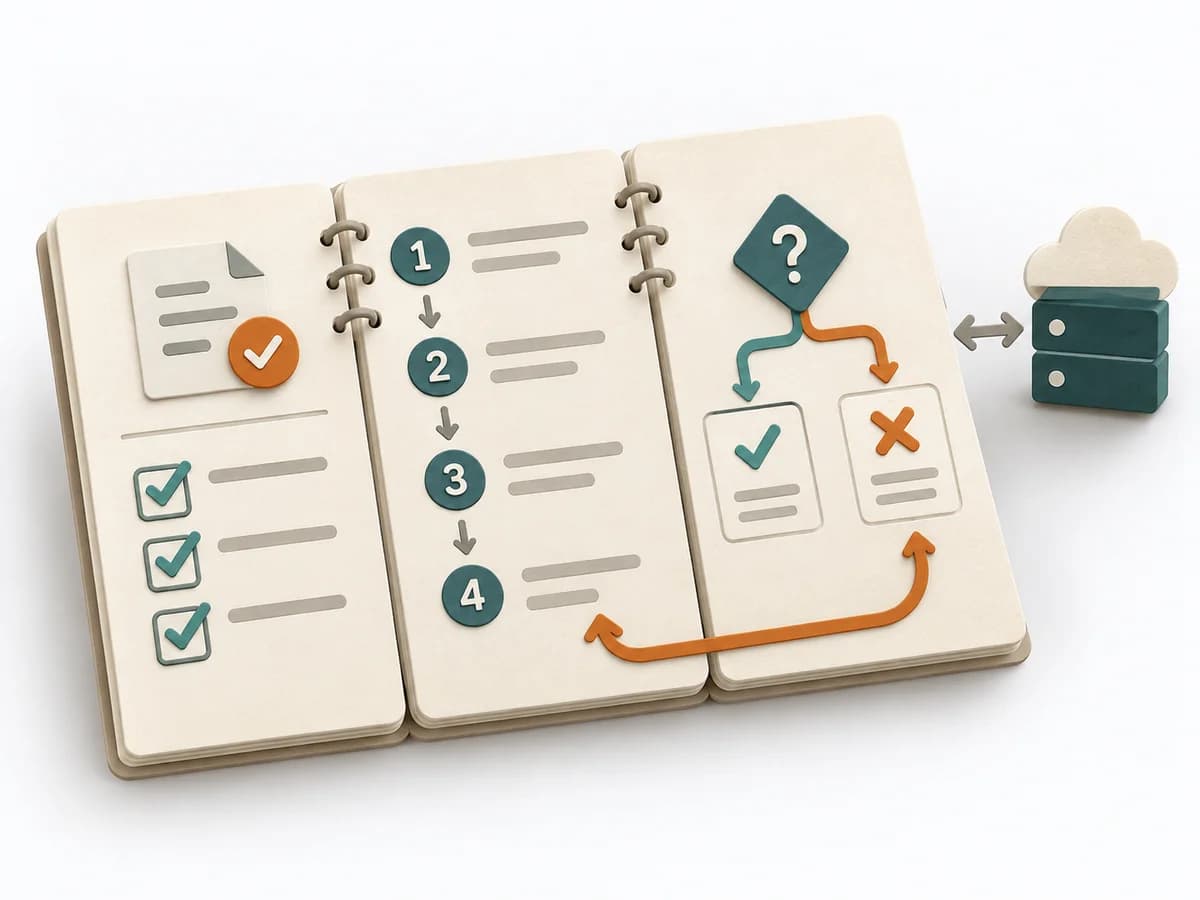 Operations Runbook | 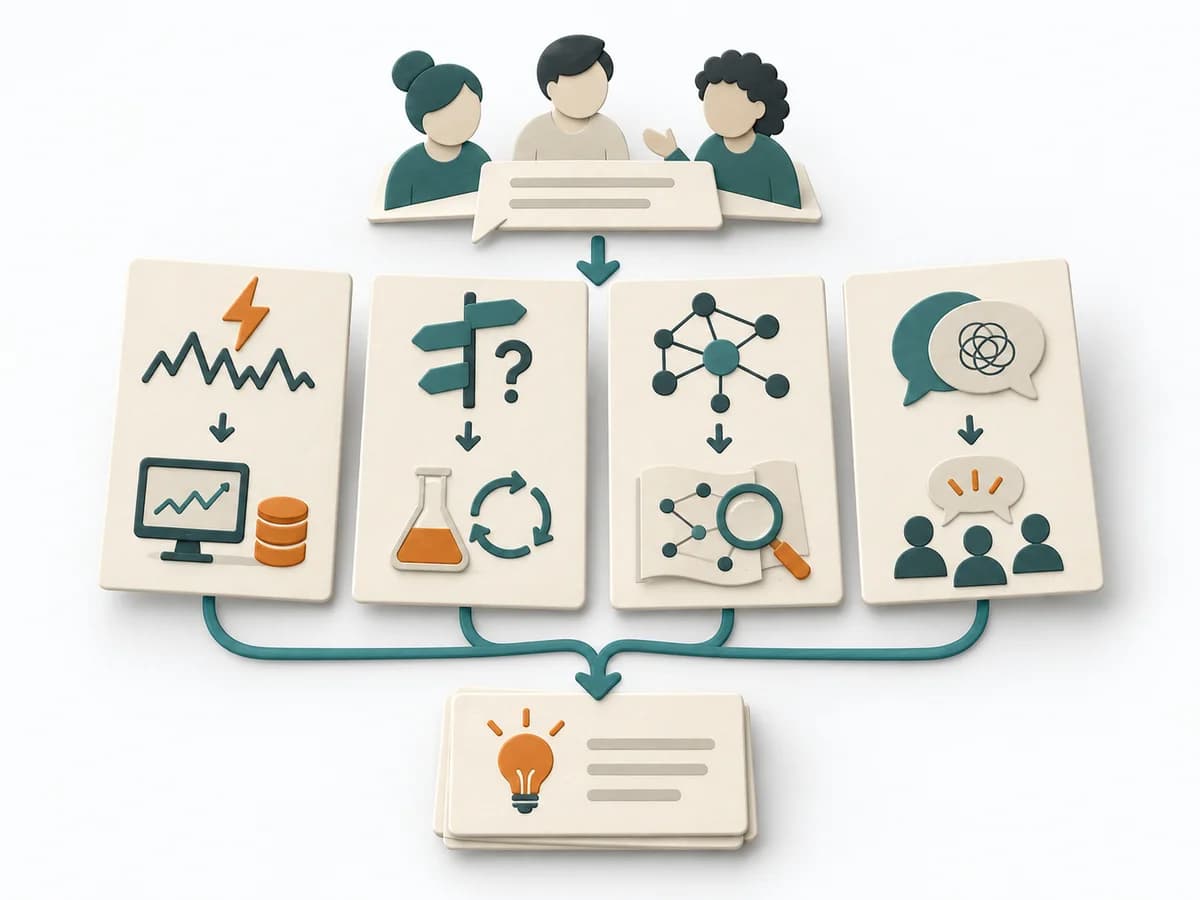 Systems Thinking VUCA Scan |  Systems Thinking Leverage Points | 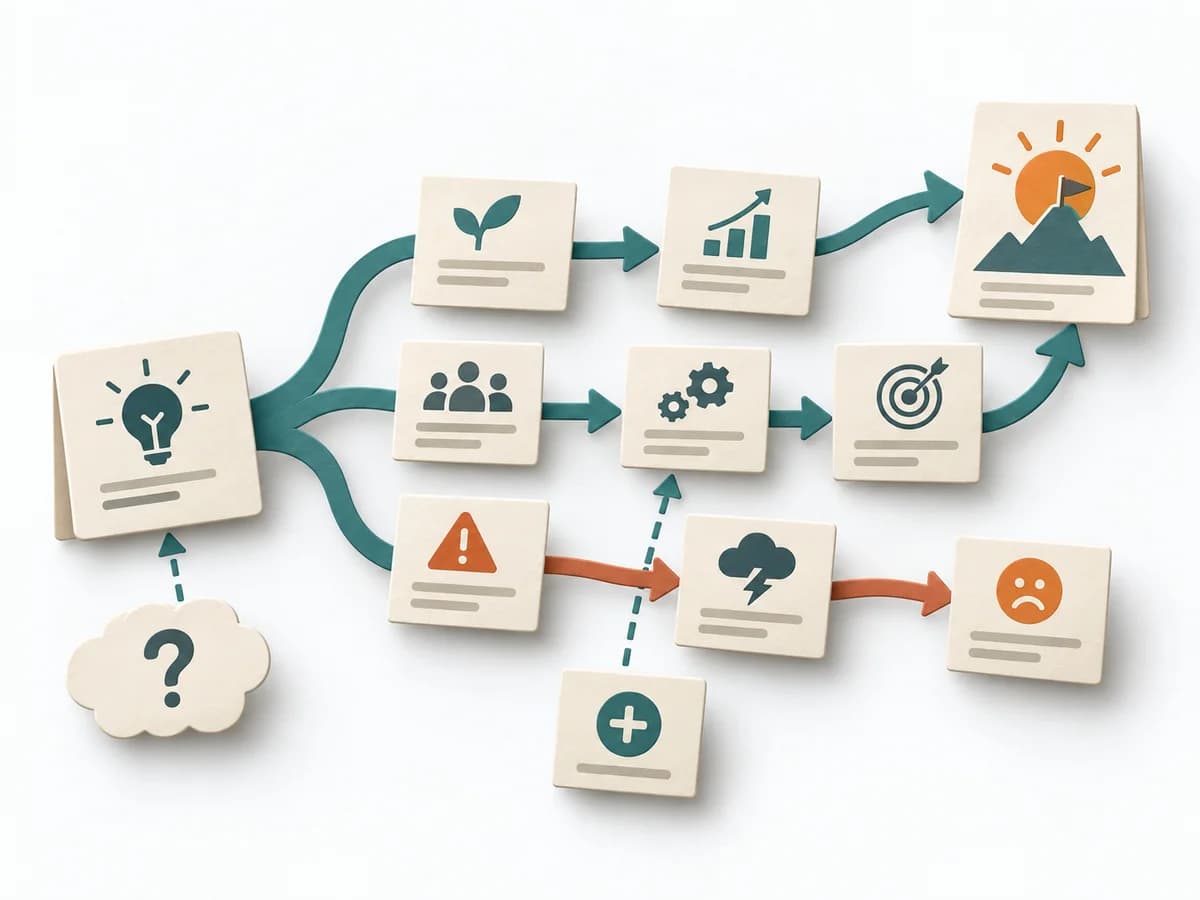 Systems Thinking Future Reality Tree |
|---|---|---|---|---|
Purposedifferent | For recurring operational tasks or incidents, the method keeps solid action logic ready. It reduces uncertainty when time pressure, role changes, or rare situations demand fast access. | The VUCA Scan helps read difficult situations more precisely. Instead of treating unclarity as generally complicated, the method separates fast change, missing knowledge, systemic entanglement, and ambiguous interpretation. | Leverage Points show exactly where interventions in a system produce a disproportionate effect. It draws relationships, patterns, and feedback loops. The result is captured as a leverage map and action strategy. | A Future Reality Tree shows how desired actions are meant to lead to a better system state. The method checks whether a path of change holds together logically before time flows into implementation. |
Complexitydifferent | Low | Low | High | High |
Timedifferent | 20-60 min | 30-90 min | Half day | 2-4 h |
Participantsdifferent | 1-4 | 1-10 | 3-12 | 3-8 |
Formatdifferent | Async | Workshop + async | Workshop | Workshop |
Outputdifferent | Runbook, Checklist, Escalation Path | VUCA Map, Response Options, Signal and Learning Plan | Leverage Map, Action Strategy | Future Reality Tree, Negative Branches, Assumption List, Improved Injections |
Tagsno overlap | OperationsReliabilityDocumentation | SensemakingUncertaintyComplexityStrategyForesight | Systems thinkingChangeStrategy | Theory of ConstraintsSystems thinkingChange |