View methods side by side.
Choose up to four methods. Add them using the search and share the comparison by copying its link.
| Criterion | 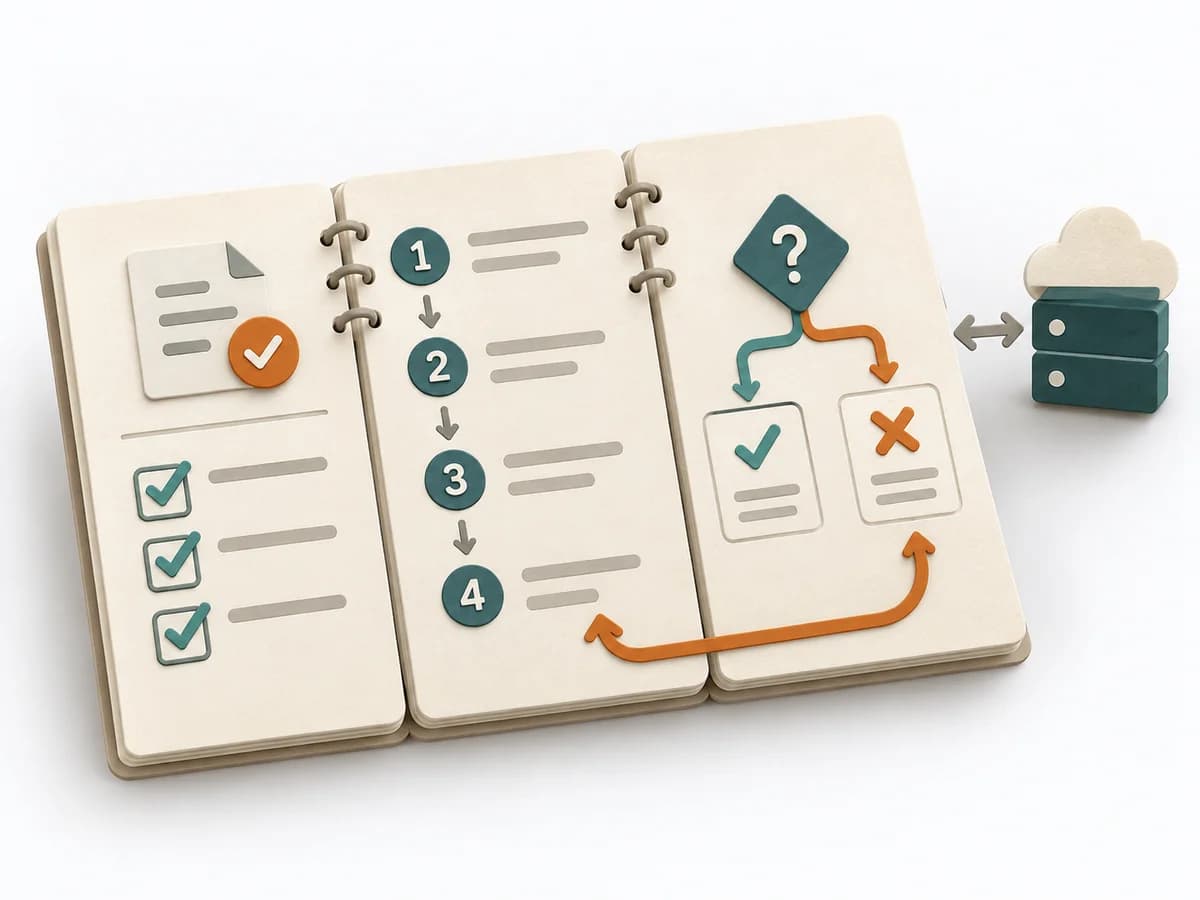 Operations Runbook | 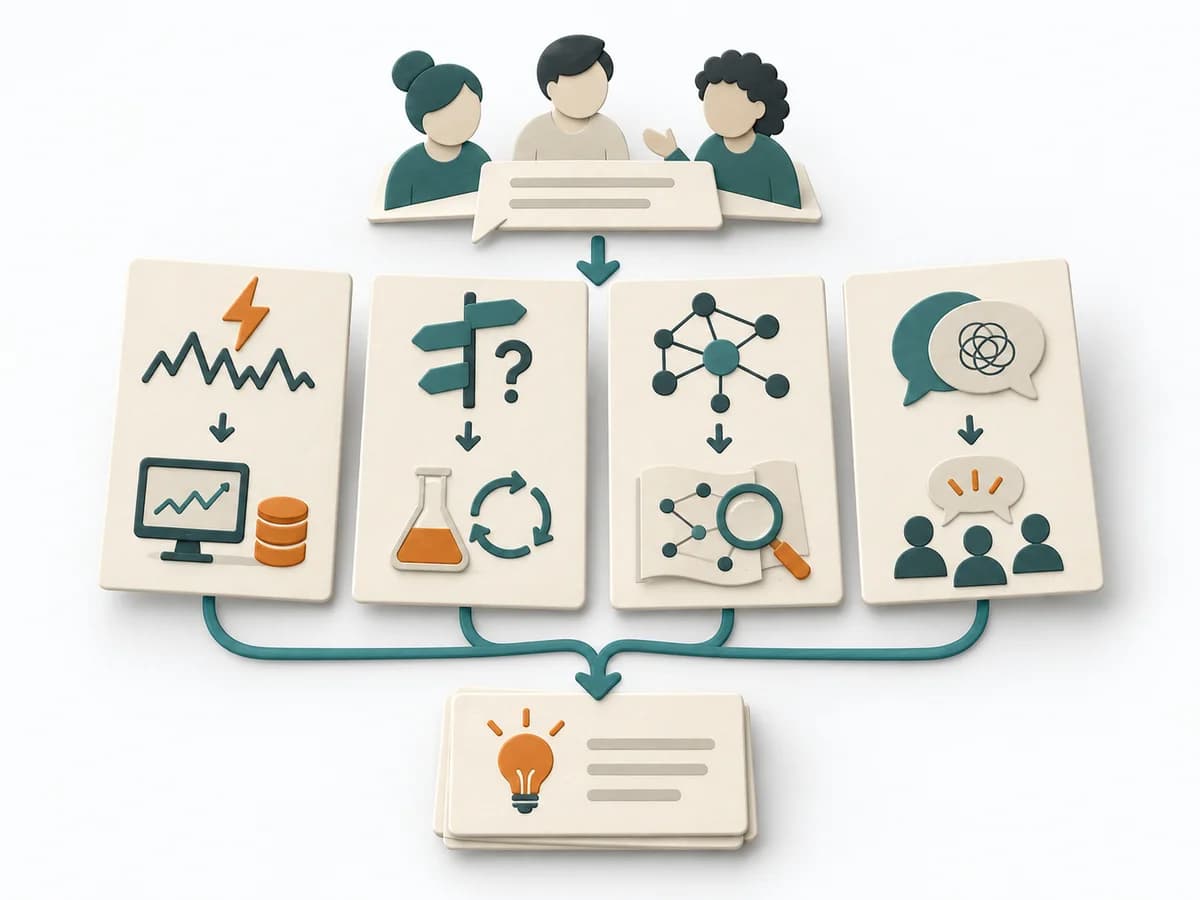 Systems Thinking VUCA Scan |  Decision Making Delphi Method |  Product Strategy DIBB |
|---|---|---|---|---|
Purposedifferent | For recurring operational tasks or incidents, the method keeps solid action logic ready. It reduces uncertainty when time pressure, role changes, or rare situations demand fast access. | The VUCA Scan helps read difficult situations more precisely. Instead of treating unclarity as generally complicated, the method separates fast change, missing knowledge, systemic entanglement, and ambiguous interpretation. | When knowledge is distributed and direct dominance should be avoided, groups quickly fall under the sway of their opinion leaders. The Delphi Method gathers assessments iteratively and gradually brings expert judgments closer together. | DIBB helps clarify target groups, value, goals, and priorities by making the logic behind a decision explicit. It captures results as a DIBB document, belief list, bet list, and learning report. |
Complexitydifferent | Low | Low | High | Low |
Timedifferent | 20-60 min | 30-90 min | 1-4 Wochen | 1-2 h |
Participantsdifferent | 1-4 | 1-10 | 6-30 Experten | 2-8 |
Formatdifferent | Async | Workshop + async | Async | Workshop + async |
Outputdifferent | Runbook, Checklist, Escalation Path | VUCA Map, Response Options, Signal and Learning Plan | Expert Forecast, Consensus Range, Assumption Notes | DIBB document, Belief list, Bet list, Learning report |
Tagsno overlap | OperationsReliabilityDocumentation | SensemakingUncertaintyComplexityStrategyForesight | ForecastingExpertsDecisionStrategy | StrategyDecisionAssumptionsHypothesis |