View methods side by side.
Choose up to four methods. Add them using the search and share the comparison by copying its link.
| Criterion | 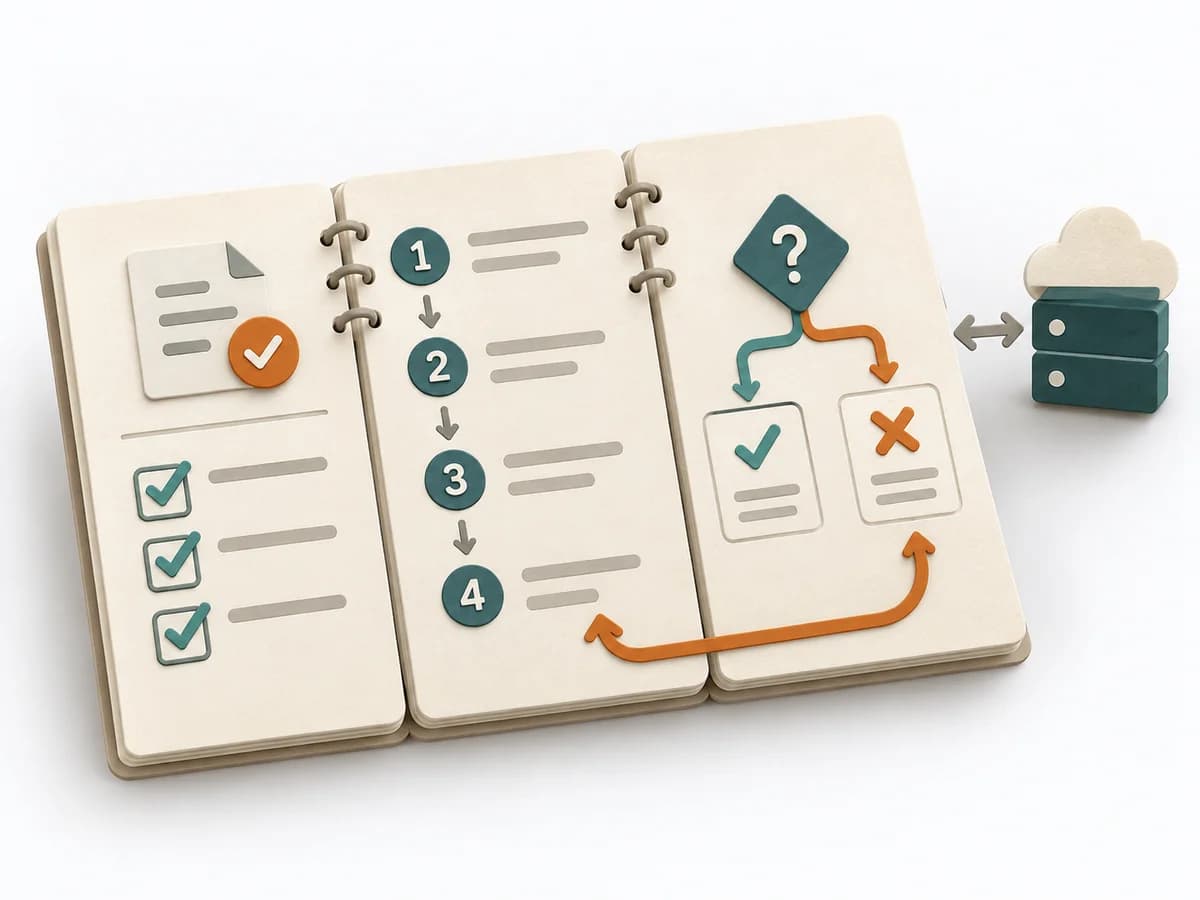 Operations Runbook |  Business Strategy Scenario Planning |  DevOps Blameless Postmortem |  Operations ALPEN Method |
|---|---|---|---|---|
Purposedifferent | For recurring operational tasks or incidents, the method keeps solid action logic ready. It reduces uncertainty when time pressure, role changes, or rare situations demand fast access. | Scenario Planning opens the view to several plausible futures instead of a single forecast. The method protects strategies from depending on too narrow an expected path. | After an incident with damage or a near miss, the method creates a sober field for learning without assigning blame. It directs attention to the course of events, conditions, and effective countermeasures. | With an overloaded day full of too many tasks, a realistic picture of the day emerges. The method connects estimating, deciding, and buffer thinking so planning fits available energy and time. |
Complexitydifferent | Low | High | Medium | Low |
Timedifferent | 20-60 min | 0.5-2 Tage | 30-90 min | 10-20 min daily |
Participantsdifferent | 1-4 | 4-12 | 3-12 | 1 |
Formatdifferent | Async | Workshop | Workshop + async | Async |
Outputdifferent | Runbook, Checklist, Escalation Path | Scenario Set, Strategic Implications, Robust Options | Postmortem Doc, Action Items, Timeline | Daily Plan, Time Estimates, Review Notes |
Tagsno overlap | OperationsReliabilityDocumentation | StrategyUncertaintyPlanning | Site Reliability EngineeringIncidentLearningReliability | PlanningTime managementProductivityOperations |