View methods side by side.
Choose up to four methods. Add them using the search and share the comparison by copying its link.
| Criterion | 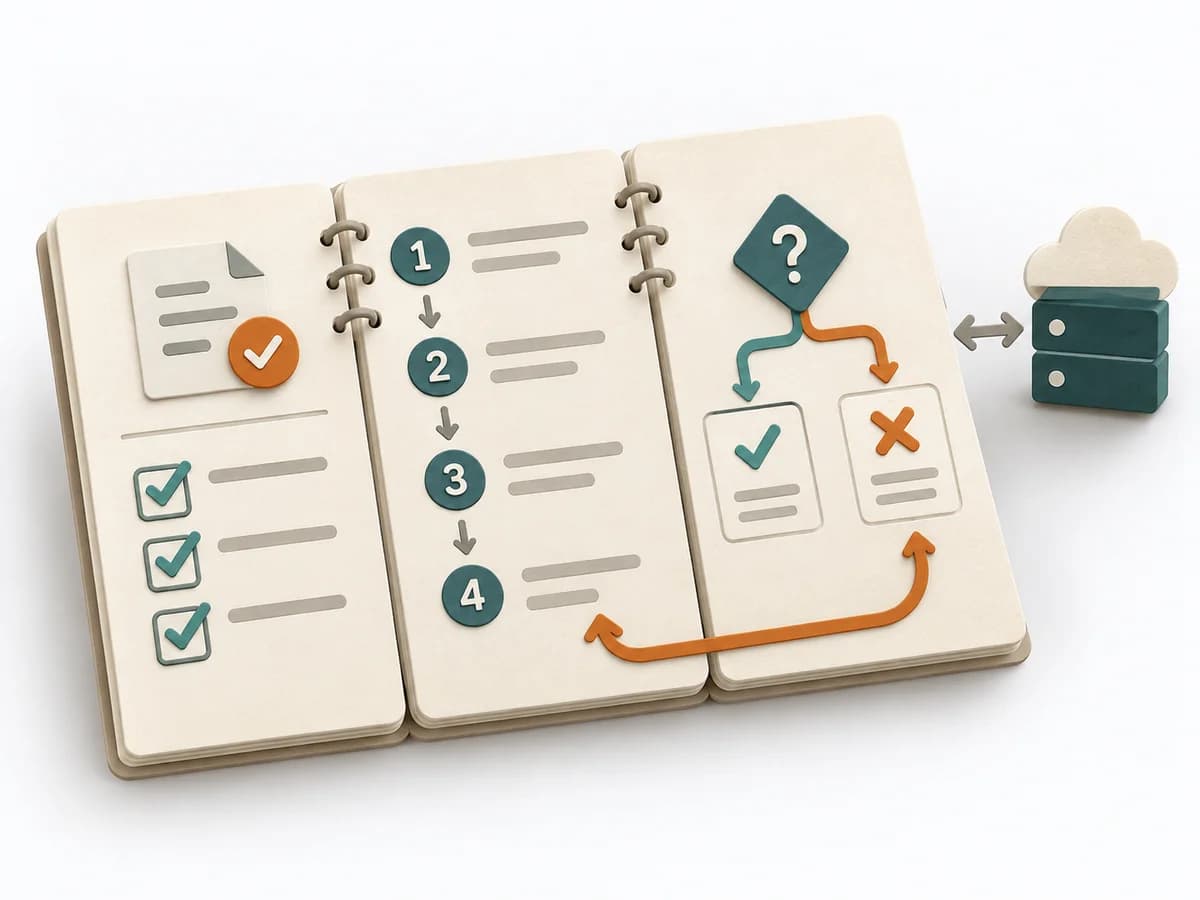 Operations Runbook |  Operations Gemba Walk |  Architecture C4 Model |  Architecture Architecture Decision Record |
|---|---|---|---|---|
Purposedifferent | For recurring operational tasks or incidents, the method keeps solid action logic ready. It reduces uncertainty when time pressure, role changes, or rare situations demand fast access. | When there is uncertainty about the real course of a process, the method brings observation to the place where work happens. It combines perception, follow-up questions, and process knowledge so decisions rest on actual workflows instead of assumptions. | The C4 Model makes a system legible across several resolution levels, from context down to code. It suits situations where different audiences need to understand the same architecture from different altitudes. | An ADR permanently records an architecture decision with context, trade-offs, and consequence. It creates continuity for later changes because the decision path stays traceable. |
Complexitysame | Low | Low | Low | Low |
Timedifferent | 20-60 min | 30-120 min | 1-4 h | 15-45 min |
Participantsdifferent | 1-4 | 2-6 | 1-5 | 1-3 |
Formatdifferent | Async | Workshop | Workshop + async | Async |
Outputdifferent | Runbook, Checklist, Escalation Path | Observation Notes, Improvement Ideas | Context Diagram, Container Diagram, Component Diagram | ADR File, Decision Log, Rationale |
Tagsno overlap | OperationsReliabilityDocumentation | LeanObservationProcessOperations | ArchitectureCommunicationVisualization | ArchitectureRationaleDocumentationGovernance |