View methods side by side.
Choose up to four methods. Add them using the search and share the comparison by copying its link.
| Criterion |  Operations Root Cause Analysis | 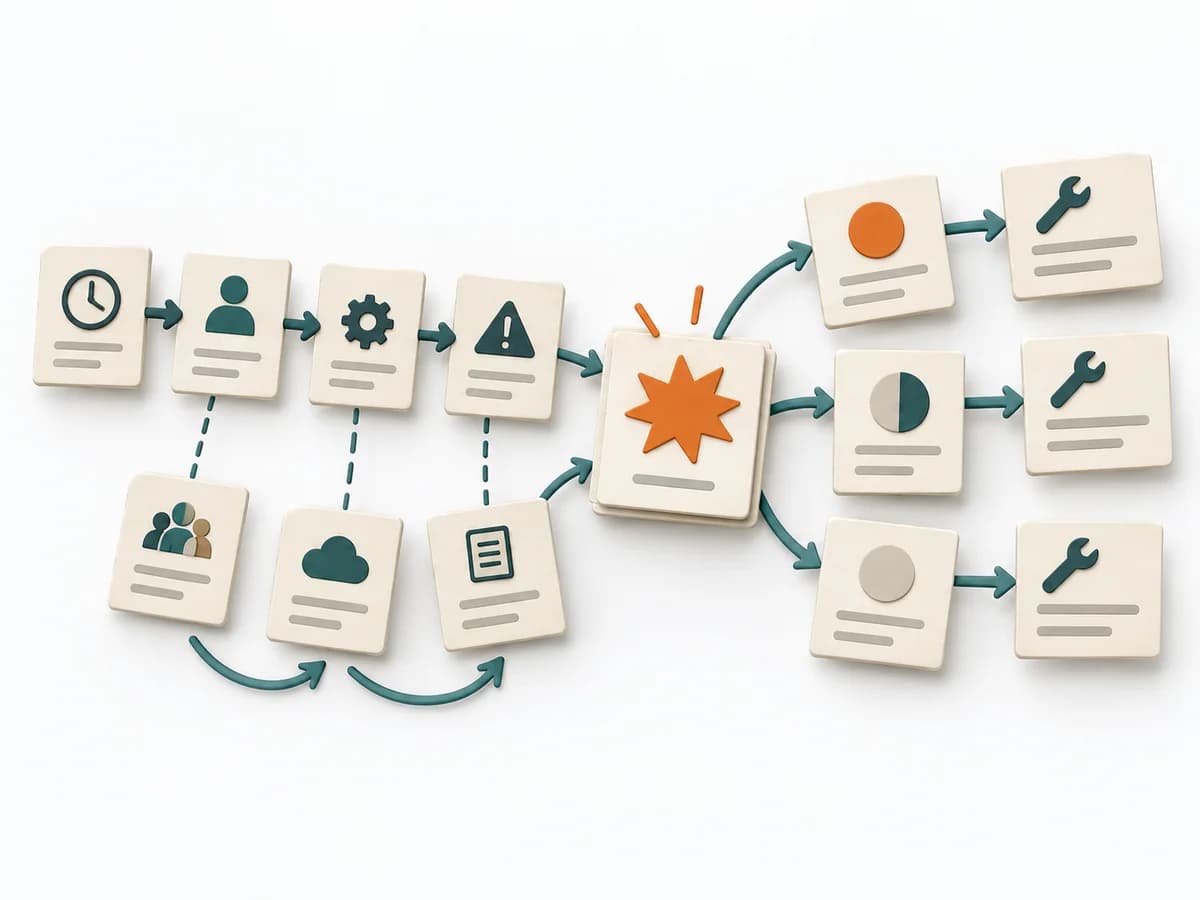 Operations Causal Factor Analysis |  Facilitation Power Interest Grid |  Facilitation Alignment Mapping |
|---|---|---|---|---|
Purposedifferent | When a problem keeps recurring and the cause stays unclear, the method exposes the underlying mechanism. It separates symptom, guess, and robust explanation from one another. | For an event with a complicated course, the method breaks down the contributing factors along the timeline. It shows how conditions, decisions, and reactions together produce a course of events. | When many stakeholders compete for attention at once, the Power Interest Grid sorts them by influence and stake. It turns individual contributions into a visible selection. The result is captured as a Power Interest Grid and a stakeholder-specific strategy. | When several people work toward one goal but hold different mental maps, Alignment Mapping makes the discrepancies visible. It arranges goals, assumptions, and priorities so shared direction becomes verifiable. |
Complexitydifferent | Medium | High | Low | Medium |
Timedifferent | 1-4 h | 2-6 h | 30-60 min | 1-2 h |
Participantsdifferent | 3-8 | 3-10 | 2-8 | 4-12 |
Formatdifferent | Workshop + async | Workshop + async | Workshop | Workshop |
Outputdifferent | Problem Statement, Cause Hypotheses, Confirmed Causes, Action Plan | Event Timeline, Causal Factor Chart, Cause List, Corrective Actions | Power Interest Grid, Strategy per Stakeholder | Alignment Map, Open Issues, Decision Questions |
Tagsno overlap | Root causeProblem solvingQualityIncident | CausalityIncidentRoot causeTimeline | StakeholdersFacilitationAlignmentPlanning | AlignmentStakeholdersStrategyFacilitation |