View methods side by side.
Choose up to four methods. Add them using the search and share the comparison by copying its link.
| Criterion |  Operations Root Cause Analysis |  Architecture Architecture Decision Record | 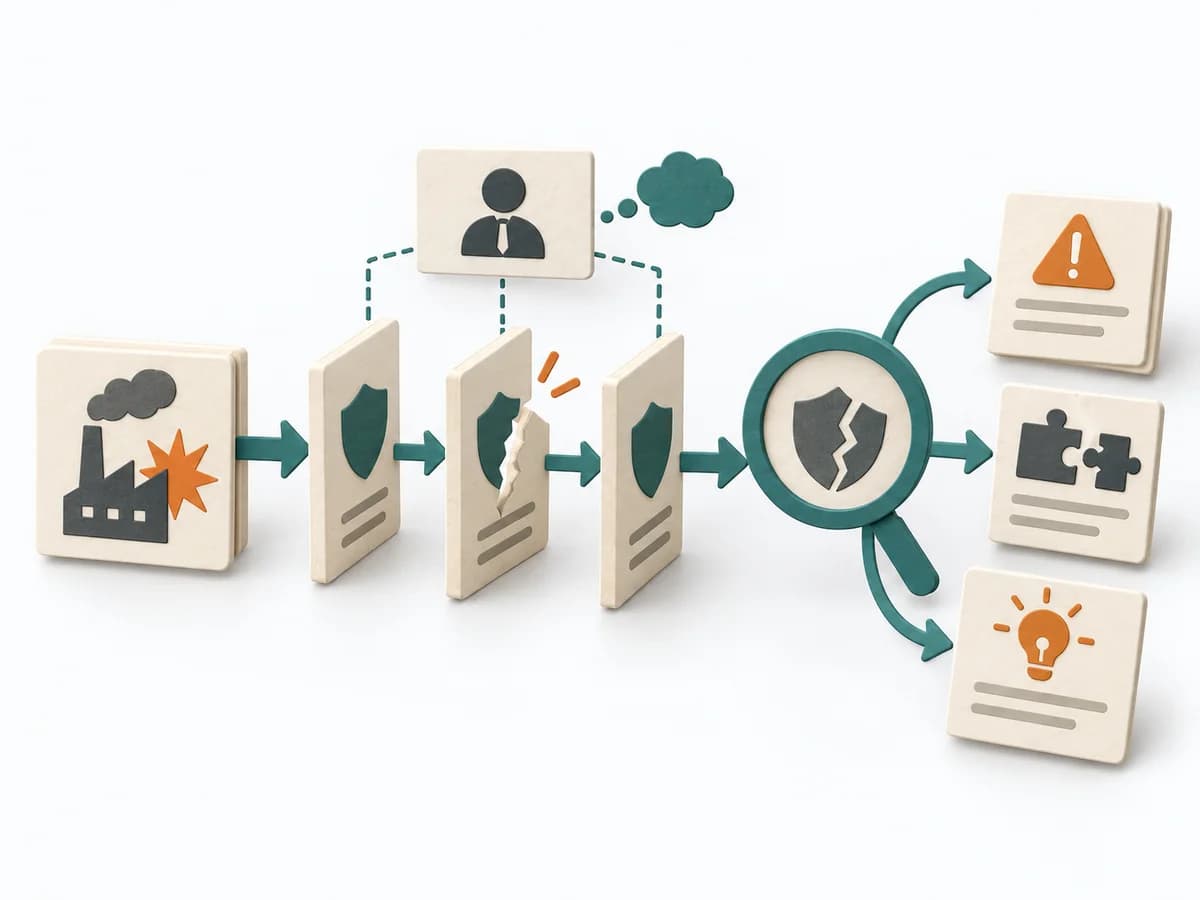 Operations MORT Analysis |  Operations 5 Whys |
|---|---|---|---|---|
Purposedifferent | When a problem keeps recurring and the cause stays unclear, the method exposes the underlying mechanism. It separates symptom, guess, and robust explanation from one another. | An ADR permanently records an architecture decision with context, trade-offs, and consequence. It creates continuity for later changes because the decision path stays traceable. | For a safety-relevant event or a system with high protection requirements, the method examines where controls failed. It exposes both technical and organizational gaps. | For a single, hard-to-explain deviation, the method exposes the causal chain behind the visible symptom. It keeps the cause open until a controllable condition emerges instead of a mere description. |
Complexitydifferent | Medium | Low | High | Low |
Timedifferent | 1-4 h | 15-45 min | Mehrere Tage bis Wochen | 15-30 min |
Participantsdifferent | 3-8 | 1-3 | 2-6 | 2-6 |
Formatdifferent | Workshop + async | Async | Workshop + async | Workshop |
Outputdifferent | Problem Statement, Cause Hypotheses, Confirmed Causes, Action Plan | ADR File, Decision Log, Rationale | MORT Worksheets, Findings per Branch, Corrective Actions, Systemic Recommendations | Root cause notes, Countermeasures |
Tagsno overlap | Root causeProblem solvingQualityIncident | ArchitectureRationaleDocumentationGovernance | Root causeSafetySystemicIncident | Root causeIncidentLeanProblem solving |