View methods side by side.
Choose up to four methods. Add them using the search and share the comparison by copying its link.
| Criterion |  Agile ROAM Board | 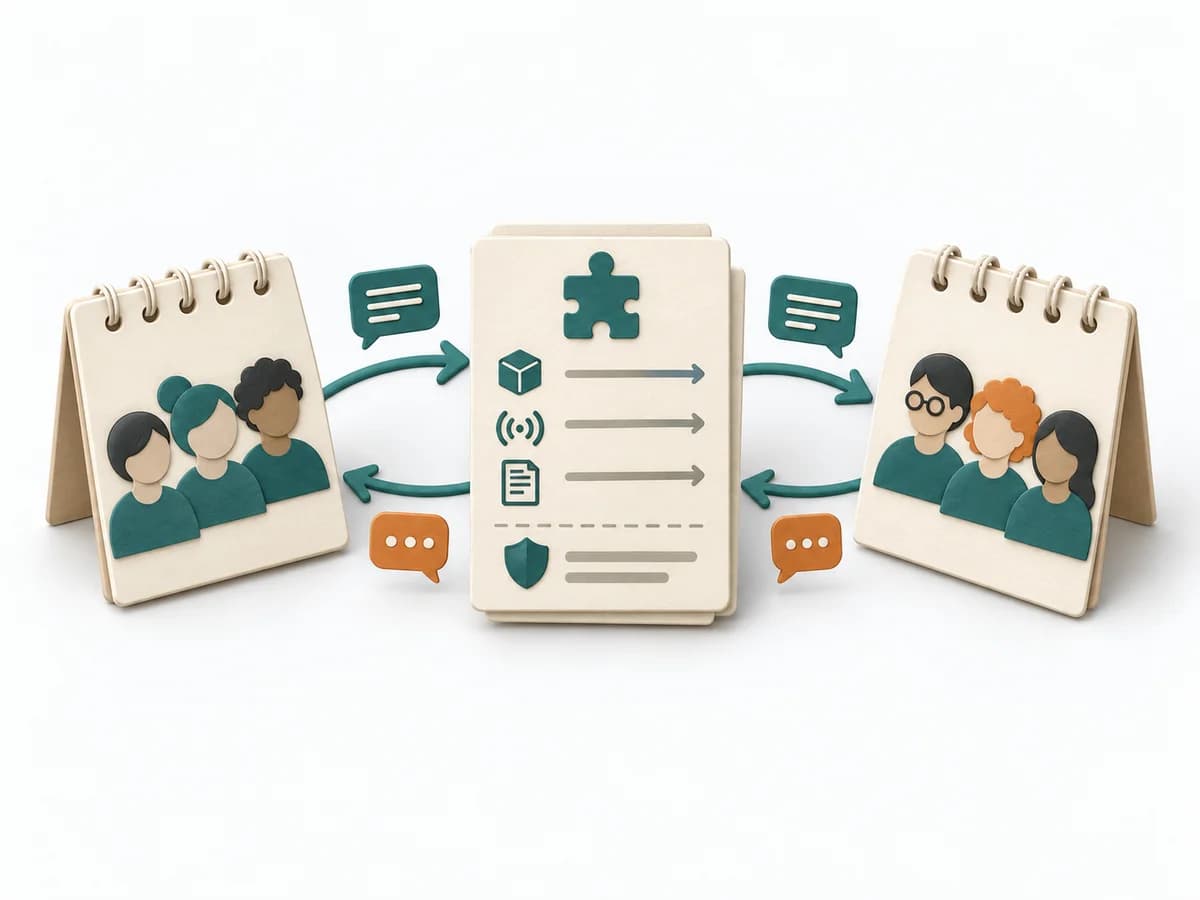 Team Design Team API |  Facilitation Stakeholder Salience Model |  Facilitation Expectation Mapping |
|---|---|---|---|---|
Purposedifferent | When work needs to move between different states or columns, it makes that movement and its handoffs legible. It sorts work by value, risk, and delivery ability. The result is captured as a ROAM Board and an Owner List. | When expectations between teams stay fuzzy, it describes how a team can be reached, used, and held accountable. It clarifies responsibility, interaction, and load between teams. The result is captured as a Team API document. | When stakeholders appear to matter very differently, the Stakeholder Salience Model rates their actual priority through power, legitimacy, and urgency. It turns individual contributions into a visible selection. The result is captured as a Salience diagram and a class-based strategy. | When roles, interfaces, or projects fail because of differing expectations, Expectation Mapping surfaces these differences. It shows what each side takes for granted and where the pictures diverge. |
Complexitydifferent | Low | Low | Medium | Low |
Timedifferent | 20-40 min initial, dann laufend | Half day initial, dann laufend | 60-90 min | 45-90 min |
Participantsdifferent | 3-15 | Ein Team plus Stakeholder | 3-6 | 3-12 |
Formatdifferent | Workshop + async | Workshop + async | Workshop | Workshop |
Outputdifferent | ROAM Board, Owner List | Team API Document | Salience Diagram, Strategy per Class | Expectation Map, Alignment Notes, Agreements |
Tags1 shared | RiskAgileTrackingAlignment | TeamAlignmentCommunicationService | StakeholdersFacilitationAlignmentGovernance | AlignmentStakeholdersTeam |