View methods side by side.
Choose up to four methods. Add them using the search and share the comparison by copying its link.
| Criterion |  Agile ROAM Board | 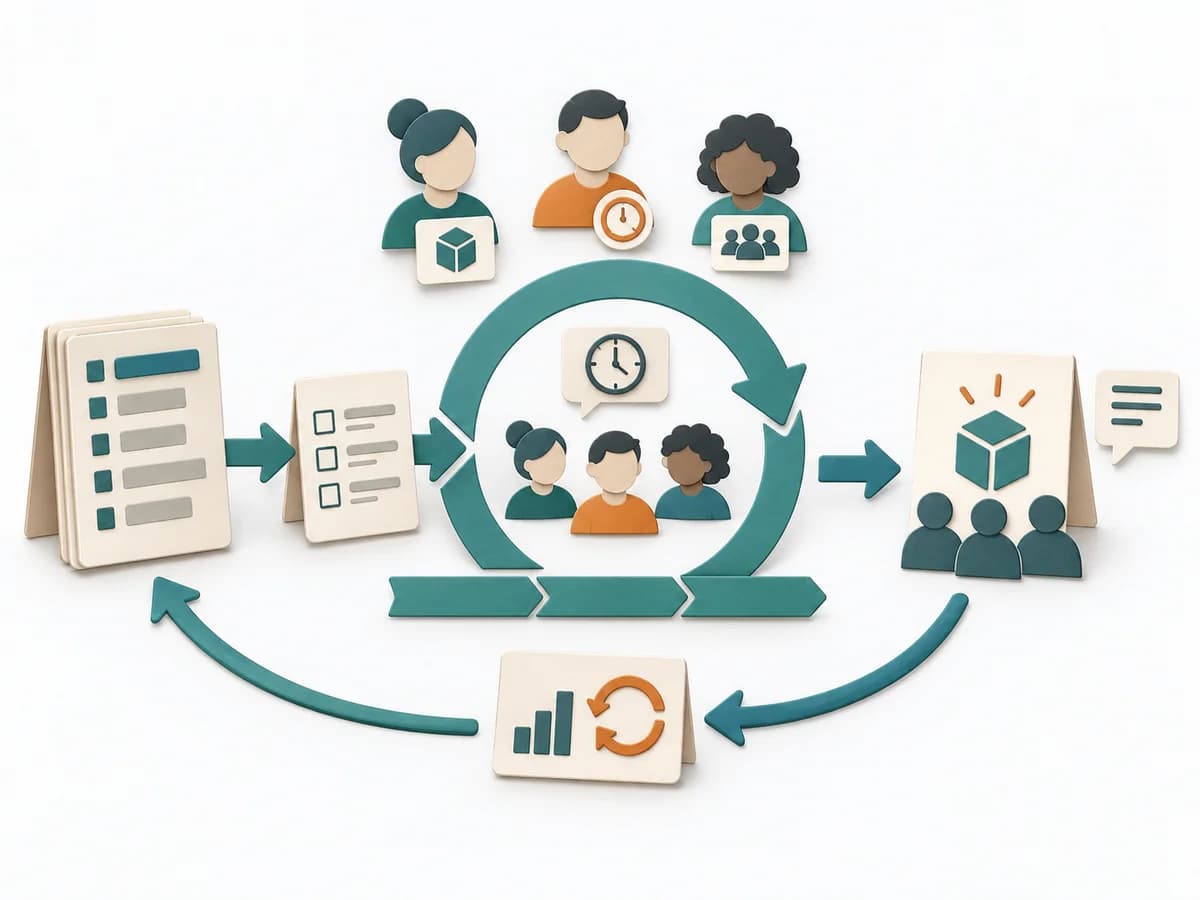 Agile Scrum |  Delivery RAID Log |  Facilitation Stakeholder Salience Model |
|---|---|---|---|---|
Purposedifferent | When work needs to move between different states or columns, it makes that movement and its handoffs legible. It sorts work by value, risk, and delivery ability. The result is captured as a ROAM Board and an Owner List. | When a team needs to work in a fixed delivery rhythm, it stabilizes cadence, responsibility, and feedback loops. It makes collaboration reliable across sprint boundaries. | Helps clarify scope, sequence, and delivery flow in concrete terms. It makes work, boundaries, and order steerable. The result is captured as a RAID Log and a source for status reporting. | When stakeholders appear to matter very differently, the Stakeholder Salience Model rates their actual priority through power, legitimacy, and urgency. It turns individual contributions into a visible selection. The result is captured as a Salience diagram and a class-based strategy. |
Complexitydifferent | Low | Medium | Low | Medium |
Timedifferent | 20-40 min initial, dann laufend | 1-4 Wochen je Sprint, laufend | 30 min Setup, dann laufend | 60-90 min |
Participantsdifferent | 3-15 | 3-10 (Scrum Team) | 1-3 maintaining, briefing for everyone | 3-6 |
Formatdifferent | Workshop + async | Workshop + async | Async | Workshop |
Outputdifferent | ROAM Board, Owner List | Product Backlog, Sprint Backlog, Increment, Sprint Goal | RAID Log, Status Report Source | Salience Diagram, Strategy per Class |
Tagsno overlap | RiskAgileTrackingAlignment | AgileIterationCadence | RiskTrackingStakeholdersGovernance | StakeholdersFacilitationAlignmentGovernance |