View methods side by side.
Choose up to four methods. Add them using the search and share the comparison by copying its link.
| Criterion |  Agile ROAM Board |  Agile Scrum |  Decision Making Decision Framing Workshop | 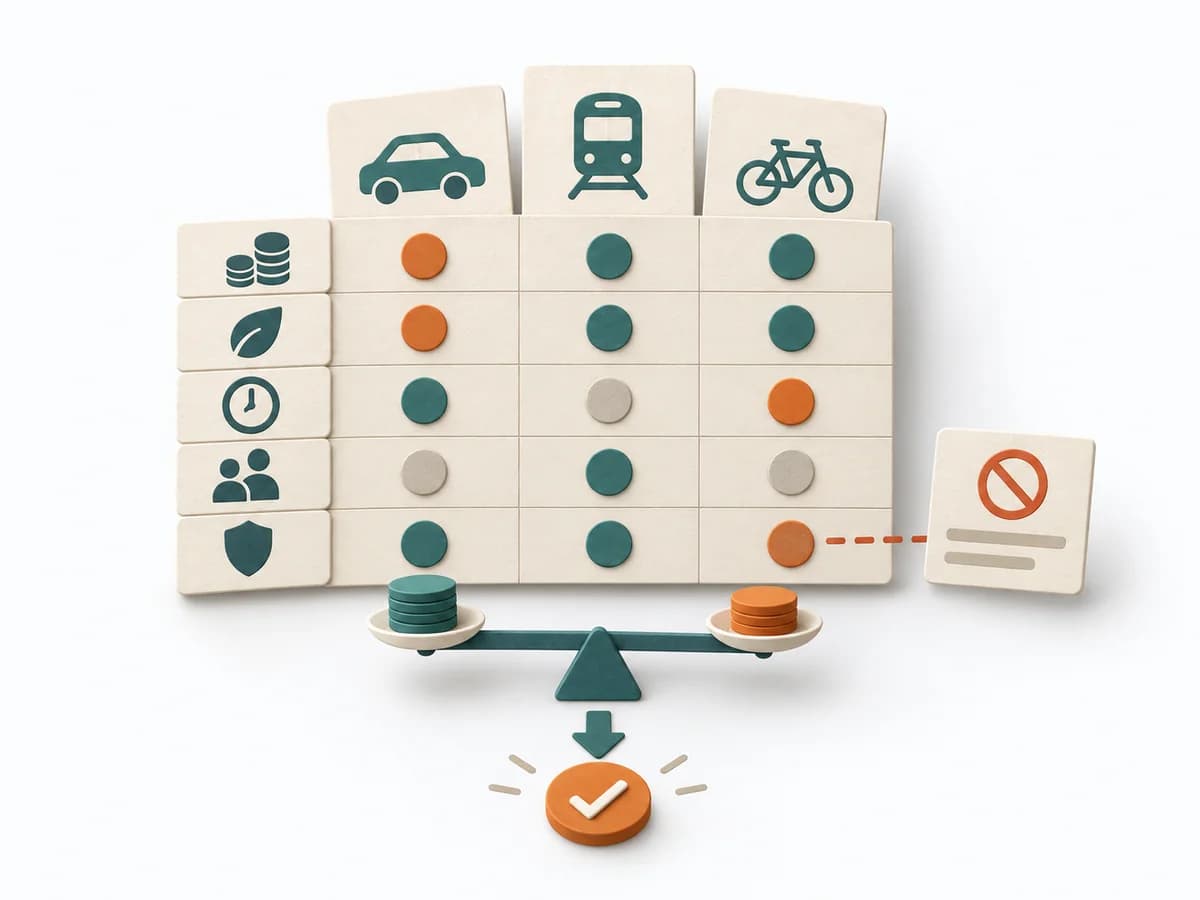 Decision Making Trade-off Analysis |
|---|---|---|---|---|
Purposedifferent | When work needs to move between different states or columns, it makes that movement and its handoffs legible. It sorts work by value, risk, and delivery ability. The result is captured as a ROAM Board and an Owner List. | When a team needs to work in a fixed delivery rhythm, it stabilizes cadence, responsibility, and feedback loops. It makes collaboration reliable across sprint boundaries. | When a decision is poorly framed, even good answers deliver little value. A Decision Framing Workshop sharpens the problem, goal, and boundaries before the actual weighing begins. | With limited resources, quality, speed, cost, and risk almost always compete with each other. Trade-off Analysis makes these tensions explicit and prevents decisions from producing hidden side effects. |
Complexitydifferent | Low | Medium | Medium | Medium |
Timedifferent | 20-40 min initial, dann laufend | 1-4 Wochen je Sprint, laufend | 60-120 min | 45-120 min |
Participantsdifferent | 3-15 | 3-10 (Scrum Team) | 4-10 | 2-8 |
Formatdifferent | Workshop + async | Workshop + async | Workshop | Workshop + async |
Outputdifferent | ROAM Board, Owner List | Product Backlog, Sprint Backlog, Increment, Sprint Goal | Decision Frame, Decision Question, Criteria List, Evidence Plan | Trade-off Matrix, Criteria List, Decision Rationale, Accepted Downsides |
Tagsno overlap | RiskAgileTrackingAlignment | AgileIterationCadence | Decision framingAlignmentCriteriaOptions | TradeoffsDecisionCriteriaOptions |