View methods side by side.
Choose up to four methods. Add them using the search and share the comparison by copying its link.
| Criterion |  Agile ROAM Board | 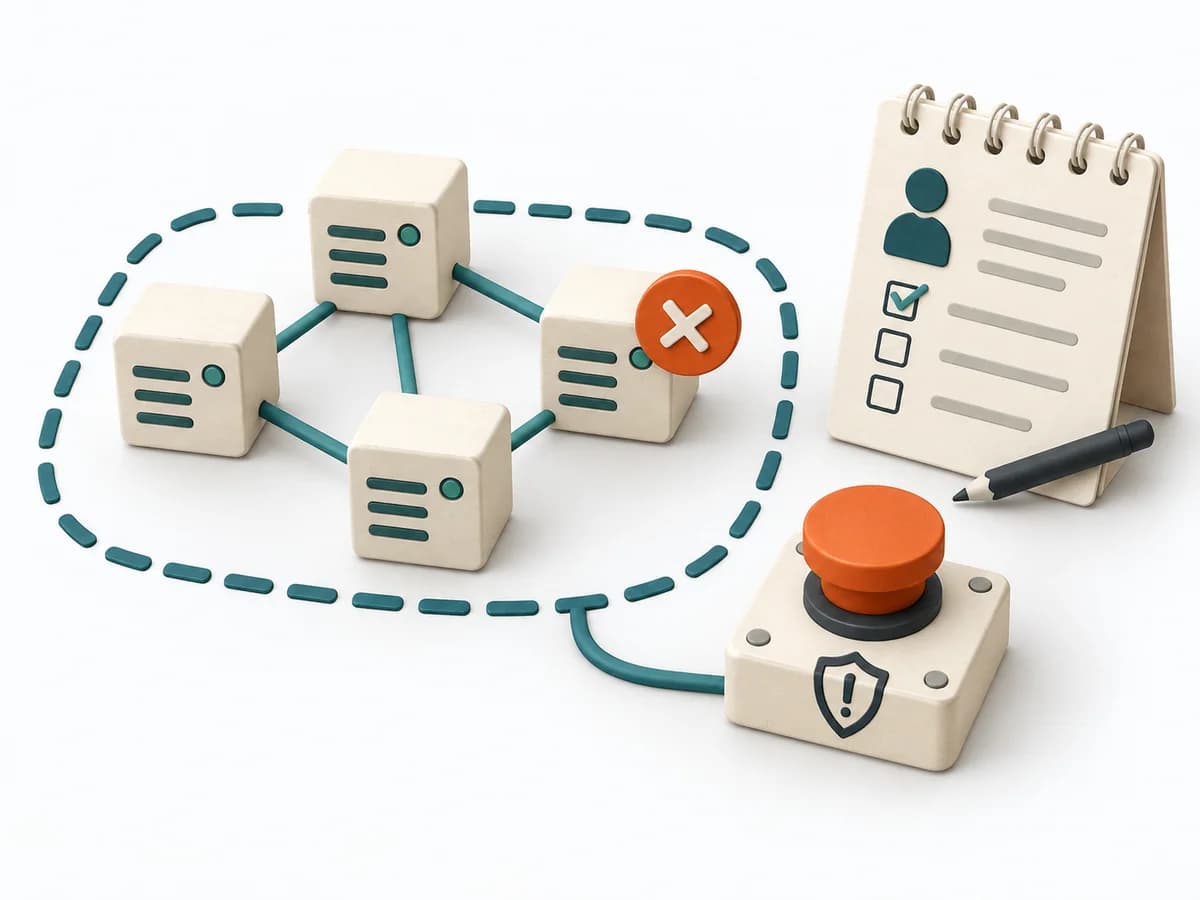 DevOps Game Day |  DevOps Blameless Postmortem |  Operations Failure Mode and Effects Analysis |
|---|---|---|---|---|
Purposedifferent | When work needs to move between different states or columns, it makes that movement and its handoffs legible. It sorts work by value, risk, and delivery ability. The result is captured as a ROAM Board and an Owner List. | In preparing for rare incidents, the method tests response capability under controlled conditions. It shows where assumptions about stability, roles, and recovery are too optimistic. | After an incident with damage or a near miss, the method creates a sober field for learning without assigning blame. It directs attention to the course of events, conditions, and effective countermeasures. | For a process, product, or service with noticeable failure risks, the method assesses possible failure modes in advance. It directs attention to combinations of occurrence, effect, and detectability. |
Complexitydifferent | Low | High | Medium | High |
Timedifferent | 20-40 min initial, dann laufend | Halber Tag | 30-90 min | 2-6 h |
Participantsdifferent | 3-15 | 5-20 | 3-12 | 3-10 |
Formatdifferent | Workshop + async | Workshop | Workshop + async | Workshop |
Outputdifferent | ROAM Board, Owner List | Simulation Notes, Gaps List, Updated Runbooks | Postmortem Doc, Action Items, Timeline | FMEA Table, Risk Priority, Mitigation Actions |
Tagsno overlap | RiskAgileTrackingAlignment | ResilienceOperationsIncident | Site Reliability EngineeringIncidentLearningReliability | RiskQualityOperationsRoot cause |