View methods side by side.
Choose up to four methods. Add them using the search and share the comparison by copying its link.
| Criterion | 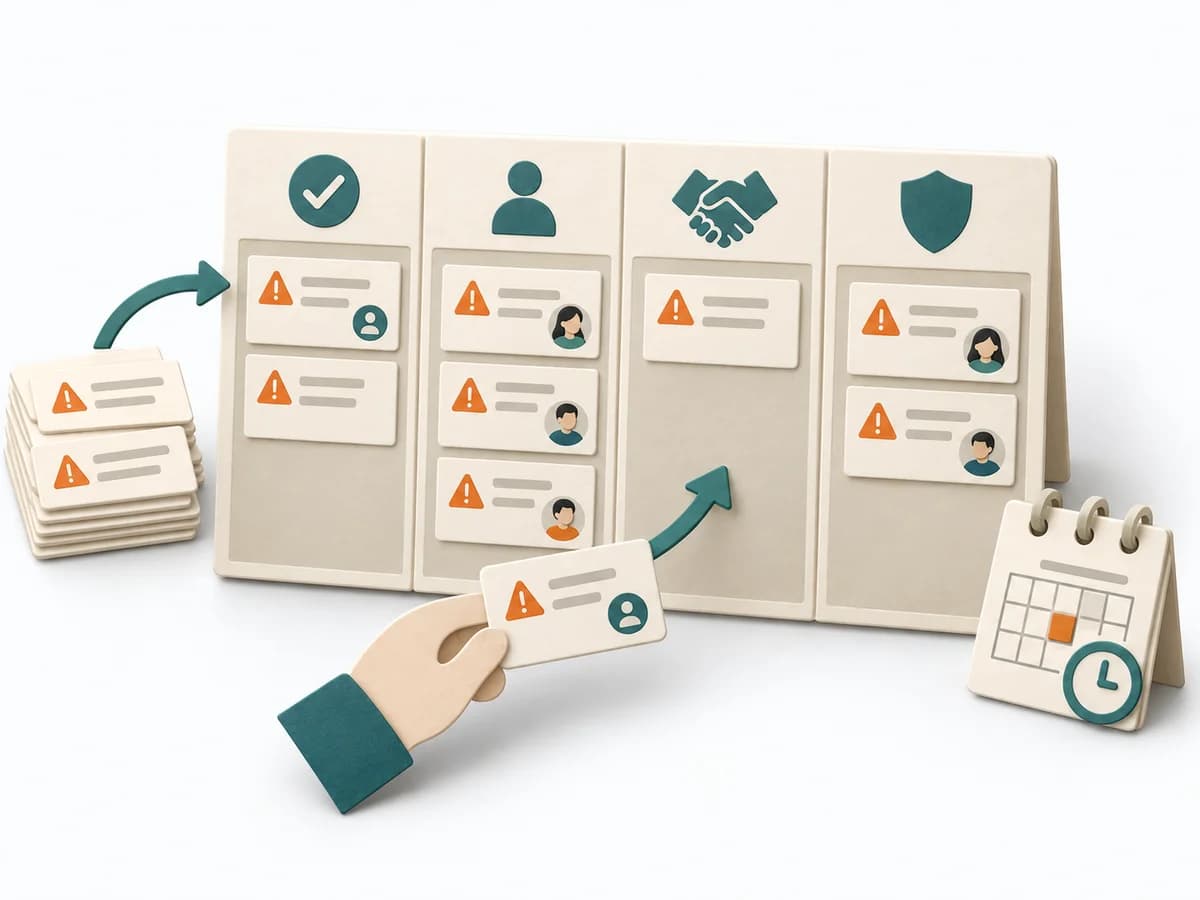 Agile ROAM Board |  Decision Making Force Field Analysis | 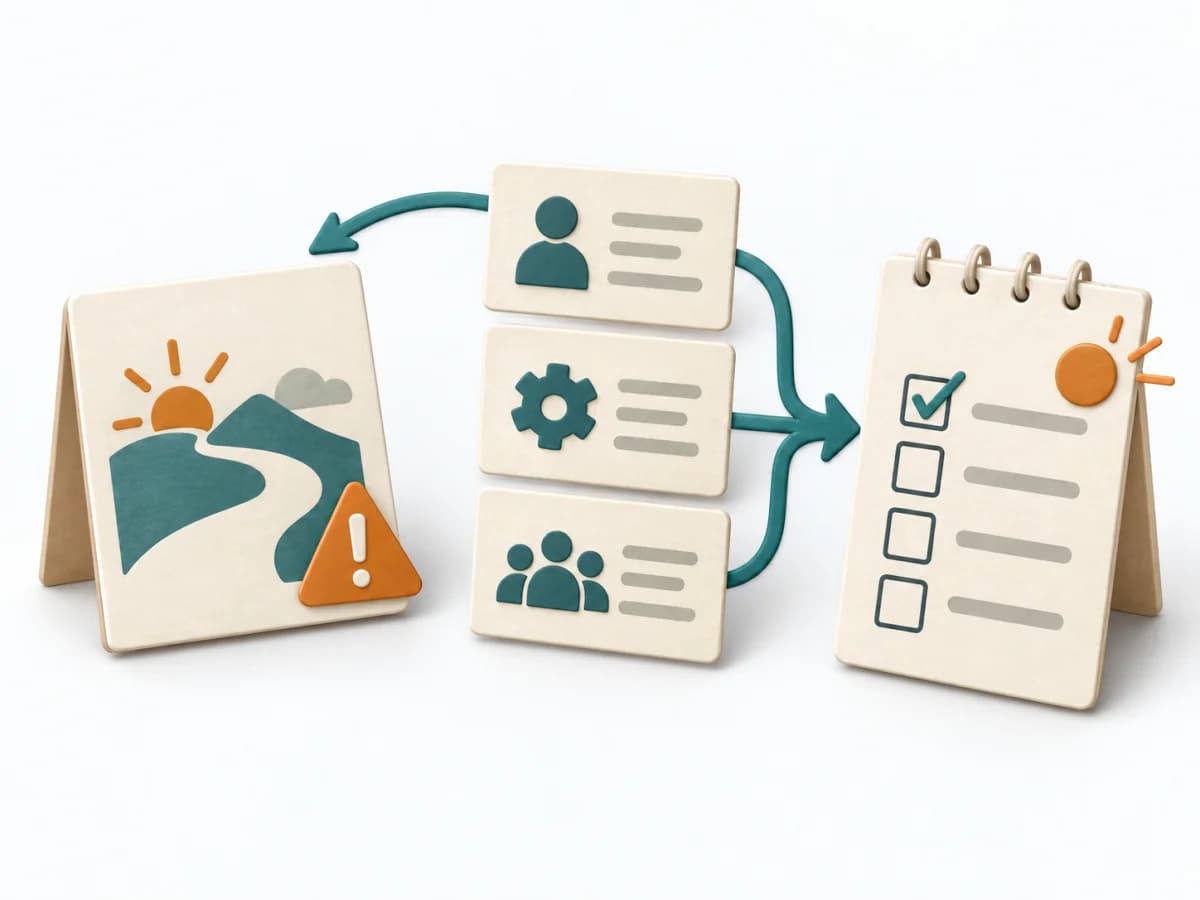 Decision Making Pre-Mortem |  Decision Making Assumption Surfacing |
|---|---|---|---|---|
Purposedifferent | When work needs to move between different states or columns, it makes that movement and its handoffs legible. It sorts work by value, risk, and delivery ability. The result is captured as a ROAM Board and an Owner List. | In change initiatives, supporting and restraining forces sit at the table at the same time. Force Field Analysis makes these tensions explicit and shows where change can be pushed forward by strengthening or relieving. | In early initiatives with many uncertainties, planning quickly turns too optimistic. A pre-mortem makes the expected failure visible in advance and sharpens the view of causes, gaps, and countermeasures. | Plans often contain assumptions that were never openly stated and remain dangerous precisely because of that. Assumption Surfacing makes these silent premises visible and prioritizes which of them carry the initiative or could sink it. |
Complexitysame | Low | Low | Low | Low |
Timedifferent | 20-40 min initial, dann laufend | 45-90 min | 20–45 min | 45-90 min |
Participantsdifferent | 3-15 | 3-12 | Small cross-functional group | 2-8 |
Formatdifferent | Workshop + async | Workshop | Workshop | Workshop + async |
Outputdifferent | ROAM Board, Owner List | Force Field Map, Change Levers, Risk Notes | Risk list, Mitigation plan, Assumption log | Assumption List, Critical Assumptions, Learning Plan |
Tagsno overlap | RiskAgileTrackingAlignment | ChangeDecisionStrategy | RiskDecisionFailurePlanning | AssumptionsRiskDecisionDiscovery |