View methods side by side.
Choose up to four methods. Add them using the search and share the comparison by copying its link.
| Criterion | 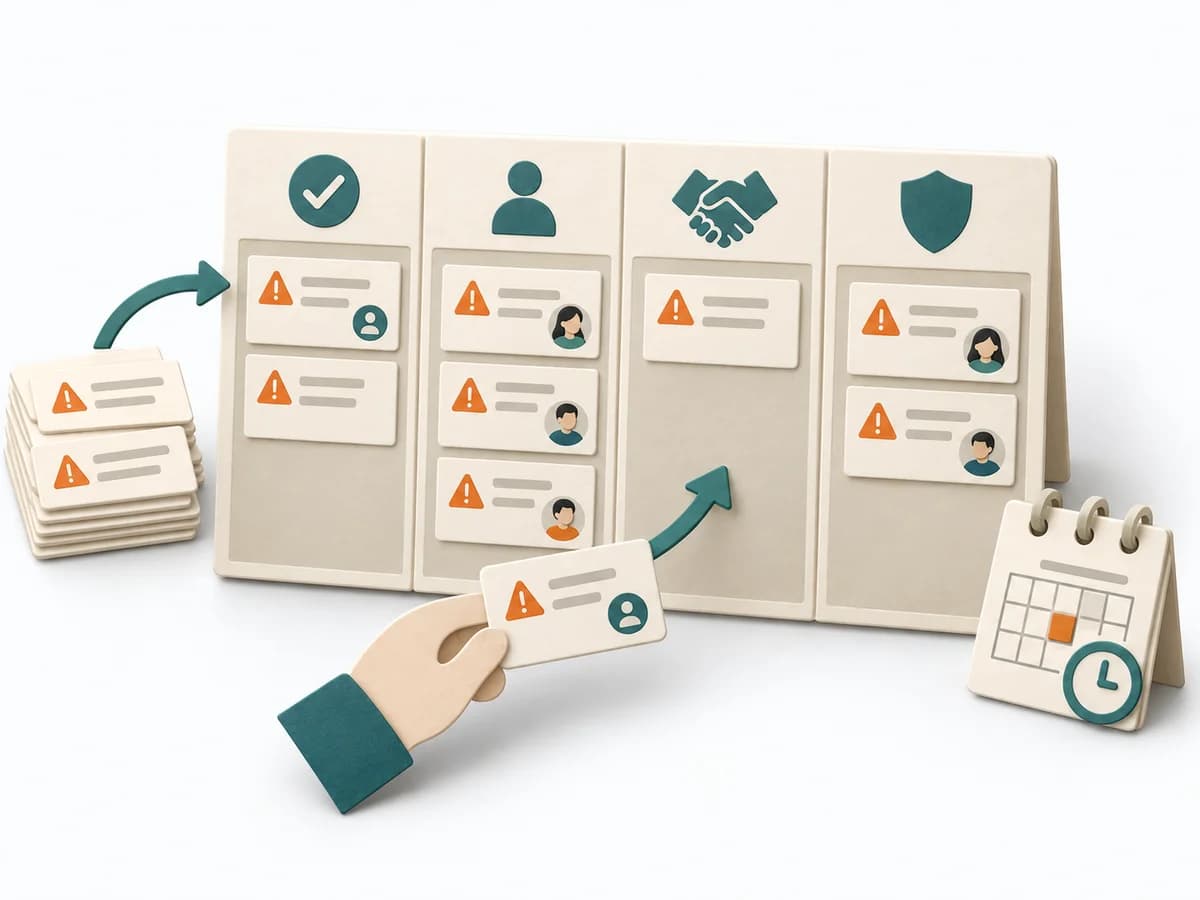 Agile ROAM Board |  Product Strategy DIBB |  Decision Making OODA Loop |  Decision Making Force Field Analysis |
|---|---|---|---|---|
Purposedifferent | When work needs to move between different states or columns, it makes that movement and its handoffs legible. It sorts work by value, risk, and delivery ability. The result is captured as a ROAM Board and an Owner List. | DIBB helps clarify target groups, value, goals, and priorities by making the logic behind a decision explicit. It captures results as a DIBB document, belief list, bet list, and learning report. | In dynamic situations, decisions become outdated faster than they can be prepared. The OODA Loop holds observing, orienting, deciding, and acting together as a recurring rhythm so reaction does not slide into inertia. | In change initiatives, supporting and restraining forces sit at the table at the same time. Force Field Analysis makes these tensions explicit and shows where change can be pushed forward by strengthening or relieving. |
Complexitydifferent | Low | Low | Medium | Low |
Timedifferent | 20-40 min initial, dann laufend | 1-2 h | 15-60 min je Zyklus | 45-90 min |
Participantsdifferent | 3-15 | 2-8 | 1-8 | 3-12 |
Formatdifferent | Workshop + async | Workshop + async | Workshop + async | Workshop |
Outputdifferent | ROAM Board, Owner List | DIBB document, Belief list, Bet list, Learning report | Situation Assessment, Decision Loop, Action Updates | Force Field Map, Change Levers, Risk Notes |
Tagsno overlap | RiskAgileTrackingAlignment | StrategyDecisionAssumptionsHypothesis | DecisionChangeLearningStrategy | ChangeDecisionStrategy |