View methods side by side.
Choose up to four methods. Add them using the search and share the comparison by copying its link.
| Criterion | 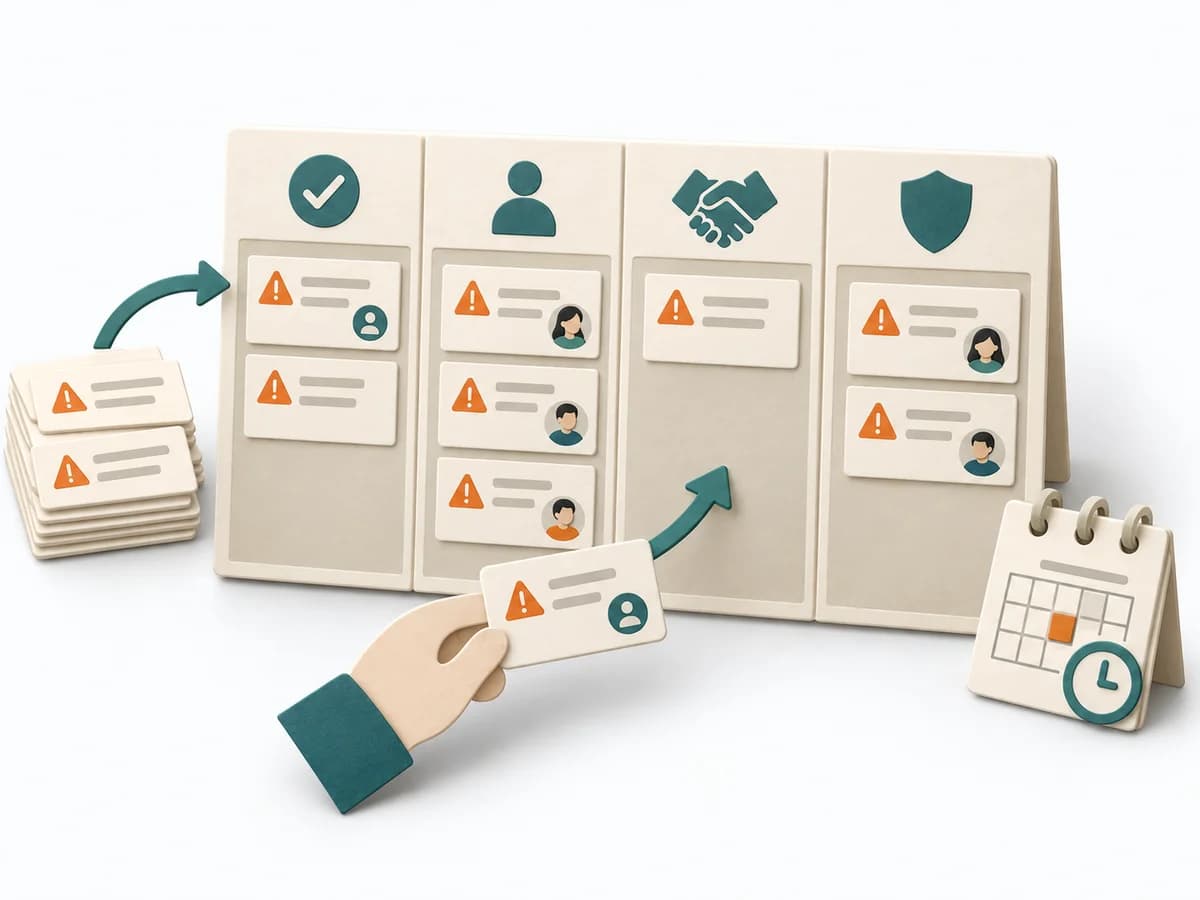 Agile ROAM Board | 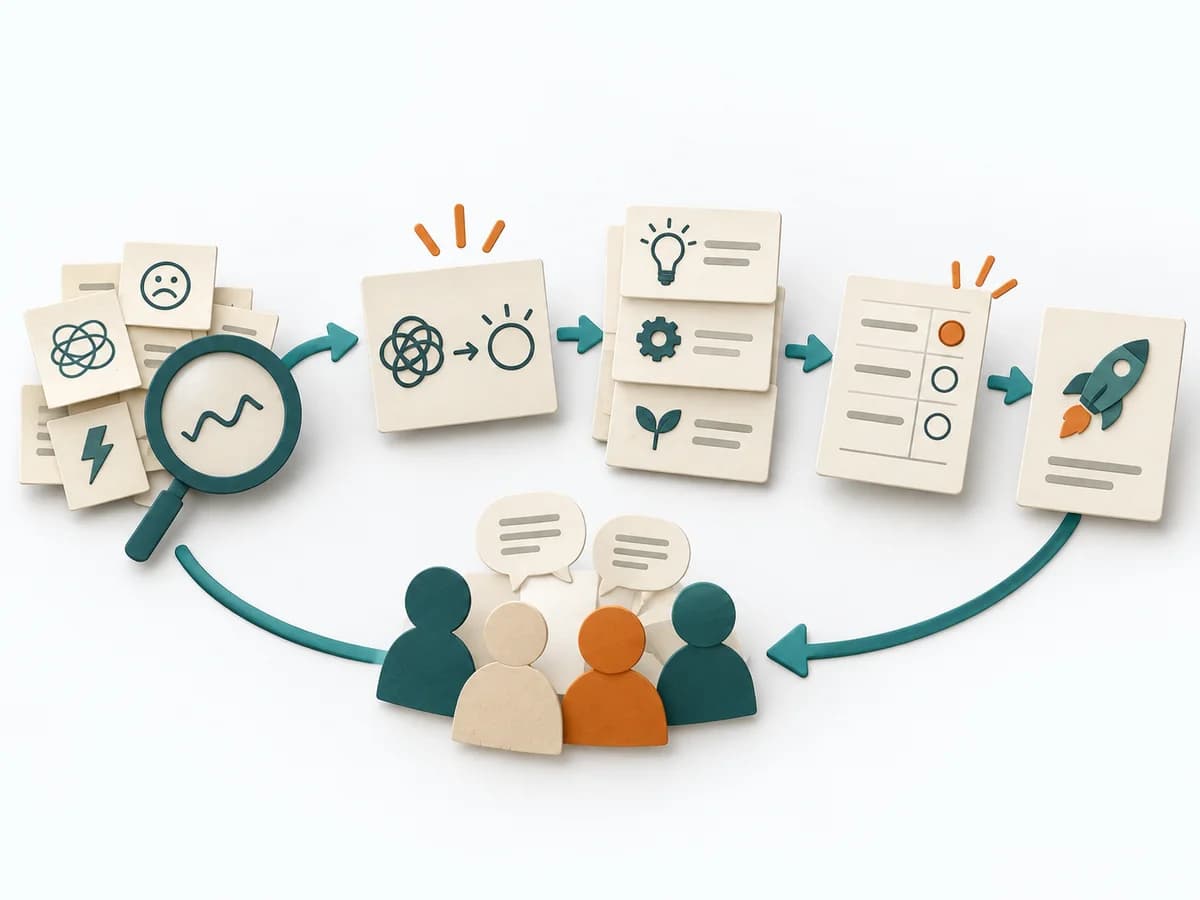 Facilitation Decision Jam | 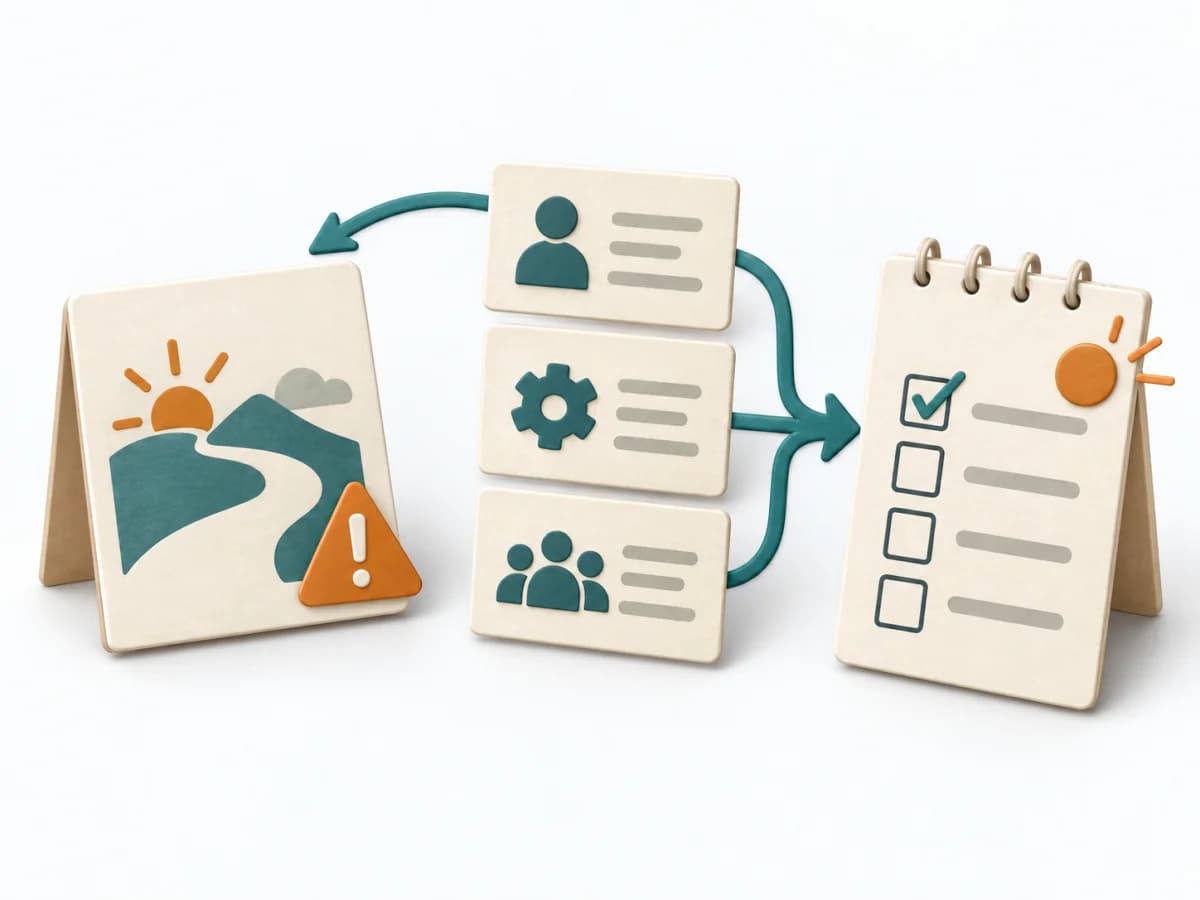 Decision Making Pre-Mortem |  Facilitation Alignment Mapping |
|---|---|---|---|---|
Purposedifferent | When work needs to move between different states or columns, it makes that movement and its handoffs legible. It sorts work by value, risk, and delivery ability. The result is captured as a ROAM Board and an Owner List. | When a decision is stuck, Decision Jam loosens the knot through structured separation of problem, idea, and selection. The format creates movement without jumping prematurely at the first seemingly elegant answer. | In early initiatives with many uncertainties, planning quickly turns too optimistic. A pre-mortem makes the expected failure visible in advance and sharpens the view of causes, gaps, and countermeasures. | When several people work toward one goal but hold different mental maps, Alignment Mapping makes the discrepancies visible. It arranges goals, assumptions, and priorities so shared direction becomes verifiable. |
Complexitydifferent | Low | Low | Low | Medium |
Timedifferent | 20-40 min initial, dann laufend | 60-90 min | 20–45 min | 1-2 h |
Participantsdifferent | 3-15 | 4-10 | Small cross-functional group | 4-12 |
Formatdifferent | Workshop + async | Workshop | Workshop | Workshop |
Outputdifferent | ROAM Board, Owner List | Problem Cluster, Prioritized Challenge, Experiment | Risk list, Mitigation plan, Assumption log | Alignment Map, Open Issues, Decision Questions |
Tagsno overlap | RiskAgileTrackingAlignment | FacilitationDecisionProblem solvingWorkshop | RiskDecisionFailurePlanning | AlignmentStakeholdersStrategyFacilitation |