View methods side by side.
Choose up to four methods. Add them using the search and share the comparison by copying its link.
| Criterion | 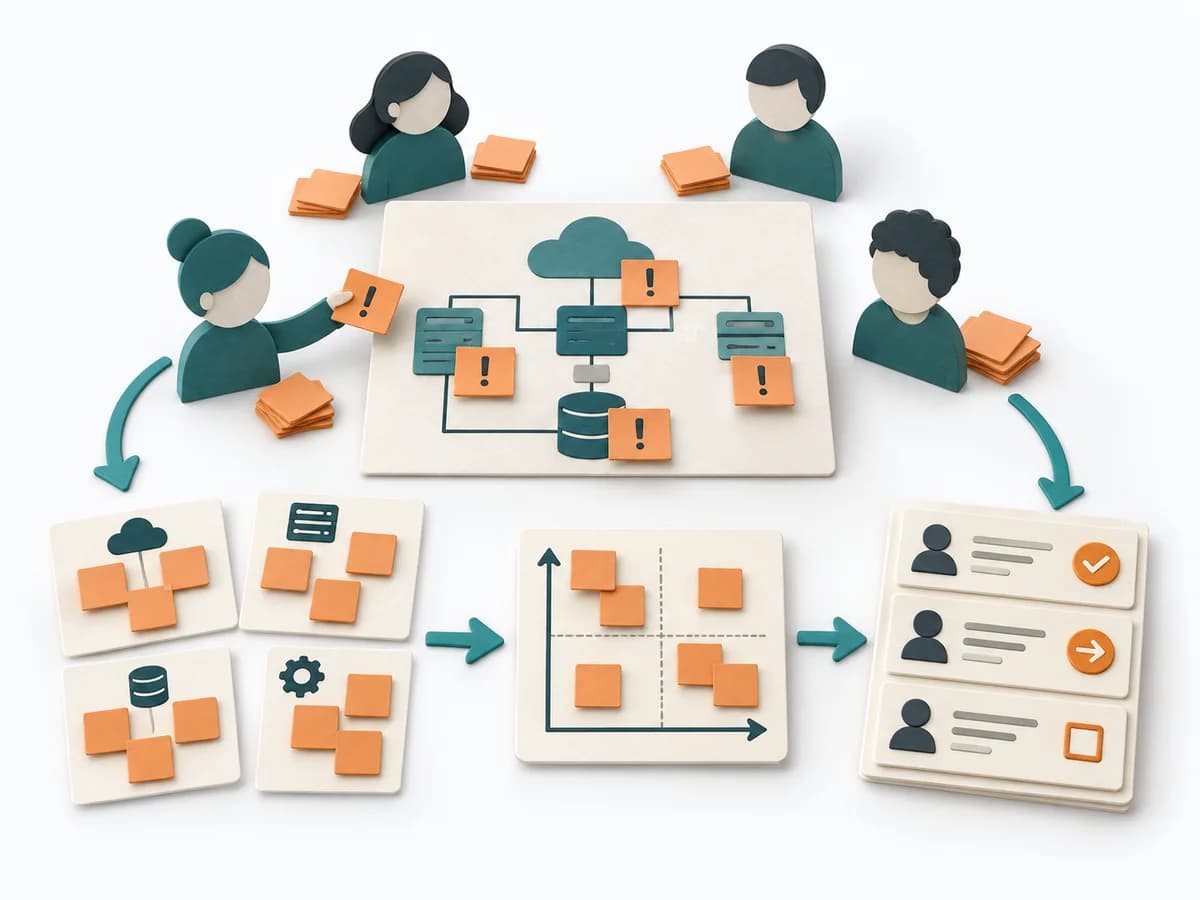 Architecture Risk Storming |  Knowledge Modeling Ontology Design Patterns |  Architecture arc42 | 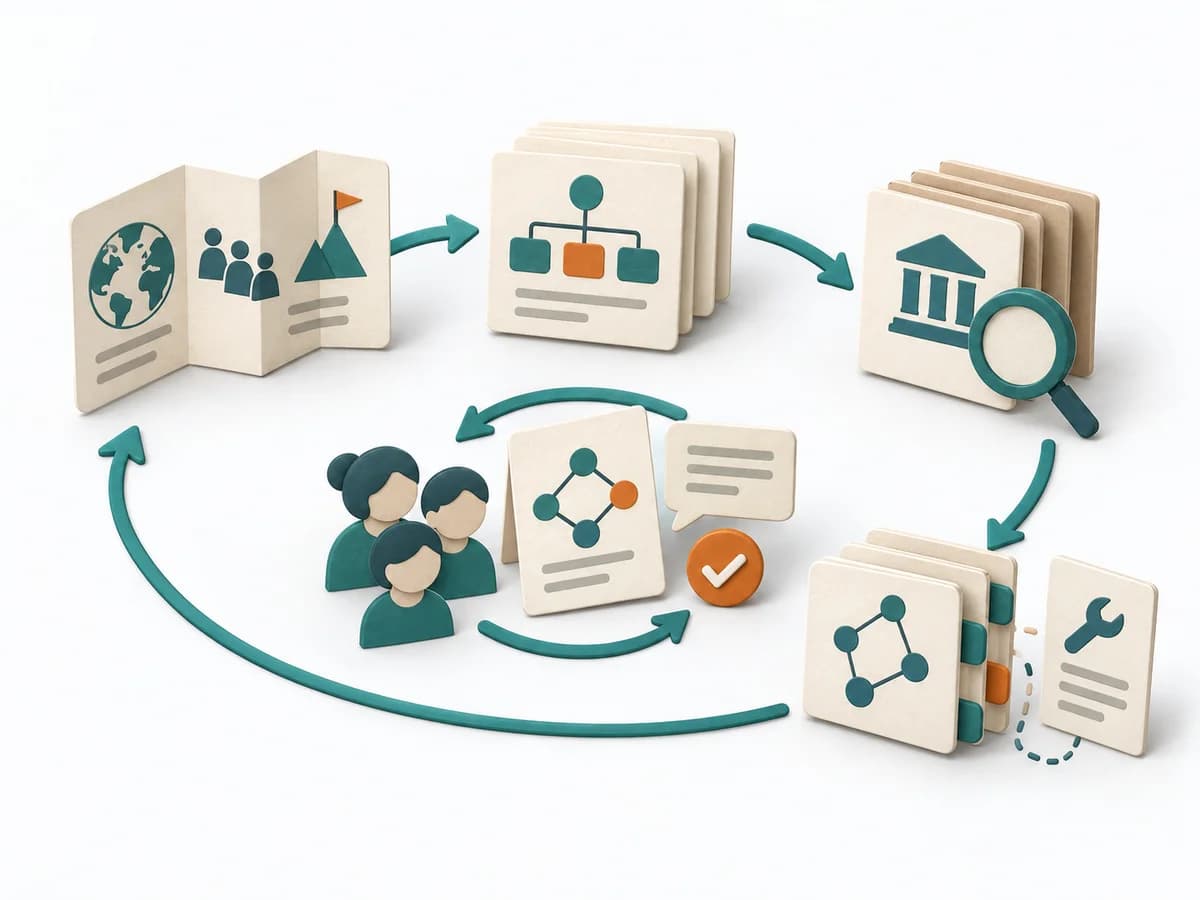 Knowledge Modeling NeOn Methodology |
|---|---|---|---|---|
Purposedifferent | Helps clarify architecture context, options, and consequences in concrete terms. It organizes technical context, alternatives, and consequences. The result is captured as an Annotated Diagram, a Prioritized Risk List, and an Action Backlog. | Ontology Design Patterns provide reusable building blocks for recurring modeling problems. The method brings structure to the search for clean concepts, relationships, and roles. | arc42 structures architecture knowledge so teams can document system, decisions, and risks consistently. The template builds a living understanding of the architecture instead of scattered notes. | The NeOn Methodology structures ontology work as a controlled process with reuse, scenarios, and reviews. It is useful when ontologies should not emerge ad hoc but modularly and reusably. |
Complexitydifferent | Low | Medium | Low | High |
Timedifferent | 60-90 min | 1-3 h pro Pattern | 1-2 Tage | Mehrere Wochen bis Monate |
Participantsdifferent | 4-12 | 1-6 | 1-4 | 2-10 |
Formatdifferent | Workshop | Workshop + async | Workshop + async | Workshop + async |
Outputdifferent | Annotated Diagram, Prioritized Risk List, Action Backlog | Selected Patterns, Adapted Schema Fragments, Pattern Documentation | Architecture Document, Context View, Runtime View, Deployment View | Ontology Requirements Specification, Reuse Plan, Ontology Modules, Evaluation Report |
Tagsno overlap | RiskArchitectureWorkshopValidation | OntologyPatternsReuseSemanticModeling | ArchitectureDocumentationCommunication | OntologyMethodologyReuseSemanticEngineering |