View methods side by side.
Choose up to four methods. Add them using the search and share the comparison by copying its link.
| Criterion | 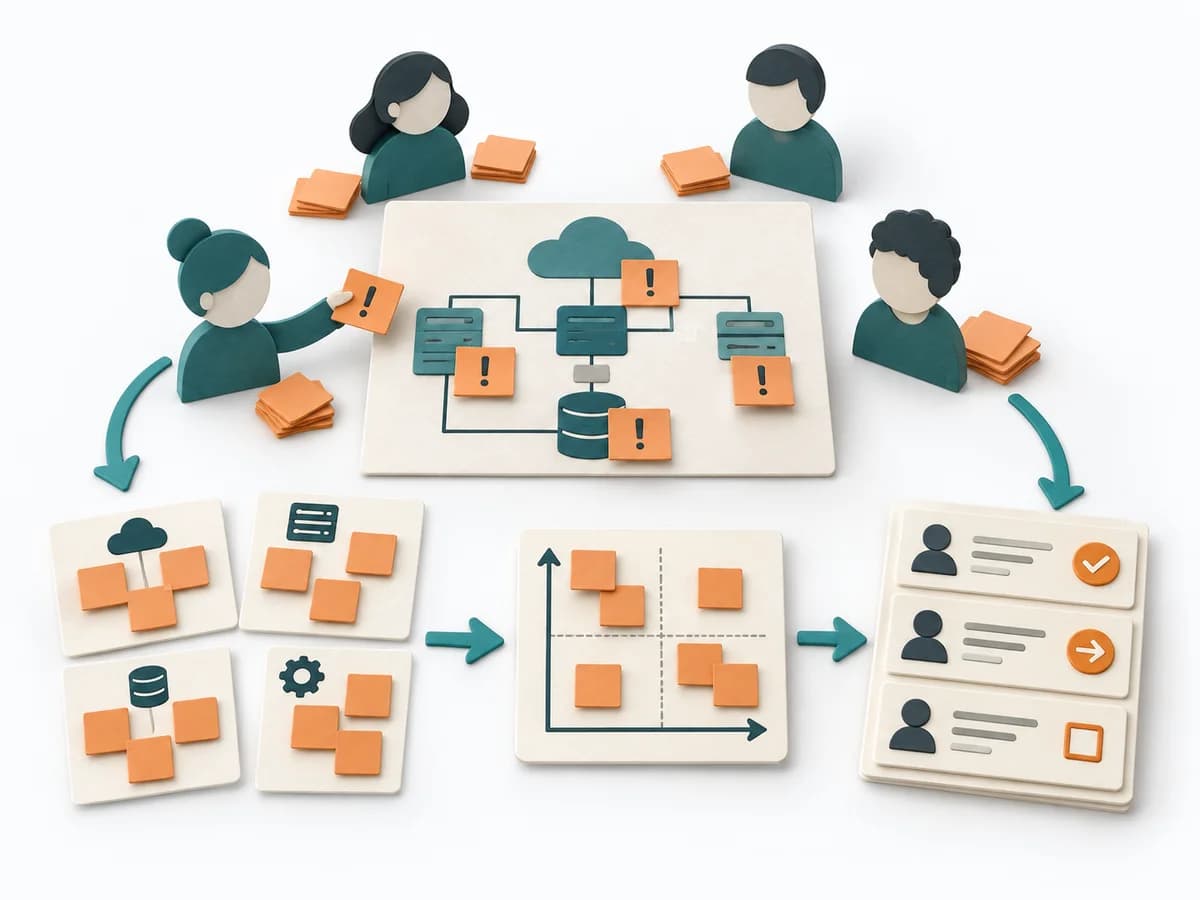 Architecture Risk Storming |  UX Research Empathy Mapping | 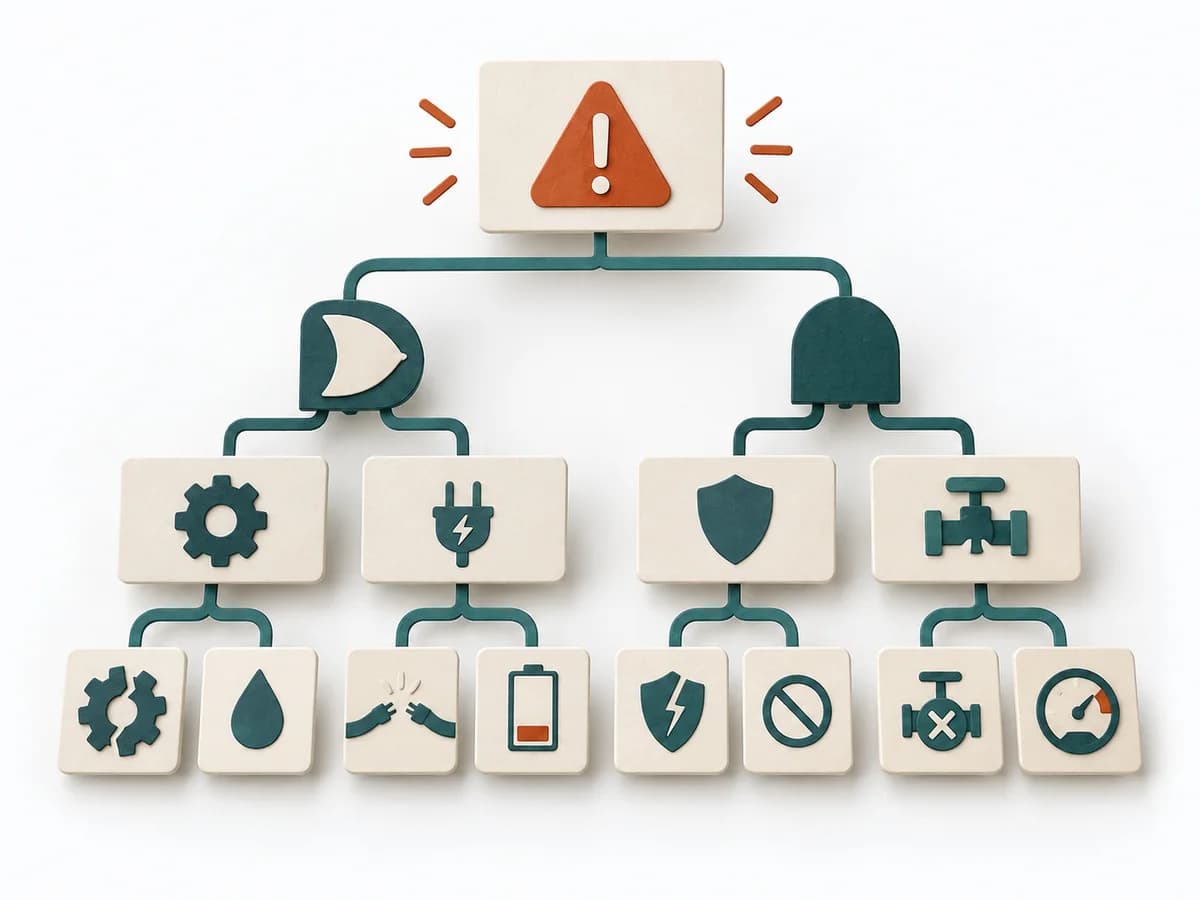 Operations Fault Tree Analysis |  Product Discovery Assumption Mapping |
|---|---|---|---|---|
Purposedifferent | Helps clarify architecture context, options, and consequences in concrete terms. It organizes technical context, alternatives, and consequences. The result is captured as an Annotated Diagram, a Prioritized Risk List, and an Action Backlog. | When a lot is assumed about a target group but little is seen jointly, empathy mapping makes knowledge and gaps directly comparable. The picture also shows which assumptions hold up and where evidence is missing. | For a critical top event with several possible triggers, the method logically models failure paths. It makes visible which combinations of conditions can lead to damage. | When assumptions still sit unordered in the room, it weighs uncertainty against leverage. It makes visible which hypotheses should be checked first. |
Complexitydifferent | Low | Low | High | Medium |
Timedifferent | 60-90 min | 30–60 min | 2-6 h | 45-60 min |
Participantsdifferent | 4-12 | 4-8 | 3-8 | 2-8 |
Formatdifferent | Workshop | Workshop | Workshop + async | Workshop + async |
Outputdifferent | Annotated Diagram, Prioritized Risk List, Action Backlog | Empathy Map, Assumptions List, Research Gaps | Fault Tree, Critical Paths, Cause Hypotheses, Control Actions | Assumption map, Test backlog, Risk ranking |
Tagsno overlap | RiskArchitectureWorkshopValidation | SynthesisQualitativeWorkshop | RiskRoot causeSafety | AssumptionsRiskExperimentsValidation |