View methods side by side.
Choose up to four methods. Add them using the search and share the comparison by copying its link.
| Criterion |  Decision Making Risk Matrix | 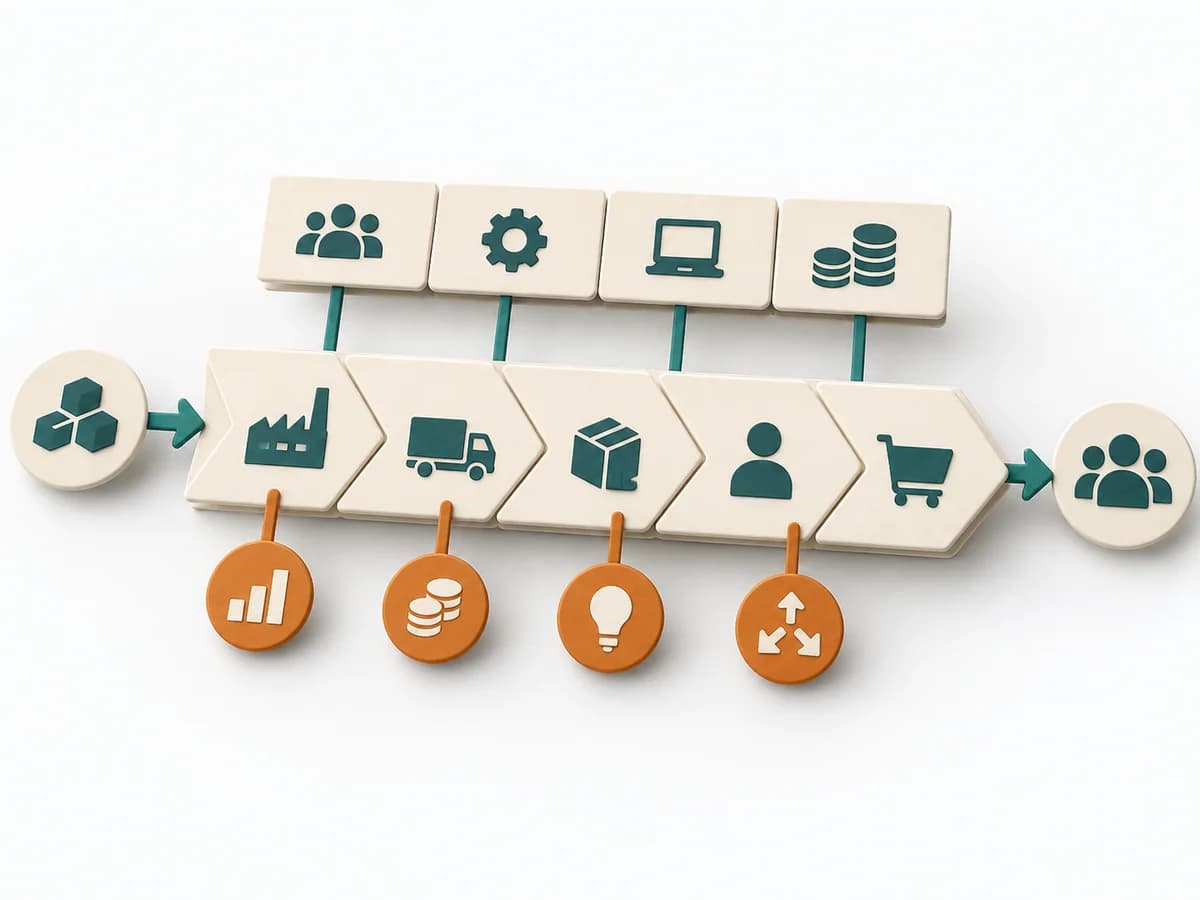 Business Strategy Value Chain Analysis |  Facilitation Stakeholder Salience Model |  Decision Making DACI |
|---|---|---|---|---|
Purposedifferent | When a project faces many possible disruptions, it quickly becomes unclear which risks deserve attention first. It separates options, evaluation criteria, and open risks. The result is captured as a Risk Matrix and a Top Risk List. | Value Chain Analysis shows where value is created, costs accrue, and differentiation becomes possible along the process. It compares strengths, risks, market logic, and courses of action. The result is captured as a value-chain map and lever list. | When stakeholders appear to matter very differently, the Stakeholder Salience Model rates their actual priority through power, legitimacy, and urgency. It turns individual contributions into a visible selection. The result is captured as a Salience diagram and a class-based strategy. | In cross-functional decisions, responsibilities quickly blur between approval, influence, and execution. DACI arranges these roles so decision pressure, contribution, and information stay cleanly separated. |
Complexitydifferent | Low | High | Medium | Low |
Timedifferent | 30-60 min | Half day | 60-90 min | 30-60 min |
Participantsdifferent | 3-10 | 3-8 | 3-6 | 2-10 |
Formatdifferent | Workshop + async | Workshop | Workshop | Workshop + async |
Outputdifferent | Risk Matrix, Top Risk List | Value Chain Map, Lever List | Salience Diagram, Strategy per Class | DACI Matrix, Decision Owner, Decision Log |
Tagsno overlap | RiskDecisionPrioritizationAssessment | StrategyBusiness modelDiagnosisAnalysis | StakeholdersFacilitationAlignmentGovernance | DecisionRolesGovernanceAlignment |