View methods side by side.
Choose up to four methods. Add them using the search and share the comparison by copying its link.
| Criterion |  Decision Making Risk Matrix |  Architecture ARID (Active Reviews for Intermediate Designs) |  Operations Ivy Lee Method | 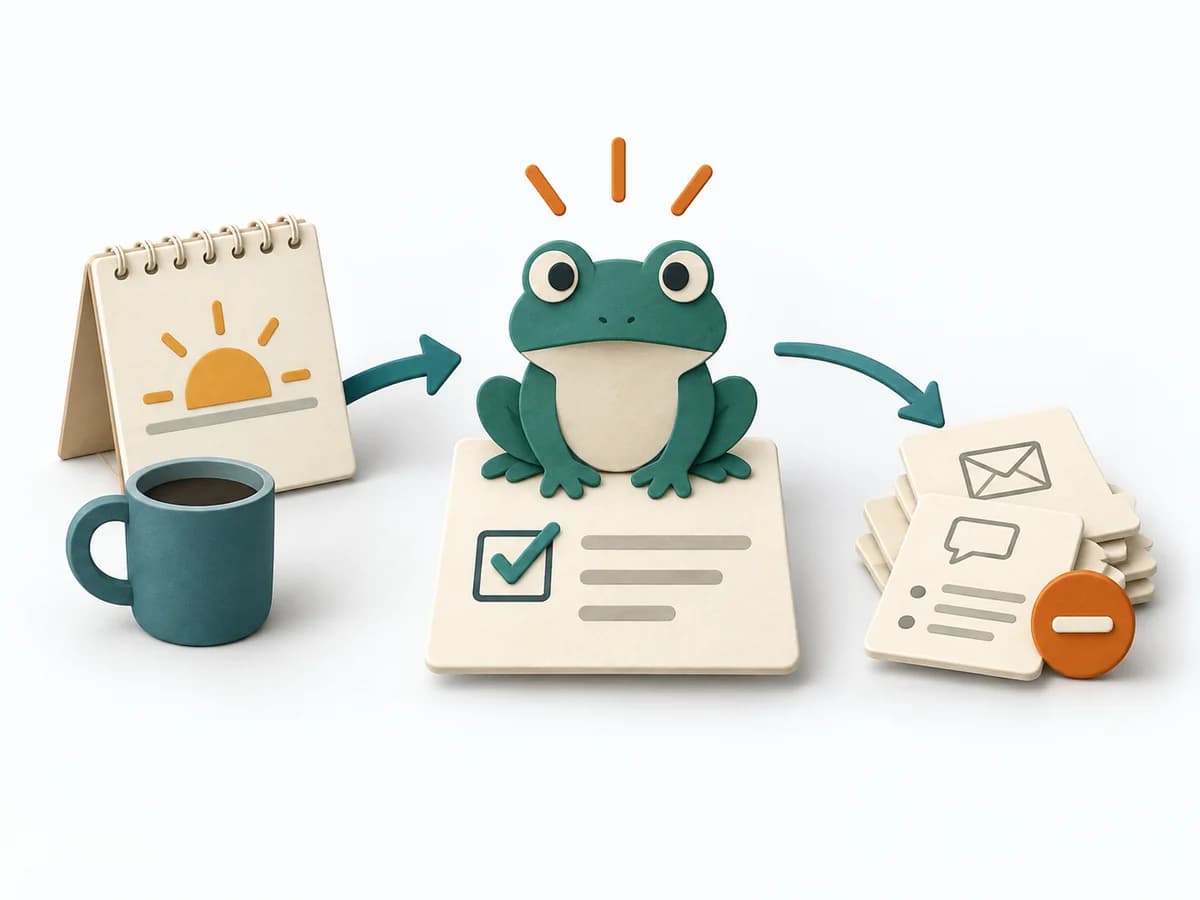 Operations Eat the Frog |
|---|---|---|---|---|
Purposedifferent | When a project faces many possible disruptions, it quickly becomes unclear which risks deserve attention first. It separates options, evaluation criteria, and open risks. The result is captured as a Risk Matrix and a Top Risk List. | ARID examines how well developers can work with a technical design. It focuses on a part of the system that can still be revised, between the architecture overview and the detailed specification. | With a restless workday full of too many open items, the method creates radical simplicity. It directs attention to a short sequence instead of a broad, still-open field. | The method protects energy and attention for the task that creates the largest progress and is often postponed. |
Complexitydifferent | Low | Medium | Low | Low |
Timedifferent | 30-60 min | 2–4 h review as a planning range; preparation and evaluation additional | 5-10 min daily | 15-90 min daily |
Participantsdifferent | 3-10 | Designers, developers as users, and facilitation | 1 | 1 |
Formatdifferent | Workshop + async | Workshop + async | Async | Async |
Outputdifferent | Risk Matrix, Top Risk List | Prioritized development tasks, Jointly produced code or pseudocode, Observed difficulties and open design questions, Proposed design revisions | Daily Priority List, Completion Notes | Priority Task, Completion Note, Daily Focus |
Tagsno overlap | RiskDecisionPrioritizationAssessment | ArchitectureEngineeringFeedbackValidationTasks | PrioritizationProductivityExecution | PrioritizationProductivityFocusExecution |