View methods side by side.
Choose up to four methods. Add them using the search and share the comparison by copying its link.
| Criterion | 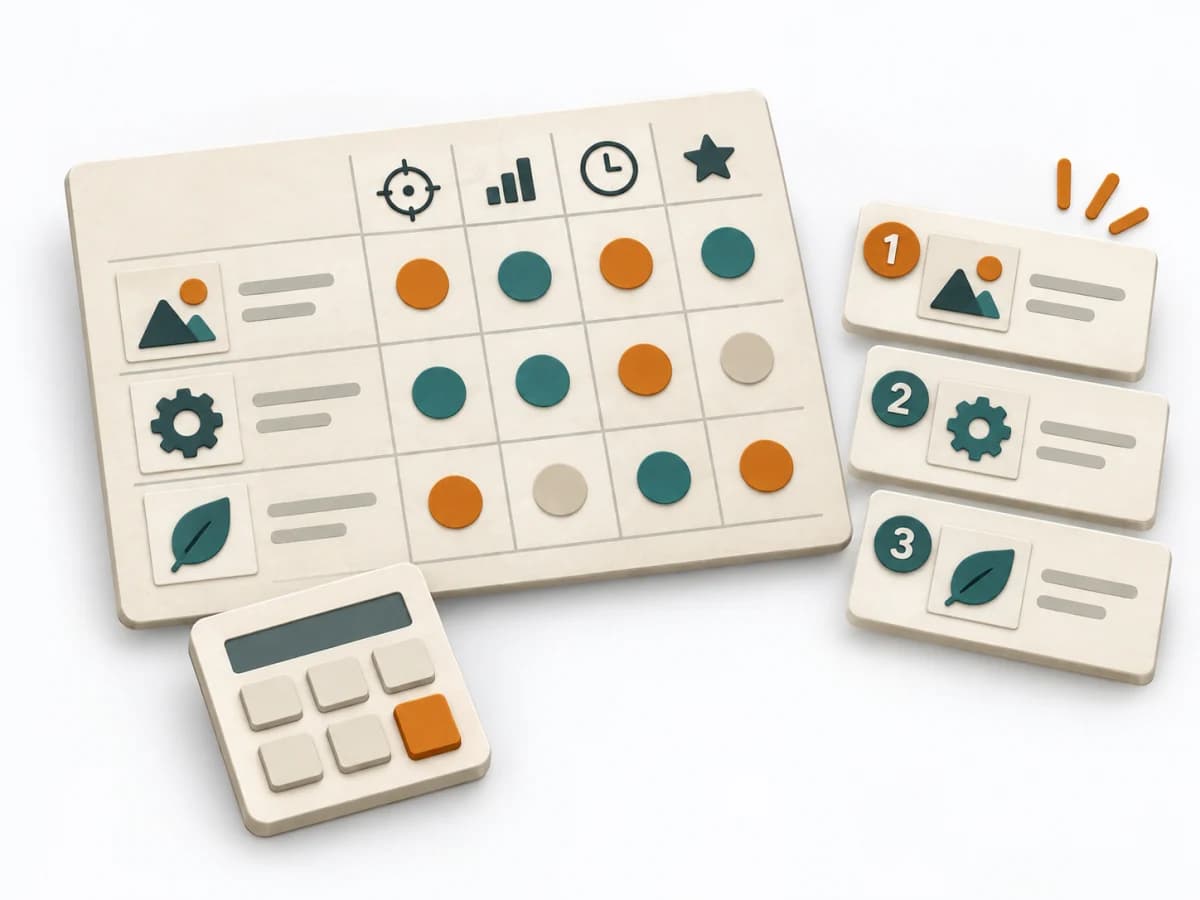 Product Strategy RICE Scoring | 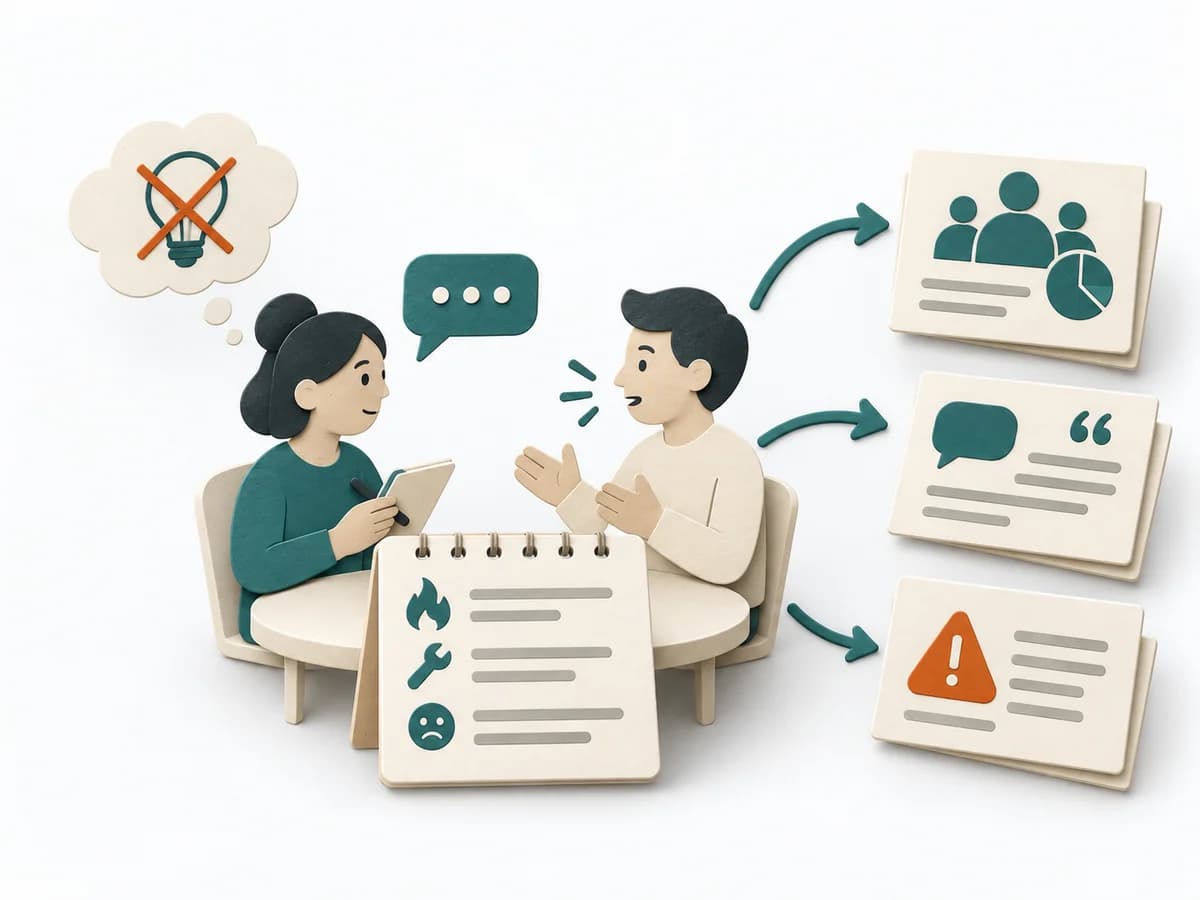 Product Discovery Problem Interview | 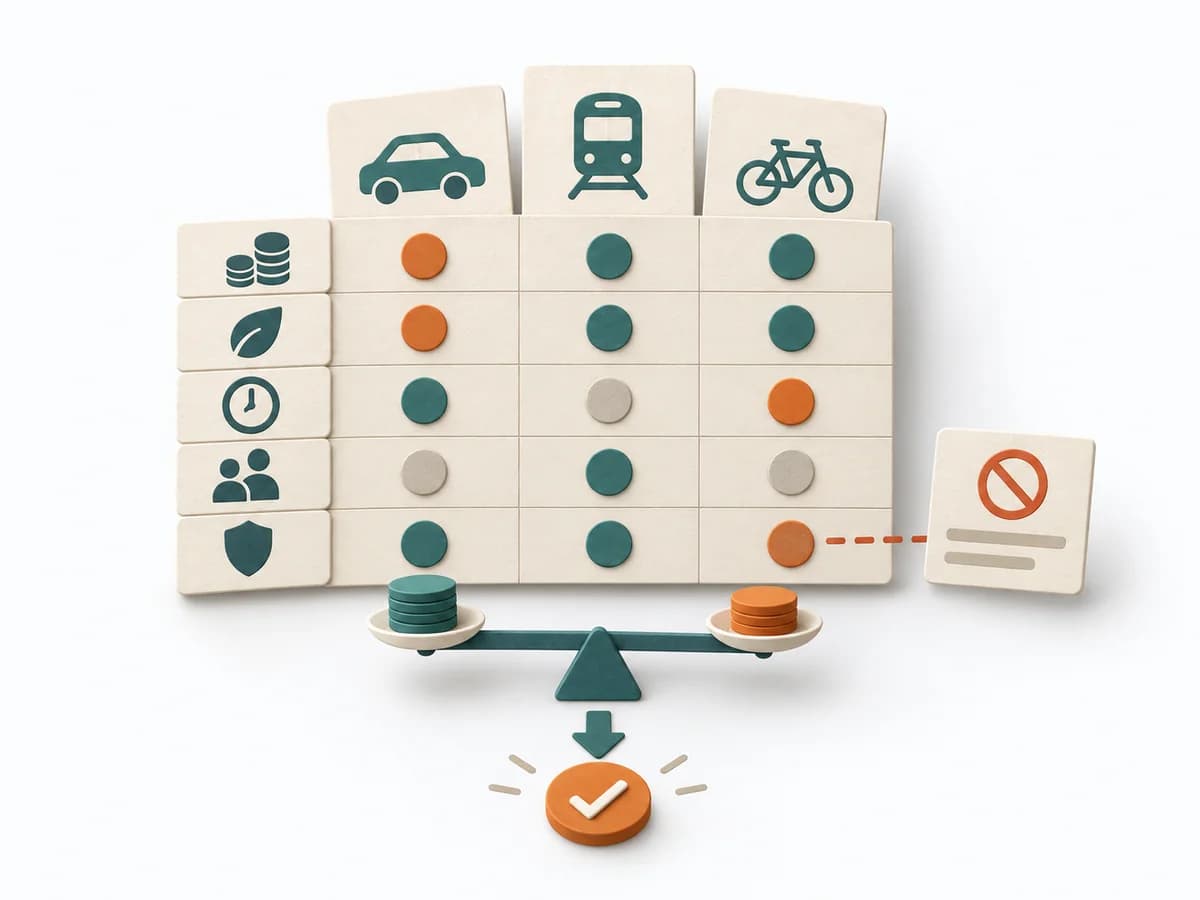 Decision Making Trade-off Analysis | 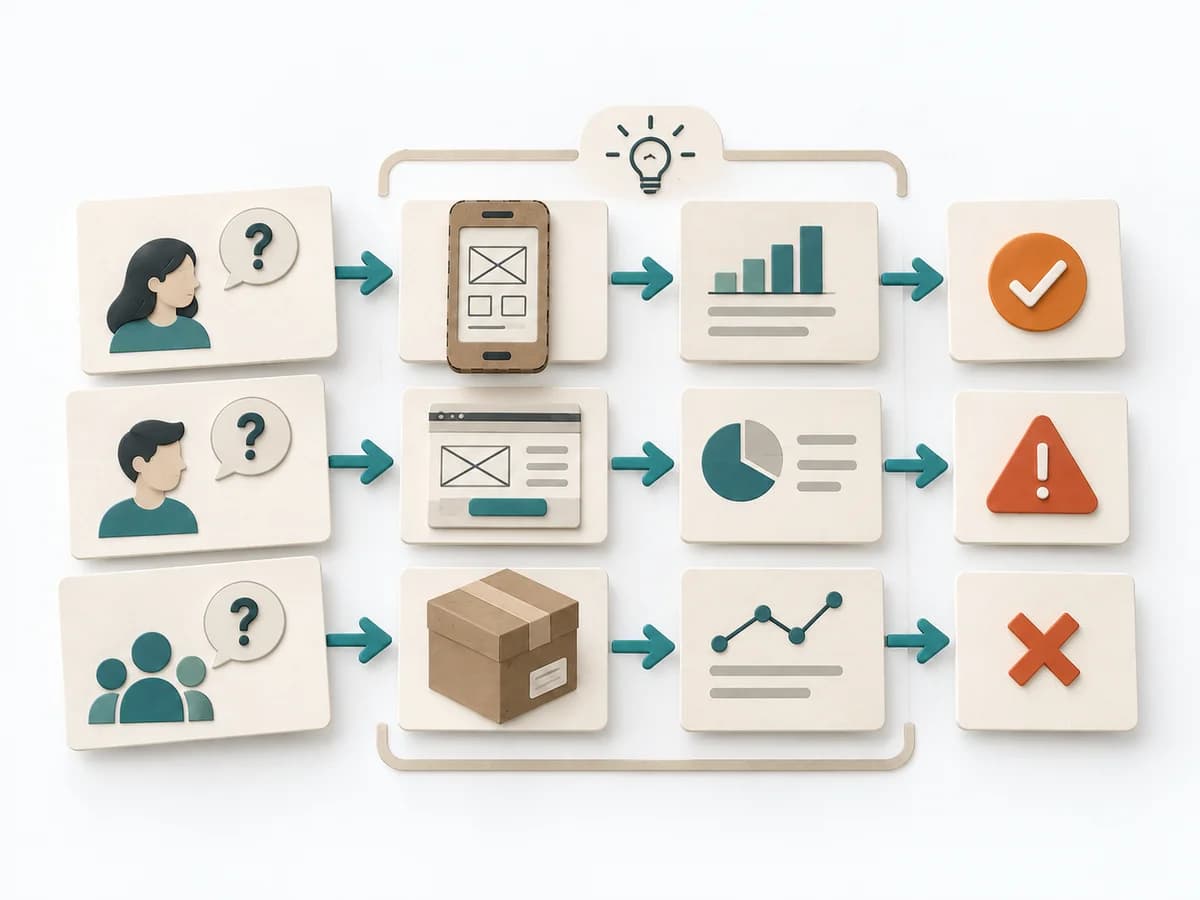 Product Discovery MVP Test Matrix |
|---|---|---|---|---|
Purposedifferent | When many initiatives compete for the same resources, it brings reach, impact, confidence, and effort into one shared ranking. It makes prioritization economically connectable. | When the picture of the problem still needs to become solid, it asks about real situations and consequences. It separates genuine suffering from mere interest in a solution. | With limited resources, quality, speed, cost, and risk almost always compete with each other. Trade-off Analysis makes these tensions explicit and prevents decisions from producing hidden side effects. | When several minimal variants compete to answer the same question, it makes comparing and choosing between them cleaner. It separates problem, assumption, solution, and evidence. The result is captured as a Test Matrix and a Test Plan. |
Complexitysame | Medium | Medium | Medium | Medium |
Timedifferent | 60-90 min | 30-60 min je Interview | 45-120 min | 45-75 min |
Participantsdifferent | 2-10 | 5-12 Interviews | 2-8 | 2-8 |
Formatdifferent | Workshop + async | Workshop + async | Workshop + async | Workshop |
Outputdifferent | RICE Scores, Ranked List, Assumption Log | Problem Evidence, Risk Notes, Customer Segments | Trade-off Matrix, Criteria List, Decision Rationale, Accepted Downsides | Test Matrix, Test Plan |
Tagsno overlap | PrioritizationScoringRoadmapTradeoffs | DiscoveryInterviewsValidation | TradeoffsDecisionCriteriaOptions | ExperimentsValidationDiscoveryOptions |