View methods side by side.
Choose up to four methods. Add them using the search and share the comparison by copying its link.
| Criterion | 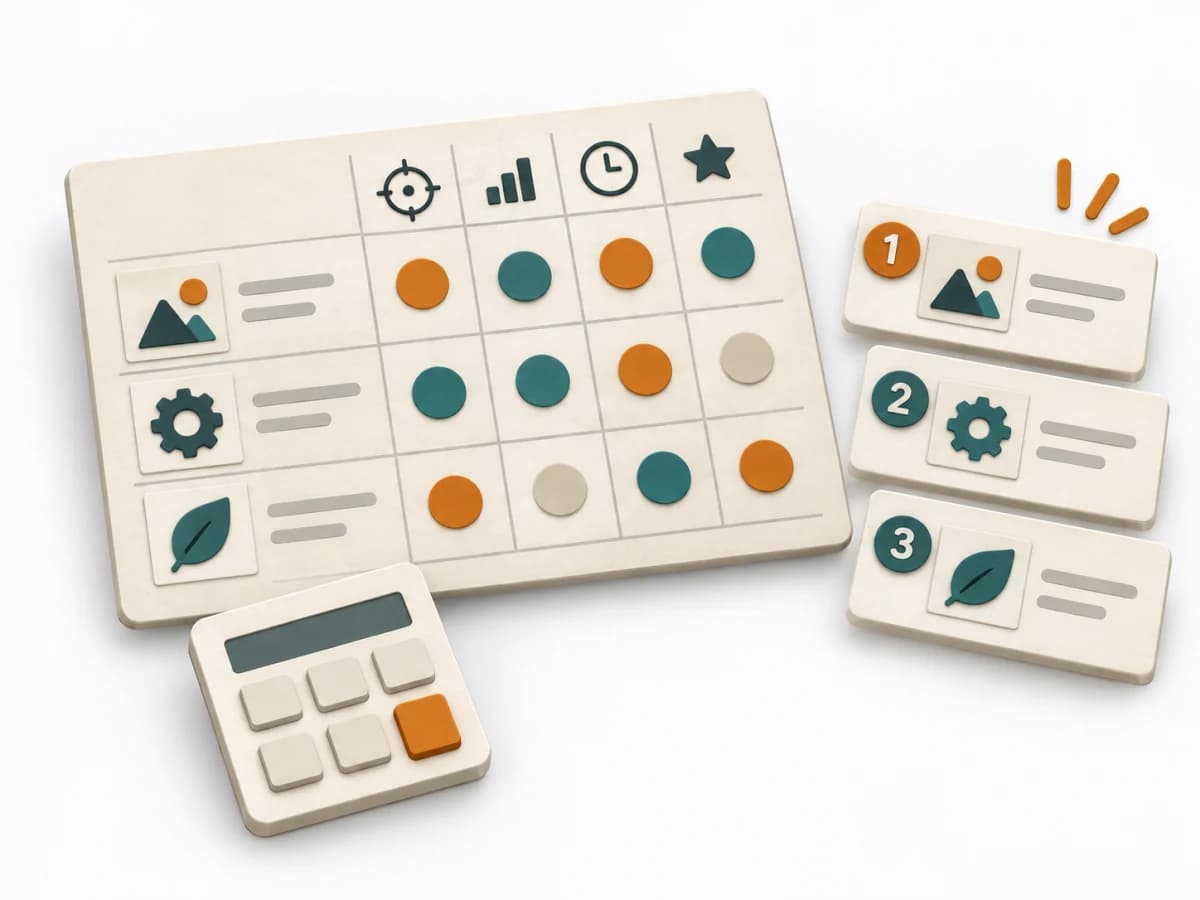 Product Strategy RICE Scoring |  UX Research Contextual Inquiry |  Product Discovery Context Canvas | 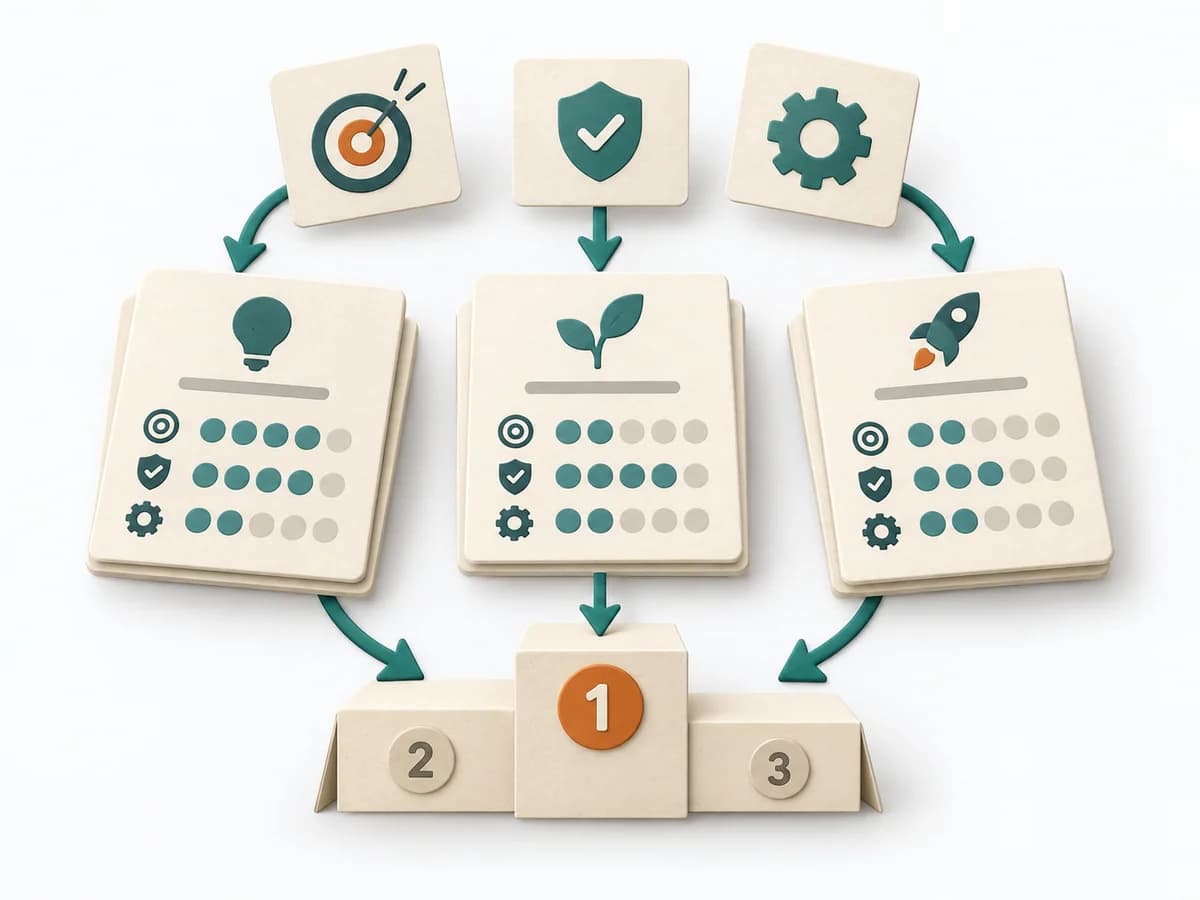 Product Strategy ICE Scoring |
|---|---|---|---|---|
Purposedifferent | When many initiatives compete for the same resources, it brings reach, impact, confidence, and effort into one shared ranking. It makes prioritization economically connectable. | When work processes are known only from accounts and the real context stays hidden, Contextual Inquiry makes behavior at the workplace visible. Observation and follow-up questions together show how people actually work, get interrupted, and improvise. | When an environment of users, systems, and constraints is hard to grasp, it puts the context compactly on the table. It creates a clear reading of influence, boundary, and dependency. | When ideas need sorting quickly, it condenses impact, confidence, and effort into one compact score. It connects customer value, product logic, and decision priorities. The result is captured as an ICE table and top-ideas list. |
Complexitydifferent | Medium | Medium | Low | Low |
Timedifferent | 60-90 min | 1-3 Wochen | 45-90 min | 30-60 min |
Participantsdifferent | 2-10 | 4-12 Beobachtungen | 3-10 | 2-8 |
Formatdifferent | Workshop + async | Workshop + async | Workshop | Workshop + async |
Outputdifferent | RICE Scores, Ranked List, Assumption Log | Field Notes, Workflow Insights, Pain Points | Context canvas, Open questions, Shared context notes | ICE Table, Top Idea List |
Tagsno overlap | PrioritizationScoringRoadmapTradeoffs | UX researchObservationContext | ContextFramingRequirementsCanvas | PrioritizationScoringGrowthDecision |