View methods side by side.
Choose up to four methods. Add them using the search and share the comparison by copying its link.
| Criterion |  Innovation Reverse Brainstorming | 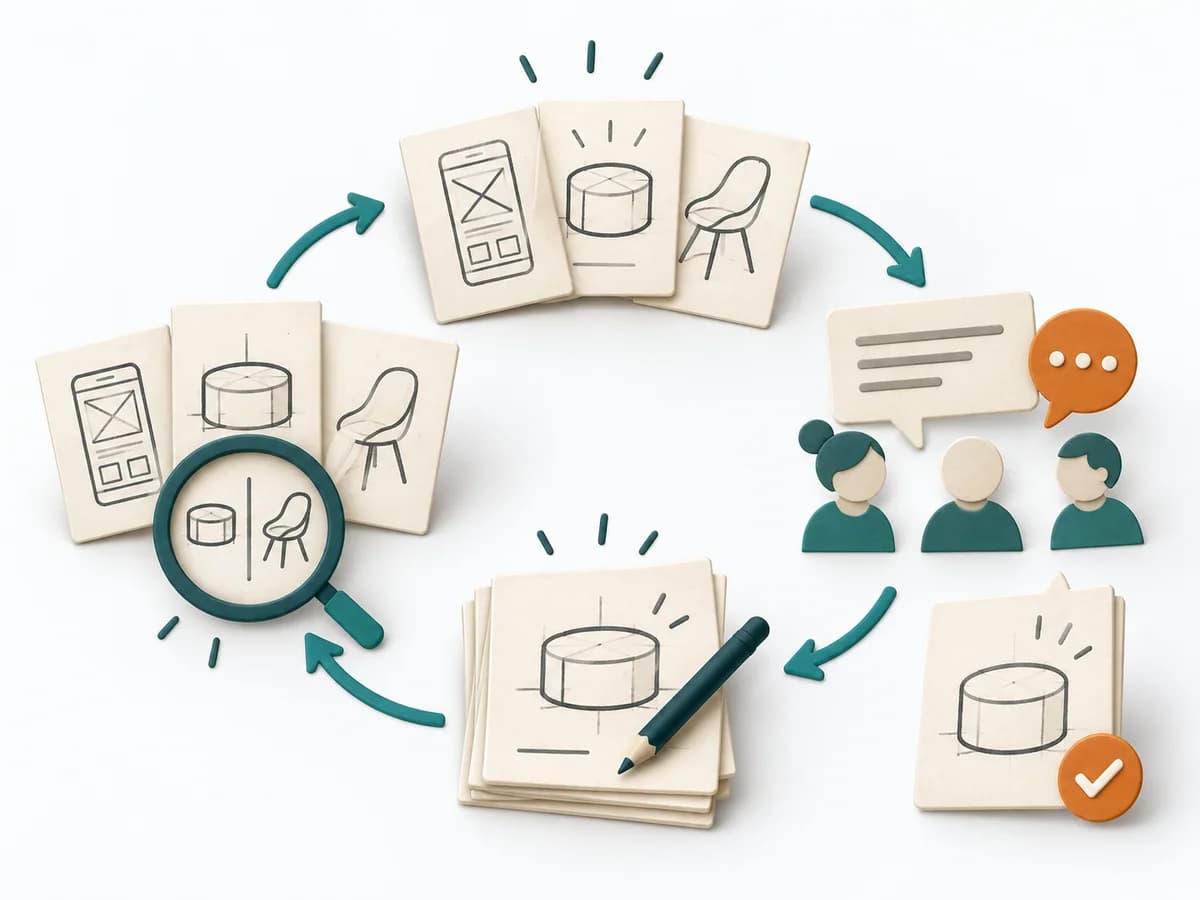 UX Design Design Studio | 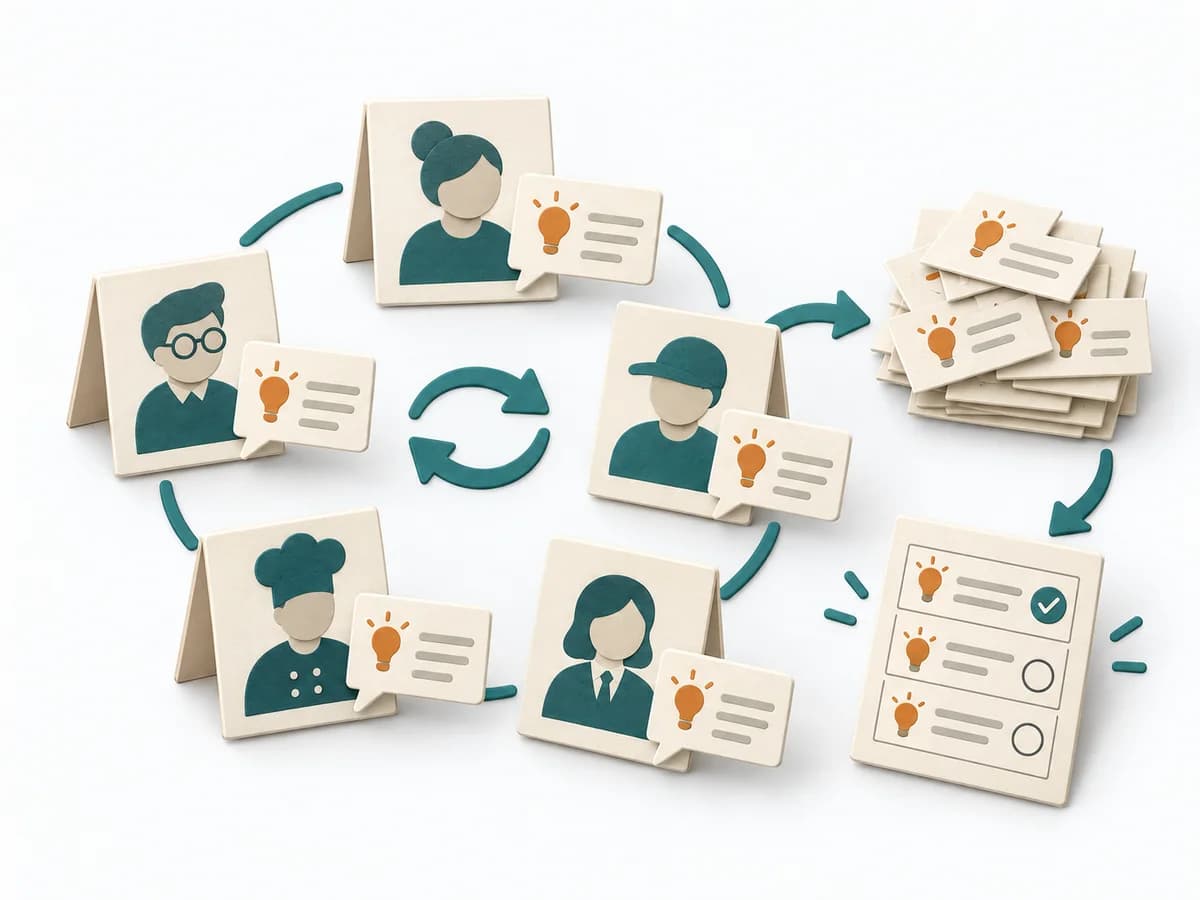 Innovation Rolestorming |  Innovation Lotus Blossom |
|---|---|---|---|---|
Purposedifferent | For persistent errors or blockages, the method shifts the view to the opposite of the desired effect. It exposes the mechanics of failure and makes hidden causes easier to grasp. This makes improvement more concrete and the problem clearer. | When several designs need to be quickly put in relation to each other, it makes ideas visible and comparable. It encourages early variants instead of long upfront debates. | When a search for ideas stalls, switching roles helps people step outside their own perspective and activate new logics of action. The method reduces habit because contributions arise from a different stance. This brings unfamiliar, often fitting solution approaches into play. | When a central question feels too large, the method breaks it into neighboring topic fields with their own depth of ideation. It holds structure and openness at the same time, so adjacent perspectives don't get lost. This grows an idea space out of a core problem. |
Complexitydifferent | Low | Medium | Low | Low |
Timedifferent | 30-60 min | 1-3 h | 30-60 min | 45-90 min |
Participantsdifferent | 3-12 | 3-8 | 3-12 | 3-10 |
Formatsame | Workshop | Workshop | Workshop | Workshop |
Outputdifferent | Reverse Ideas, Risk Themes, Solution Ideas | Sketches, Concept Directions, Design Decisions | Rollenkarten, Ideenpool pro Rolle, Konsolidierte Shortlist | Lotus Diagram, Idea Themes, Shortlist |
Tags1 shared | BrainstormingIdeationCreativityRisk | SketchingCollaborationIdeation | BrainstormingIdeationCreativity | BrainstormingIdeationCreativityDivergenceWorkshop |