View methods side by side.
Choose up to four methods. Add them using the search and share the comparison by copying its link.
| Criterion | 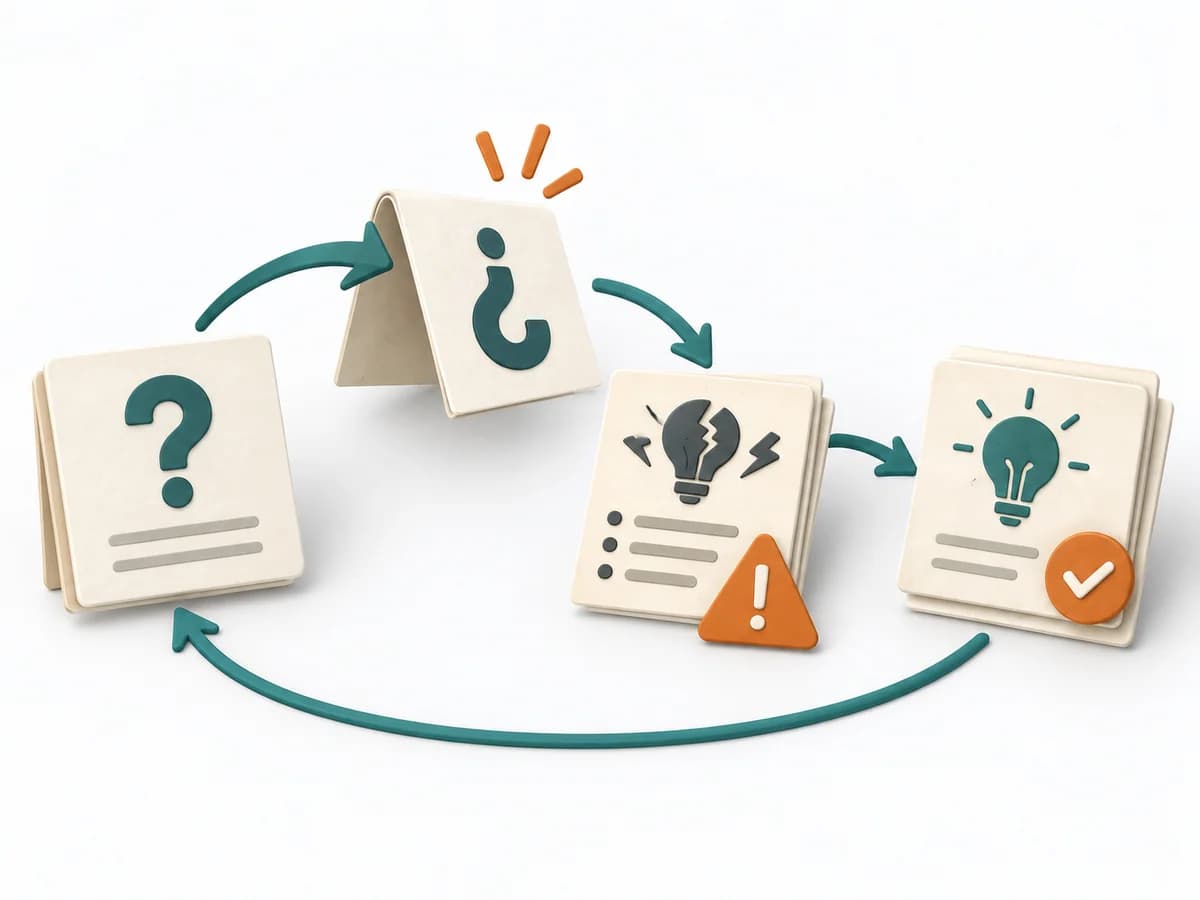 Innovation Reverse Brainstorming |  Facilitation Alignment Mapping | 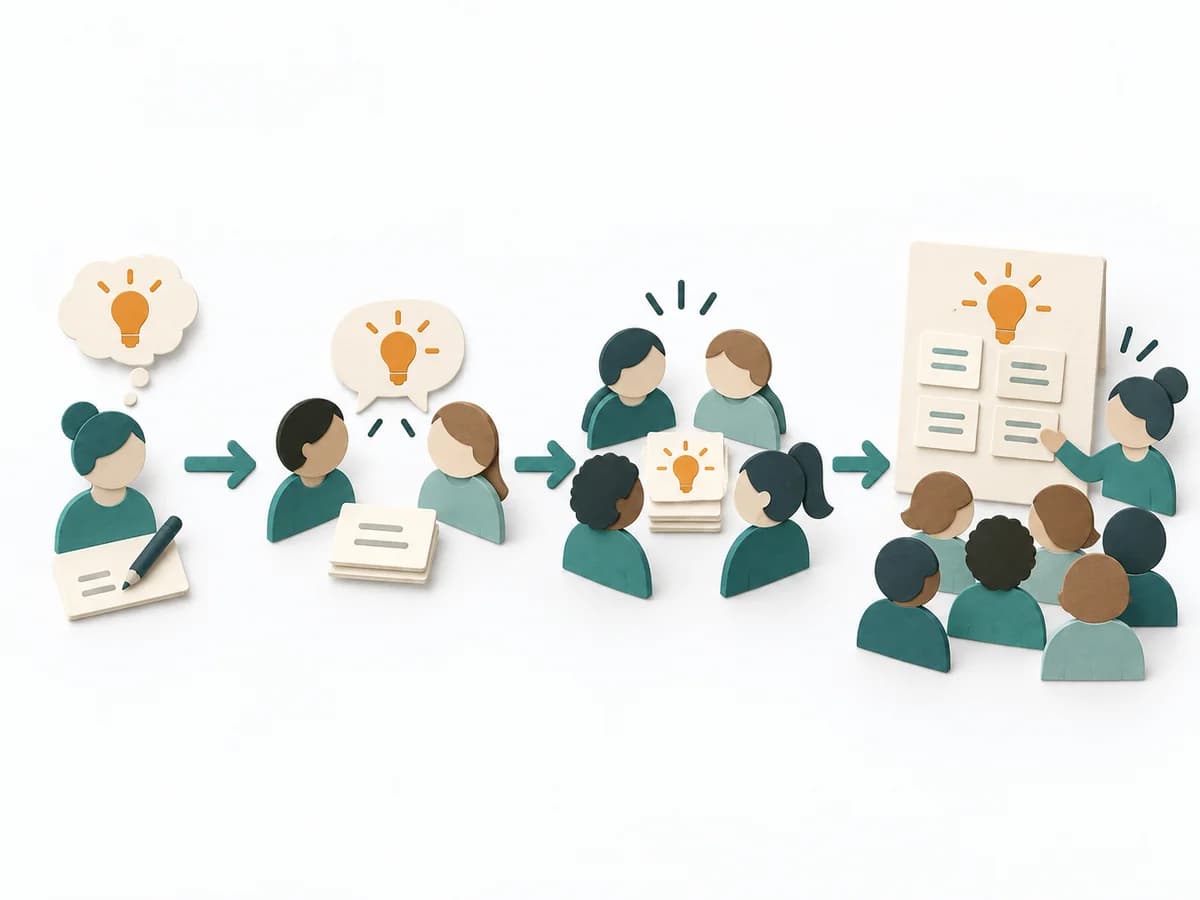 Facilitation 1-2-4-All |  Facilitation Power Interest Grid |
|---|---|---|---|---|
Purposedifferent | For persistent errors or blockages, the method shifts the view to the opposite of the desired effect. It exposes the mechanics of failure and makes hidden causes easier to grasp. This makes improvement more concrete and the problem clearer. | When several people work toward one goal but hold different mental maps, Alignment Mapping makes the discrepancies visible. It arranges goals, assumptions, and priorities so shared direction becomes verifiable. | When many people in a group too rarely get to speak, 1-2-4-All distributes thinking time more fairly. The format builds participation step by step and makes quiet or still-unformed thoughts usable faster. | When many stakeholders compete for attention at once, the Power Interest Grid sorts them by influence and stake. It turns individual contributions into a visible selection. The result is captured as a Power Interest Grid and a stakeholder-specific strategy. |
Complexitydifferent | Low | Medium | Low | Low |
Timedifferent | 30-60 min | 1-2 h | 10-20 min | 30-60 min |
Participantsdifferent | 3-12 | 4-12 | 4-100+ | 2-8 |
Formatsame | Workshop | Workshop | Workshop | Workshop |
Outputdifferent | Reverse Ideas, Risk Themes, Solution Ideas | Alignment Map, Open Issues, Decision Questions | Idea List, Shared Insights, Emergent Themes | Power Interest Grid, Strategy per Stakeholder |
Tagsno overlap | BrainstormingIdeationCreativityRisk | AlignmentStakeholdersStrategyFacilitation | FacilitationInclusionIdeation | StakeholdersFacilitationAlignmentPlanning |