View methods side by side.
Choose up to four methods. Add them using the search and share the comparison by copying its link.
Selected:RAPIDAfter-Action ReviewStrategic, Tactical and Operational PlanningDecision Rights Mapping
| Criterion |  Decision Making RAPID |  Operations After-Action Review | 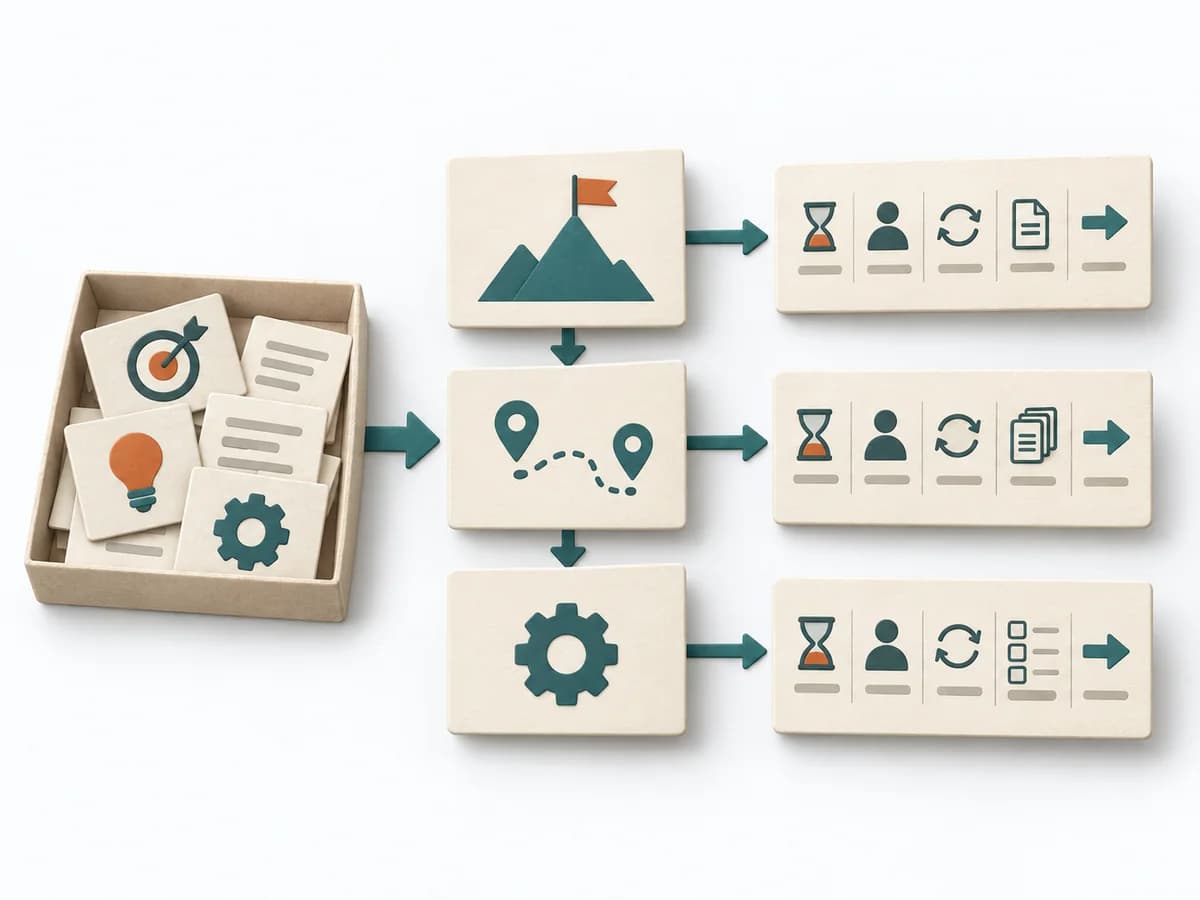 Business Strategy Strategic, Tactical and Operational Planning |  Decision Making Decision Rights Mapping |
|---|---|---|---|---|
Purposedifferent | In complex management decisions, clarity is often missing about who recommends, who agrees, and who makes the decision. RAPID creates this assignment and stabilizes decisions across several levels. | After missions or project phases with unclear outcomes, the method makes visible what actually happened and what can be learned from it. It separates course, effect, and causes so experience turns into solid improvement. | It places decisions and artifacts at the right level. Strategic planning clarifies direction, tactical planning translates it into programs, and operational planning steers concrete processes. | In organizations with many stakeholders, it often blurs who actually decides and who is merely consulted. It separates options, evaluation criteria, and open risks. The result is captured as a Decision Rights matrix and an agreement. |
Complexitydifferent | Medium | Low | Medium | Medium |
Timedifferent | 45-90 min | 20-45 min | 90-180 min | 90-180 min |
Participantsdifferent | 3-12 | 3-12 | 4-12 | 4-12 |
Formatdifferent | Workshop + async | Workshop + async | Workshop | Workshop |
Outputdifferent | RAPID Role Map, Recommendation, Decision Log | Lessons learned, Action items, Event summary | Planning Levels Map, Cadence Model, Planning Artifact Inventory | Decision Rights Matrix, Agreement |
Tagsno overlap | DecisionRolesGovernance | LearningOperationsImprovement | CadenceGovernanceExecution | DecisionGovernanceAlignmentResponsibility |