View methods side by side.
Choose up to four methods. Add them using the search and share the comparison by copying its link.
| Criterion | 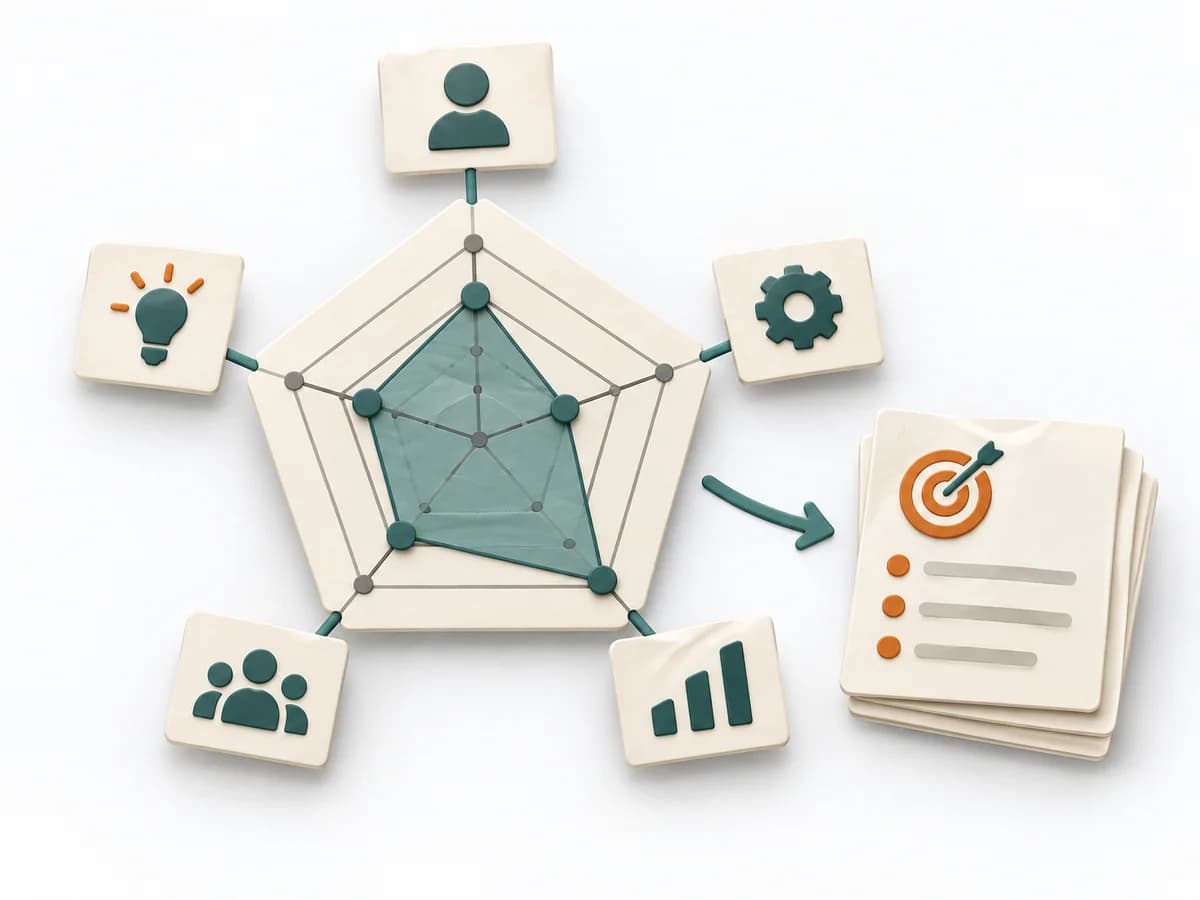 Decision Making Radar | 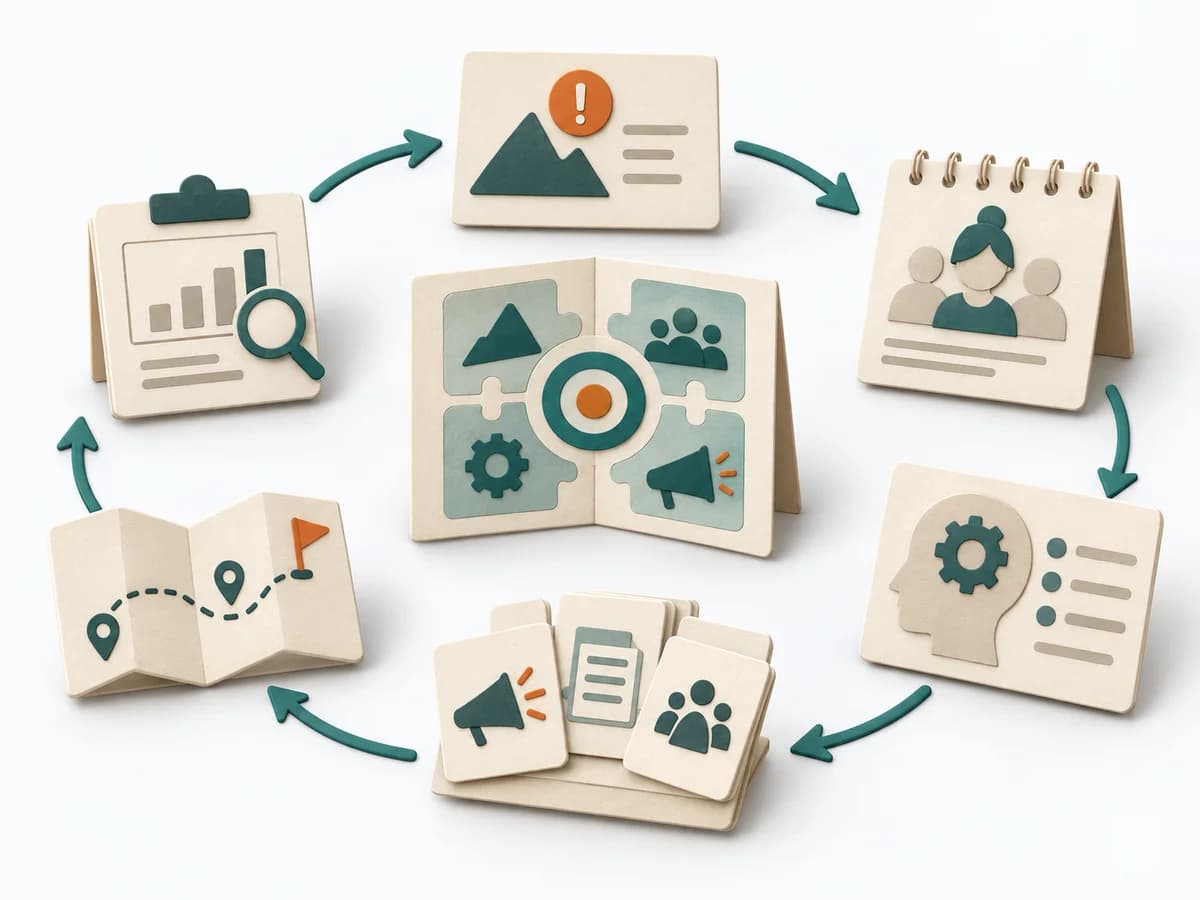 Systems Thinking Intervention Mapping |  Knowledge Modeling IBIS |  Decision Making Force Field Analysis |
|---|---|---|---|---|
Purposedifferent | When capabilities, maturity levels, or market positions need to be compared across several dimensions, overview is easily lost. Radar brings different characteristics into a shared picture and shows patterns faster than tables do. | Intervention Mapping translates a need for change into a planned, evaluable program. The method connects target group, determinants, actions, and measurement into a traceable chain. | IBIS structures thinking about complex questions as a sequence of issues, ideas, and arguments. The method keeps discussions open without forcing them into premature consensus. | In change initiatives, supporting and restraining forces sit at the table at the same time. Force Field Analysis makes these tensions explicit and shows where change can be pushed forward by strengthening or relieving. |
Complexitydifferent | Medium | High | Medium | Low |
Timedifferent | 1-2 h | 1-5 Tage | 1-3 h | 45-90 min |
Participantsdifferent | 2-10 | 4-12 | 2-8 | 3-12 |
Formatdifferent | Workshop + async | Workshop + async | Workshop + async | Workshop |
Outputdifferent | Radar Map, Capability Scores, Action Areas | Logic Model, Change Objectives, Intervention Components, Evaluation Plan | Issue Map, Positions, Argument Notes | Force Field Map, Change Levers, Risk Notes |
Tagsno overlap | AssessmentPortfolioCapability | ChangeSystems thinkingCapability | RationaleKnowledgeDecision | ChangeDecisionStrategy |