View methods side by side.
Choose up to four methods. Add them using the search and share the comparison by copying its link.
| Criterion |  Facilitation Question Burst | 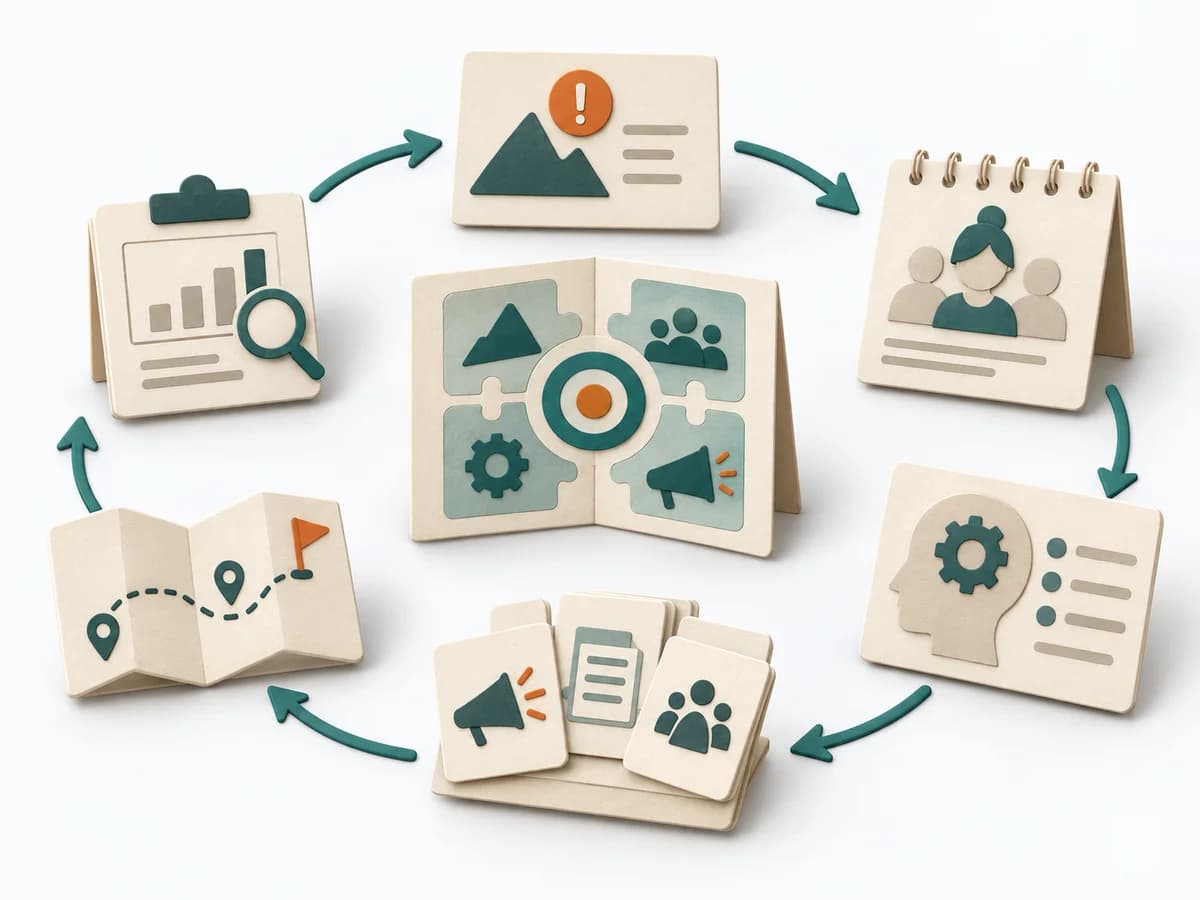 Systems Thinking Intervention Mapping | 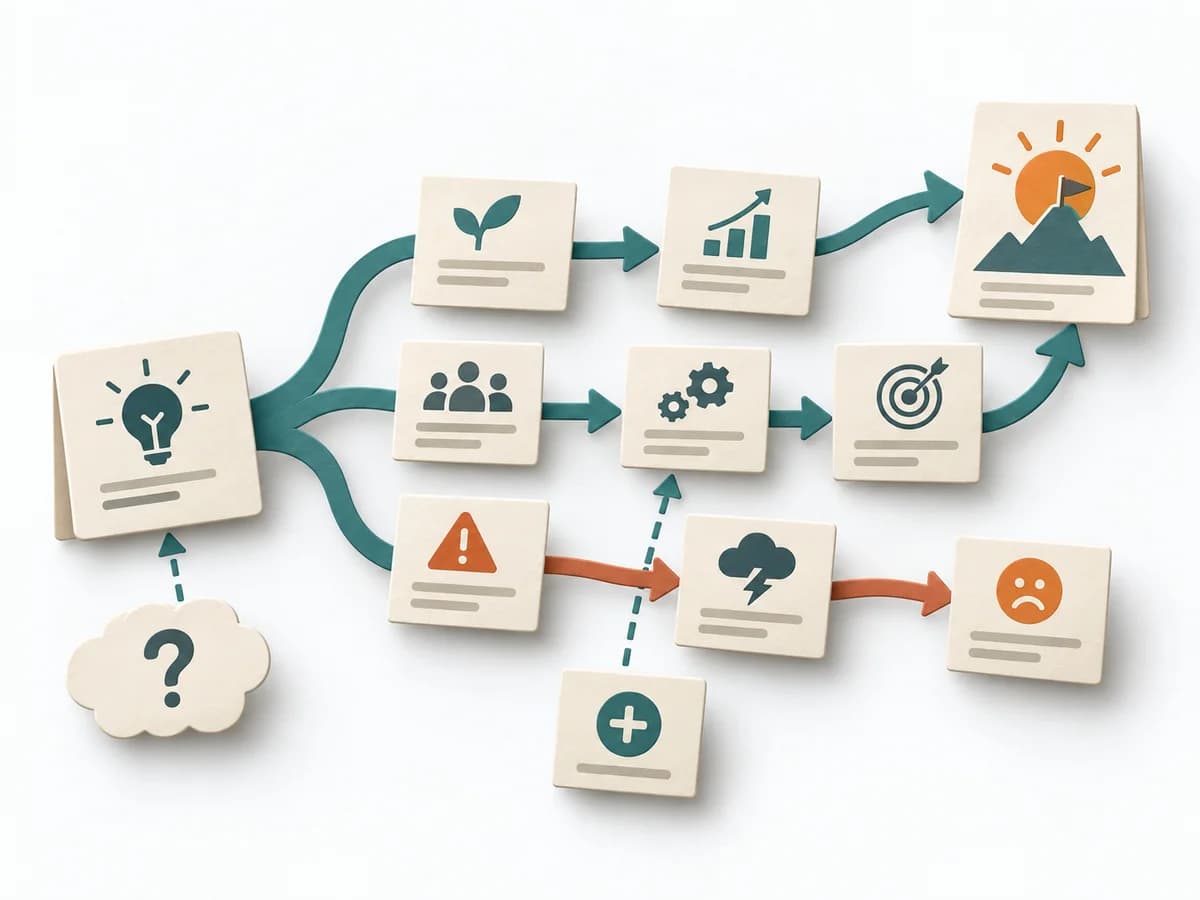 Systems Thinking Future Reality Tree |  Facilitation Stakeholder Mapping |
|---|---|---|---|---|
Purposedifferent | When a problem gets covered up too quickly with answers, Question Burst puts the better question at the center. The format opens the thinking space before the group commits to an interpretation. | Intervention Mapping translates a need for change into a planned, evaluable program. The method connects target group, determinants, actions, and measurement into a traceable chain. | A Future Reality Tree shows how desired actions are meant to lead to a better system state. The method checks whether a path of change holds together logically before time flows into implementation. | When an initiative depends on many people, interests, and power dynamics, Stakeholder Mapping systematically orders the environment. It shows who influences, who is affected, and where relationship management or safeguarding matters first. |
Complexitydifferent | Low | High | High | Low |
Timedifferent | 15-30 min | 1-5 Tage | 2-4 h | 60–90 min |
Participantsdifferent | 2-8 | 4-12 | 3-8 | 2-8 |
Formatdifferent | Workshop | Workshop + async | Workshop | Workshop + async |
Outputdifferent | Question List, Reframed Challenge, Learning Prompts | Logic Model, Change Objectives, Intervention Components, Evaluation Plan | Future Reality Tree, Negative Branches, Assumption List, Improved Injections | Stakeholder Map, Engagement Plan, Risk Notes |
Tagsno overlap | QuestionsReframingFacilitationSensemaking | ChangeSystems thinkingCapability | Theory of ConstraintsSystems thinkingChange | StakeholdersAlignmentFacilitationChange |