View methods side by side.
Choose up to four methods. Add them using the search and share the comparison by copying its link.
Selected:Property Graph Schema DesignATAM (Architecture Tradeoff Analysis Method)Alignment MappingStakeholder Salience Model
| Criterion | 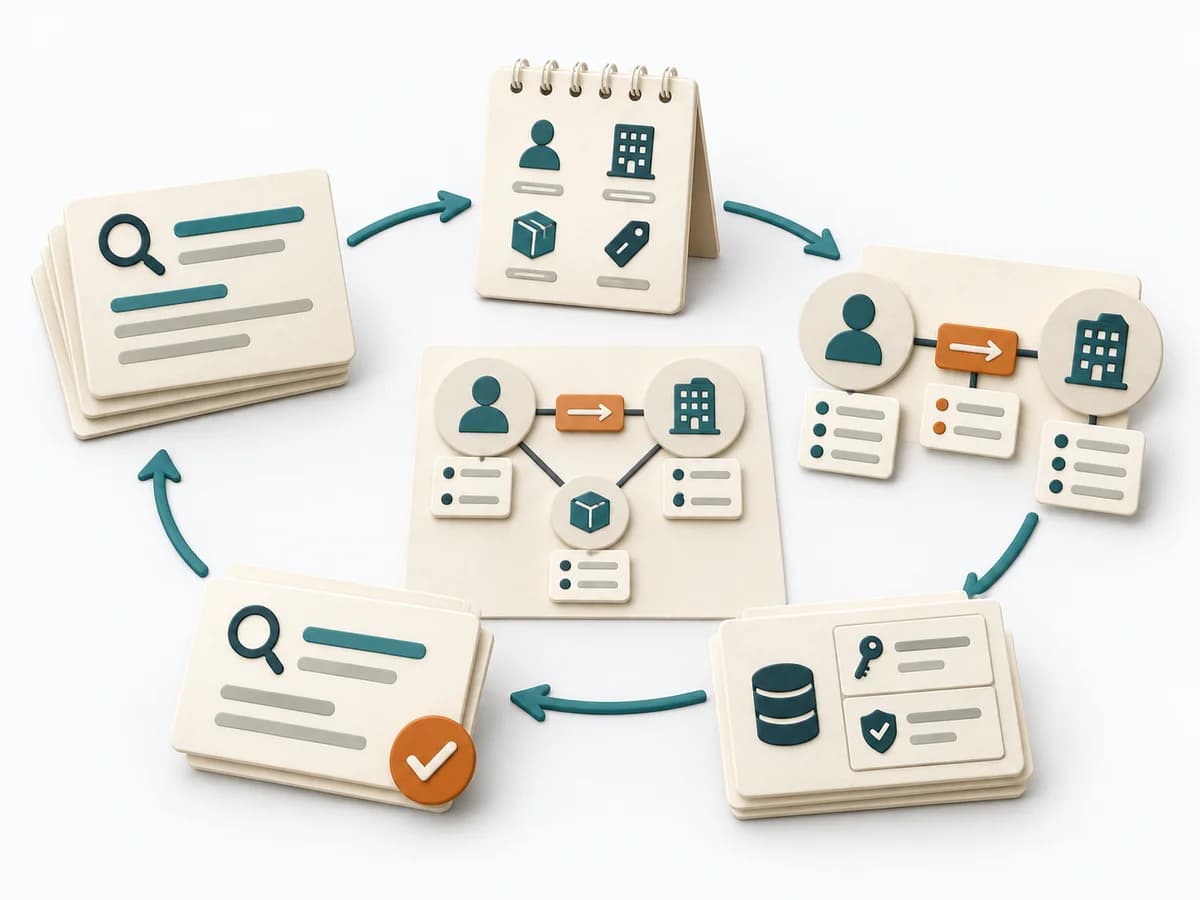 Knowledge Modeling Property Graph Schema Design |  Architecture ATAM (Architecture Tradeoff Analysis Method) |  Facilitation Alignment Mapping |  Facilitation Stakeholder Salience Model |
|---|---|---|---|---|
Purposedifferent | Property Graph Schema Design turns business and technical requirements into a robust graph schema. It fits when query patterns, constraints, and migrations need to be thought about together. | ATAM helps teams weigh architecture decisions when quality goals compete. The team considers business goals, stakeholder expectations, and technical decisions together. The evaluation shows which risks need further investigation. | When several people work toward one goal but hold different mental maps, Alignment Mapping makes the discrepancies visible. It arranges goals, assumptions, and priorities so shared direction becomes verifiable. | When stakeholders appear to matter very differently, the Stakeholder Salience Model rates their actual priority through power, legitimacy, and urgency. It turns individual contributions into a visible selection. The result is captured as a Salience diagram and a class-based strategy. |
Complexitydifferent | Medium | High | Medium | Medium |
Timedifferent | 4-8 h initial, dann iterativ | Several meetings plus preparation and analysis; total effort depends on scope | 1-2 h | 60-90 min |
Participantsdifferent | 1-6 | Evaluation team, architects, and relevant stakeholders | 4-12 | 3-6 |
Formatdifferent | Workshop + async | Workshop + async | Workshop | Workshop |
Outputdifferent | Schema Diagram, Node and Relationship Catalog, Index Plan, Migration Scripts, Sample Queries | Prioritized quality scenarios in a utility tree, Architecture risks with reasoning and assumptions, Sensitivity and trade-off points, Findings report with open investigations | Alignment Map, Open Issues, Decision Questions | Salience Diagram, Strategy per Class |
Tagsno overlap | Knowledge graphModelingSemantic | ArchitectureQualityRiskTradeoffsStakeholders | AlignmentStakeholdersStrategyFacilitation | StakeholdersFacilitationAlignmentGovernance |