View methods side by side.
Choose up to four methods. Add them using the search and share the comparison by copying its link.
| Criterion |  Product Strategy Product Canvas | 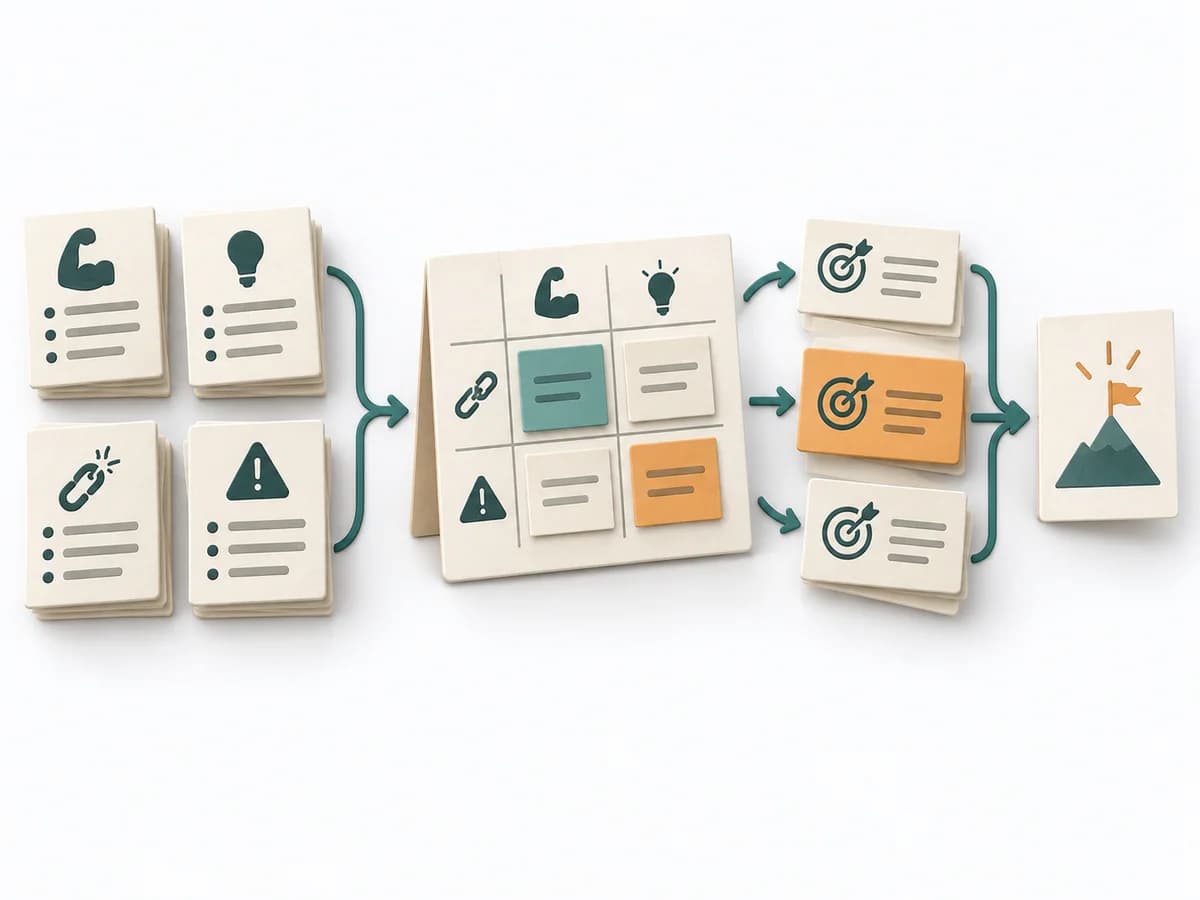 Business Strategy TOWS Matrix | 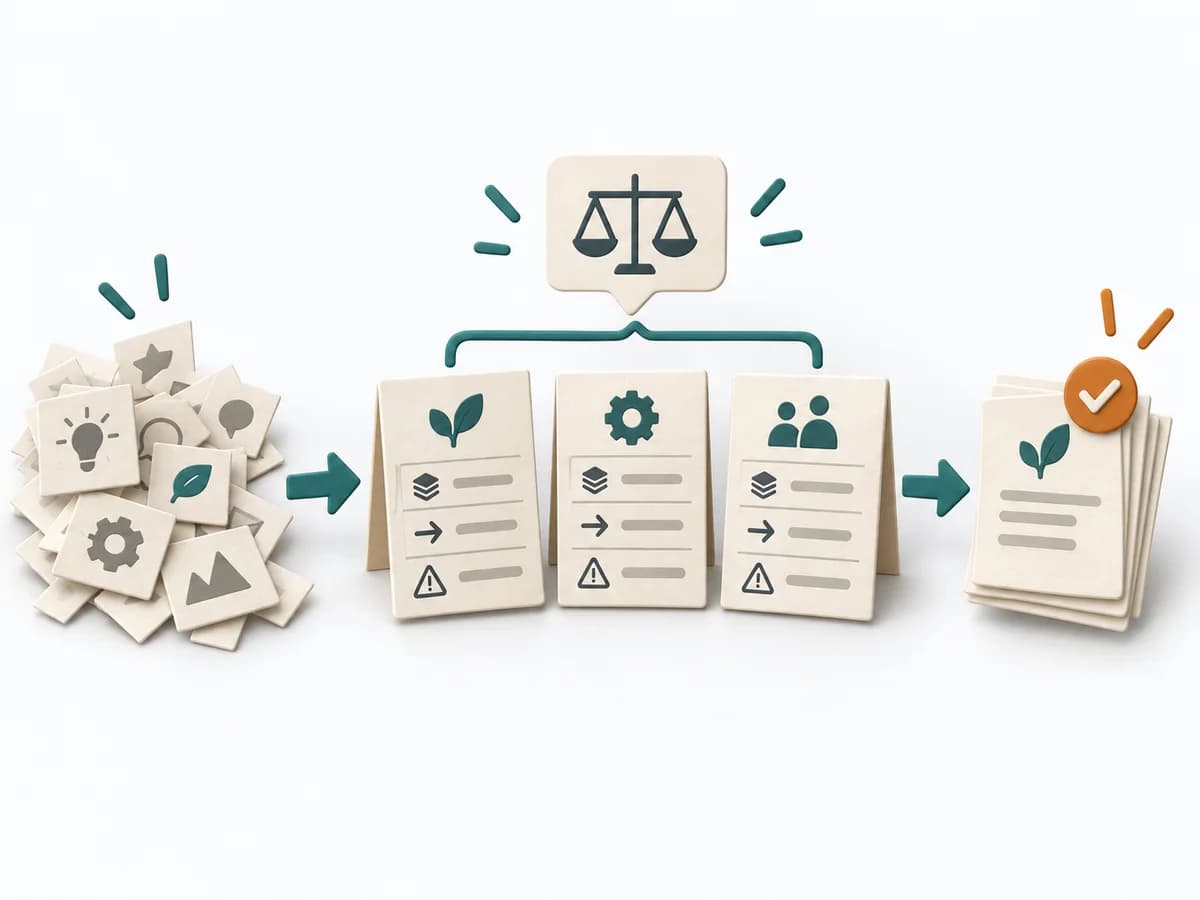 Decision Making Option Framing | 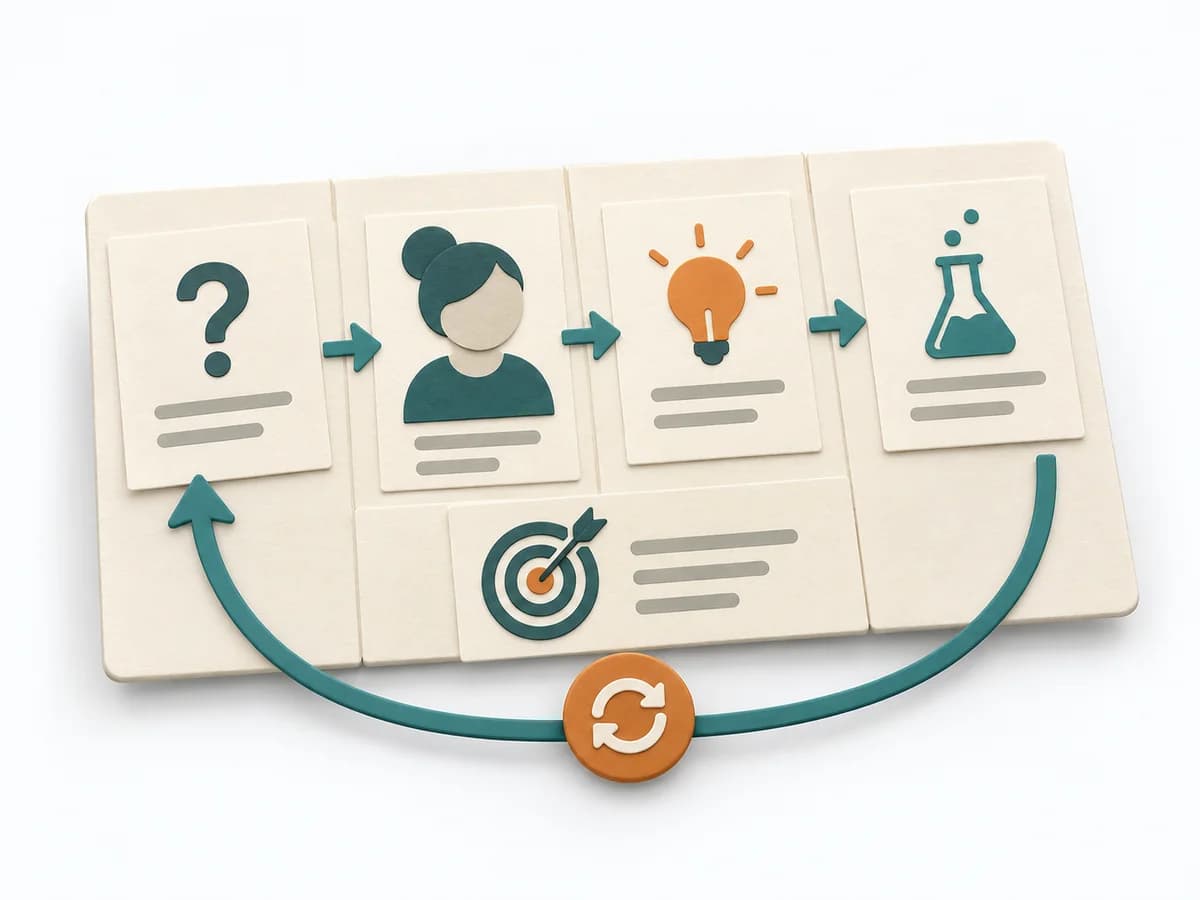 UX Design Lean UX Canvas |
|---|---|---|---|---|
Purposedifferent | When product goal and feature scope don't yet fit cleanly together, it creates a shared working picture. It connects need, core features, and assumptions into a solid starting point. | The TOWS Matrix connects internal strengths and weaknesses with external opportunities and threats into action-oriented strategies. It goes a step further than a pure stocktaking. | In early decisions, alternatives are often still vague, incomplete, or blended together. Option Framing brings every possibility into a comparable form and makes visible which variant actually fits the question. | The Lean UX Canvas helps clarify user behavior, touchpoints, and concept decisions. It makes assumptions and desired outcomes visible and captures the result as a completed canvas, hypothesis list, and first experiment. |
Complexitysame | Medium | Medium | Medium | Medium |
Timedifferent | 1-2 h | 1-2 h | 45-120 min | 2-3 h |
Participantsdifferent | 2-8 | 3-10 | 3-8 | 3-8 |
Formatdifferent | Workshop + async | Workshop | Workshop + async | Workshop + async |
Outputdifferent | Product Canvas, Product Assumptions, Scope Notes | TOWS Matrix, Strategic Options, Priority Actions | Option Frames, Assumption Notes, Comparable Shortlist, Decision Inputs | Completed Lean UX Canvas, Hypothesis list, First experiment |
Tagsno overlap | CanvasDiscoveryScope | StrategyAnalysisOptions | OptionsDecision framingStrategyComparison | CanvasHypothesisOutcomesDiscovery |