View methods side by side.
Choose up to four methods. Add them using the search and share the comparison by copying its link.
| Criterion | 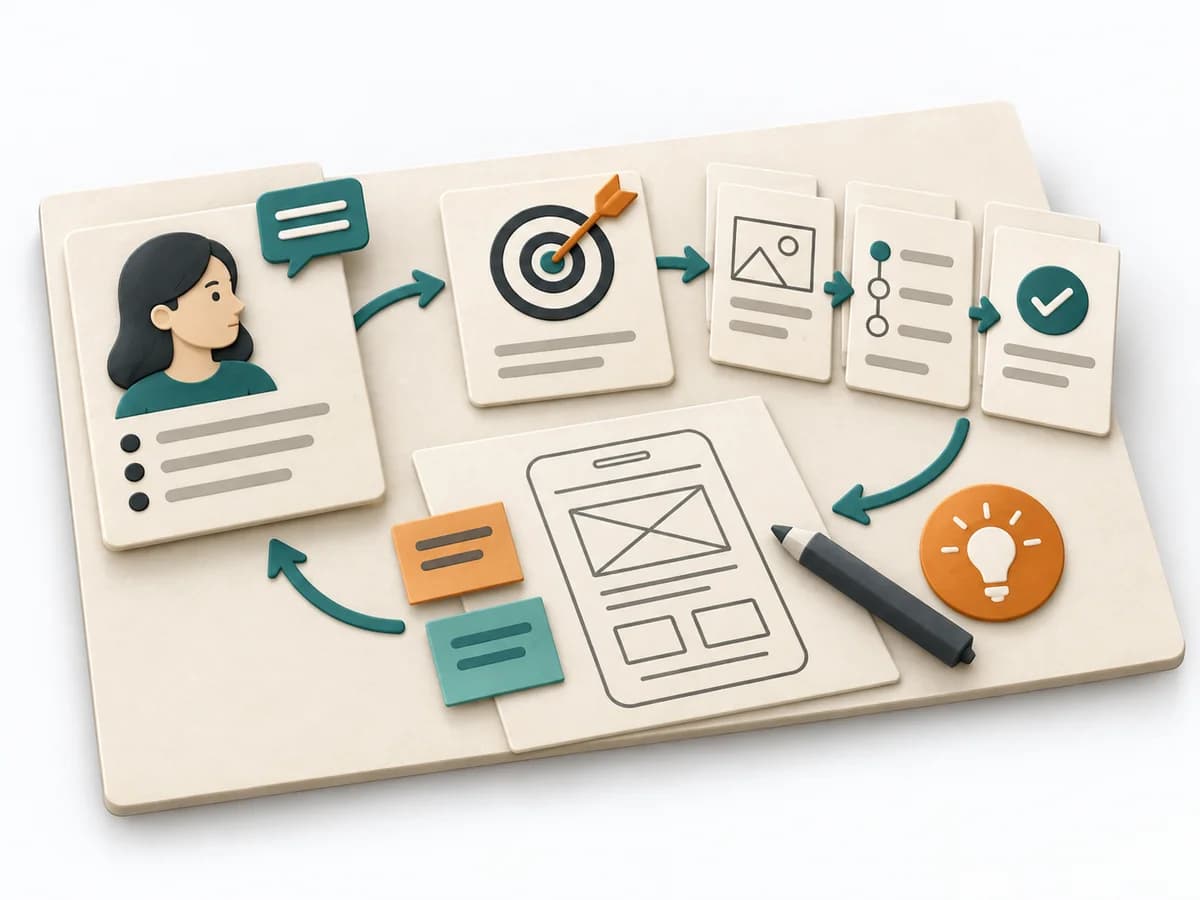 Product Strategy Product Canvas |  Knowledge Modeling Event Modeling |  Product Strategy DIBB |  Domain Modeling Context Map |
|---|---|---|---|---|
Purposedifferent | When product goal and feature scope don't yet fit cleanly together, it creates a shared working picture. It connects need, core features, and assumptions into a solid starting point. | Event Modeling connects business workflows with commands, events, and views into one coherent mental model. It helps design behavior, UI, and technical slices from the same underlying logic. | DIBB helps clarify target groups, value, goals, and priorities by making the logic behind a decision explicit. It captures results as a DIBB document, belief list, bet list, and learning report. | When several contexts need to talk to each other, it makes their relationships and dependencies legible. It helps sort integration pressure and responsibilities across system boundaries. |
Complexitydifferent | Medium | Medium | Low | Medium |
Timedifferent | 1-2 h | 2-6 h | 1-2 h | 1-3 h |
Participantssame | 2-8 | 2-8 | 2-8 | 2-8 |
Formatsame | Workshop + async | Workshop + async | Workshop + async | Workshop + async |
Outputdifferent | Product Canvas, Product Assumptions, Scope Notes | Event Model, UI Flow, Commands, Read Models | DIBB document, Belief list, Bet list, Learning report | Context Map, Integration Patterns, Boundary Notes |
Tagsno overlap | CanvasDiscoveryScope | EventsBlueprintDomain-Driven DesignBehavior | StrategyDecisionAssumptionsHypothesis | Domain-Driven DesignBoundariesStrategy |