View methods side by side.
Choose up to four methods. Add them using the search and share the comparison by copying its link.
| Criterion | 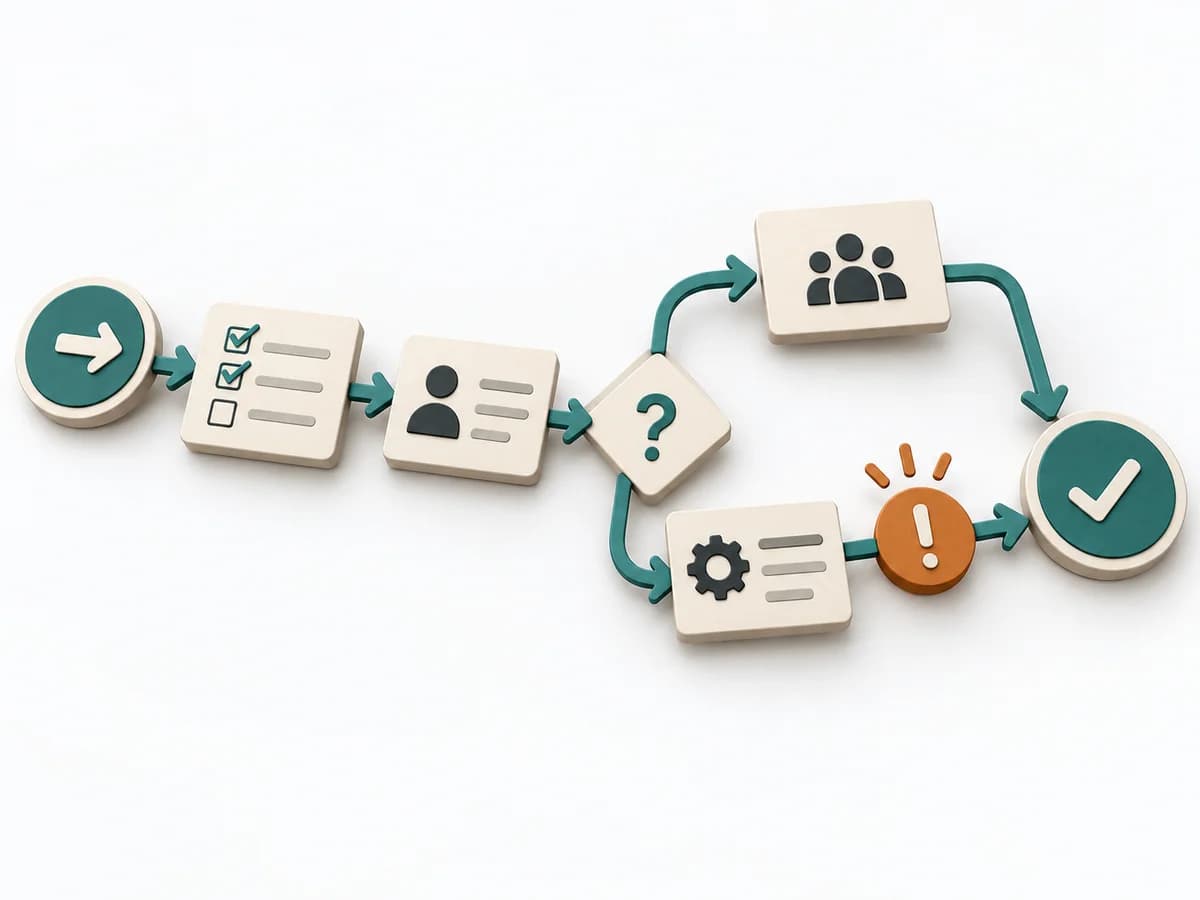 Operations Process Mapping | 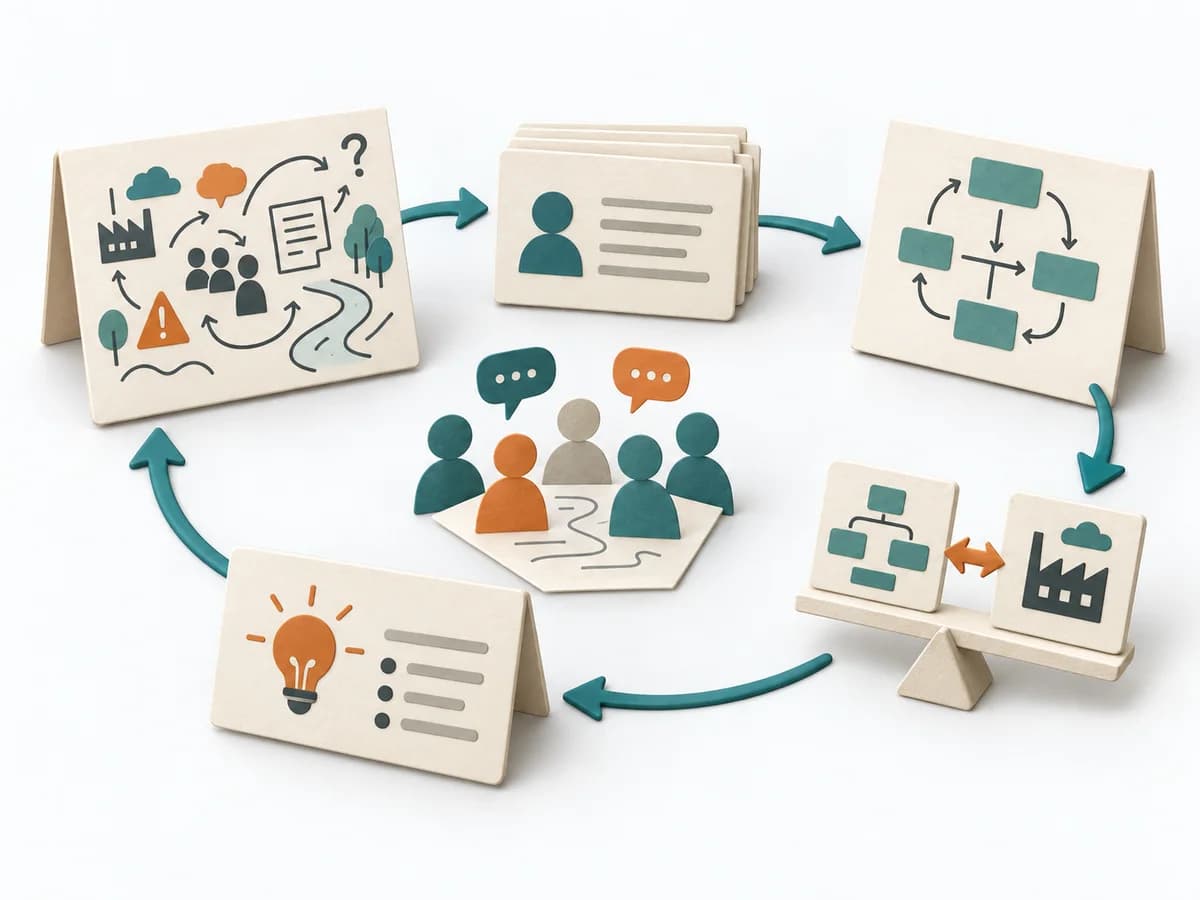 Systems Thinking Soft Systems Methodology |  Knowledge Modeling Concept Mapping |  Operations After-Action Review |
|---|---|---|---|---|
Purposedifferent | With a confusing workflow that has many handoffs, the method makes the actual process visible. It shows where work is passed on, delayed, or duplicated, so improvement targets the right spots. | Soft Systems Methodology helps explore unclear or politically charged problems systematically. Instead of forcing a quick answer, the method builds a shared understanding of perspectives and room for action. | Concept Mapping arranges terms and relationships in a network that makes subject-matter connections tangible. It fits when a topic needs to be understood structurally rather than linearly. | After missions or project phases with unclear outcomes, the method makes visible what actually happened and what can be learned from it. It separates course, effect, and causes so experience turns into solid improvement. |
Complexitydifferent | Medium | High | Medium | Low |
Timedifferent | 1-3 h | 0.5-3 Tage | 1-2 h | 20-45 min |
Participantsdifferent | 3-10 | 5-15 | 1-8 | 3-12 |
Formatdifferent | Workshop | Workshop | Workshop + async | Workshop + async |
Outputdifferent | Process Map, Handoff List, Improvement Backlog | Rich Picture, Root Definitions, Conceptual Models, Change Agenda | Concept Map, Relationship Labels, Knowledge Gaps | Lessons learned, Action items, Event summary |
Tagsno overlap | ProcessOperationsImprovement | Soft systemsComplexitySensemakingSystems thinking | KnowledgeConceptsMappingSensemaking | LearningOperationsImprovement |