View methods side by side.
Choose up to four methods. Add them using the search and share the comparison by copying its link.
| Criterion | 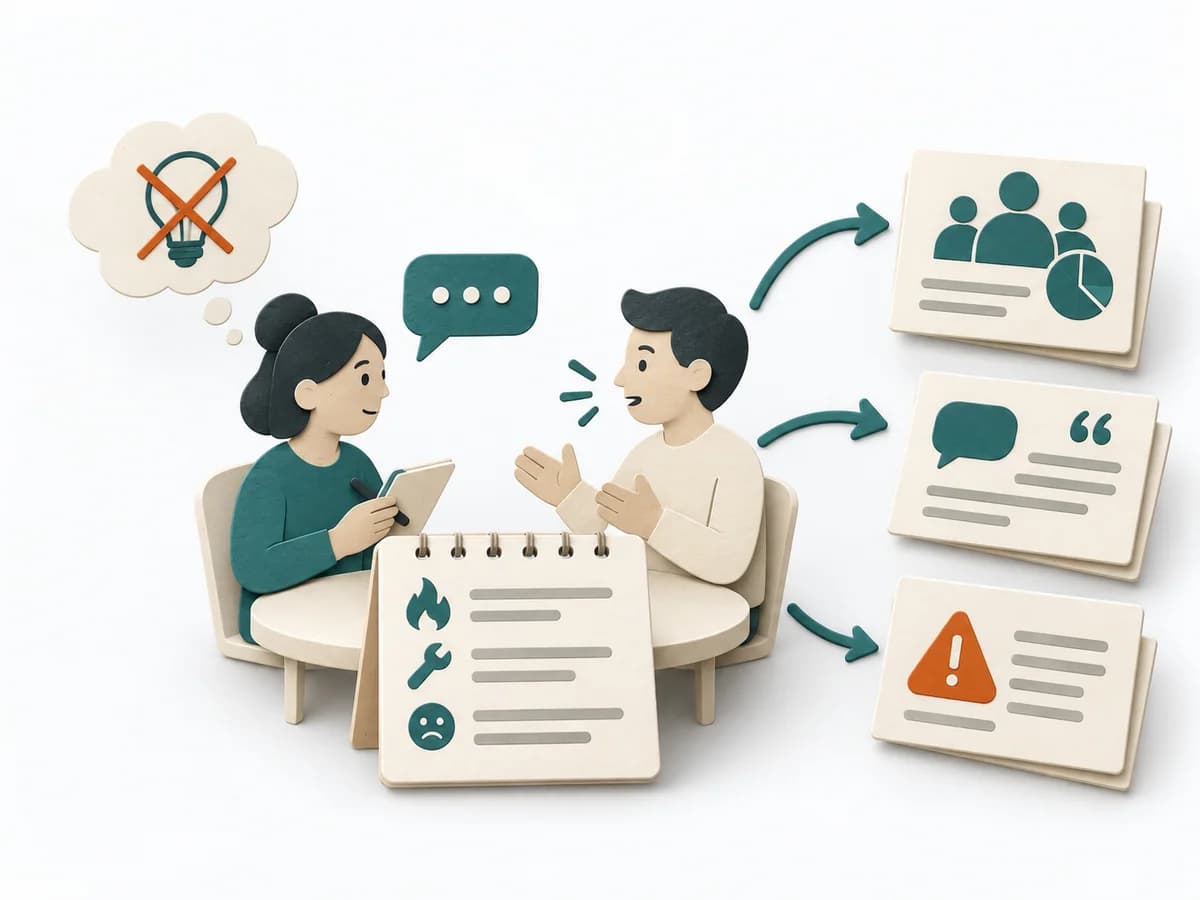 Product Discovery Problem Interview | 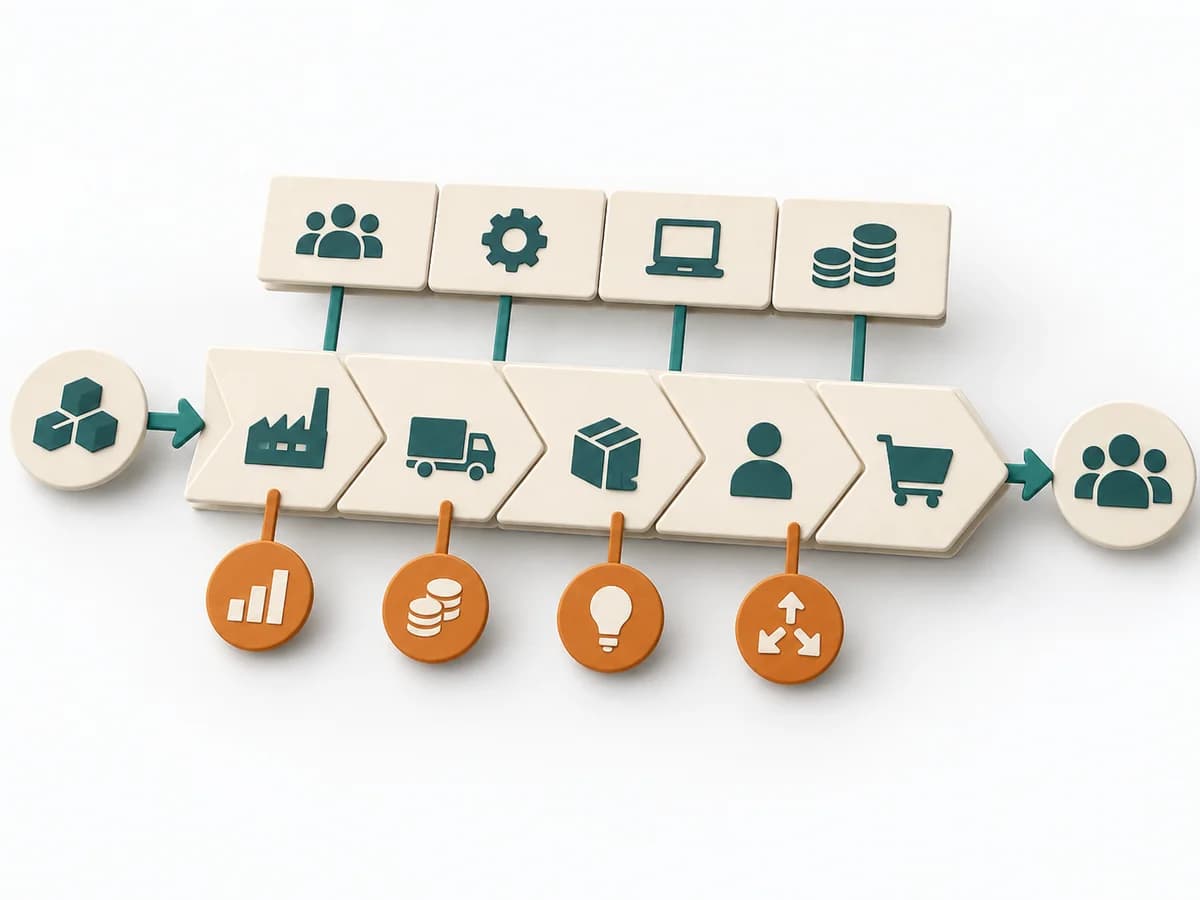 Business Strategy Value Chain Analysis |  Product Discovery Experiment Canvas | 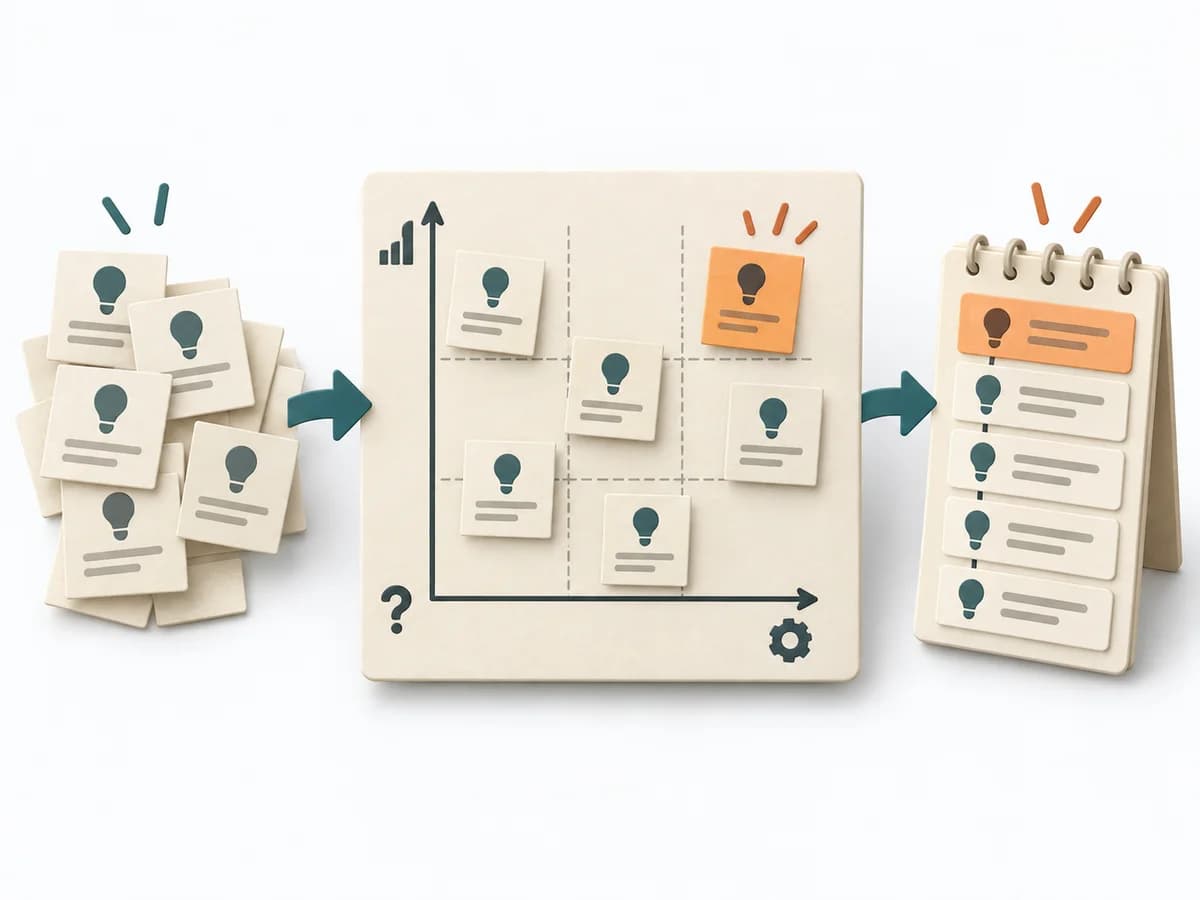 Product Discovery Hypothesis Prioritization Canvas |
|---|---|---|---|---|
Purposedifferent | When the picture of the problem still needs to become solid, it asks about real situations and consequences. It separates genuine suffering from mere interest in a solution. | Value Chain Analysis shows where value is created, costs accrue, and differentiation becomes possible along the process. It compares strengths, risks, market logic, and courses of action. The result is captured as a value-chain map and lever list. | When experiments become unreadable after the fact, it arranges hypothesis, signal, and learning goal on a single canvas. It separates problem, assumption, solution, and evidence. The result is captured as a Completed Experiment Canvas and a Success Metric. | When many hypotheses compete for attention, it brings order to their learning sequence and importance. It separates problem, assumption, solution, and evidence. The result is captured as a prioritization canvas and a hypothesis backlog. |
Complexitydifferent | Medium | High | Low | Medium |
Timedifferent | 30-60 min je Interview | Half day | 30-60 min | 60-90 min |
Participantsdifferent | 5-12 Interviews | 3-8 | 1-5 | 3-8 |
Formatdifferent | Workshop + async | Workshop | Workshop + async | Workshop |
Outputdifferent | Problem Evidence, Risk Notes, Customer Segments | Value Chain Map, Lever List | Completed Experiment Canvas, Success Metric | Prioritization Canvas, Hypothesis Backlog |
Tagsno overlap | DiscoveryInterviewsValidation | StrategyBusiness modelDiagnosisAnalysis | ExperimentsValidationDiscoveryHypothesis | ExperimentsPrioritizationDiscoveryHypothesis |