View methods side by side.
Choose up to four methods. Add them using the search and share the comparison by copying its link.
| Criterion | 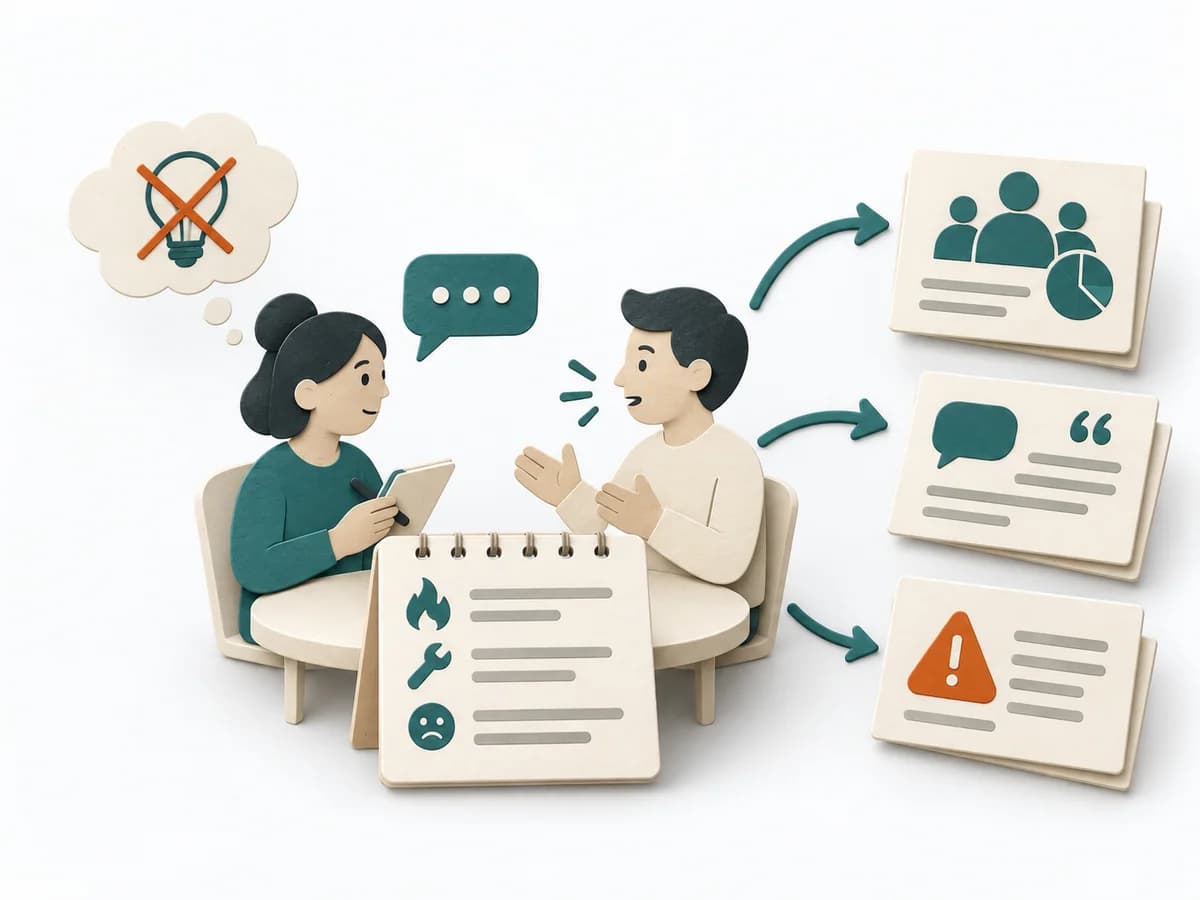 Product Discovery Problem Interview | 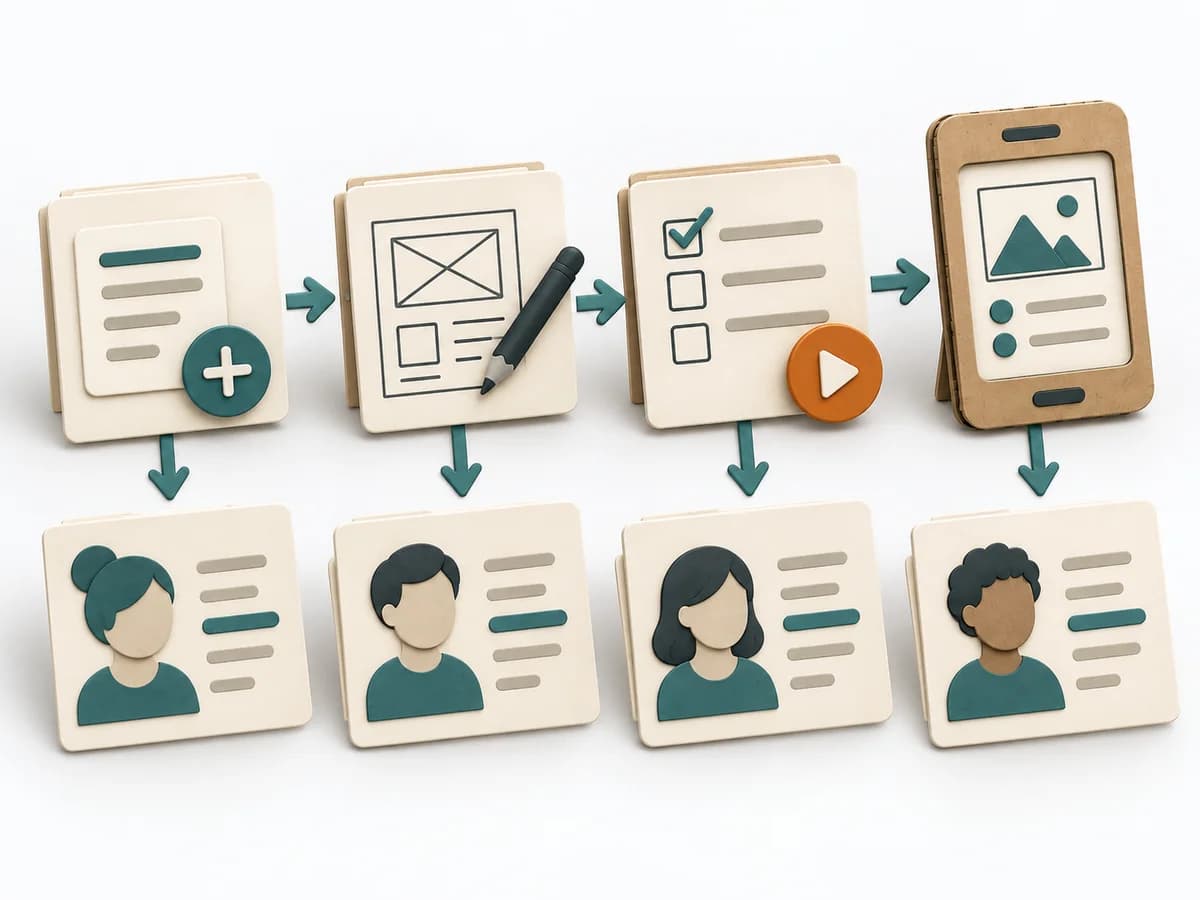 Knowledge Modeling Event Modeling | 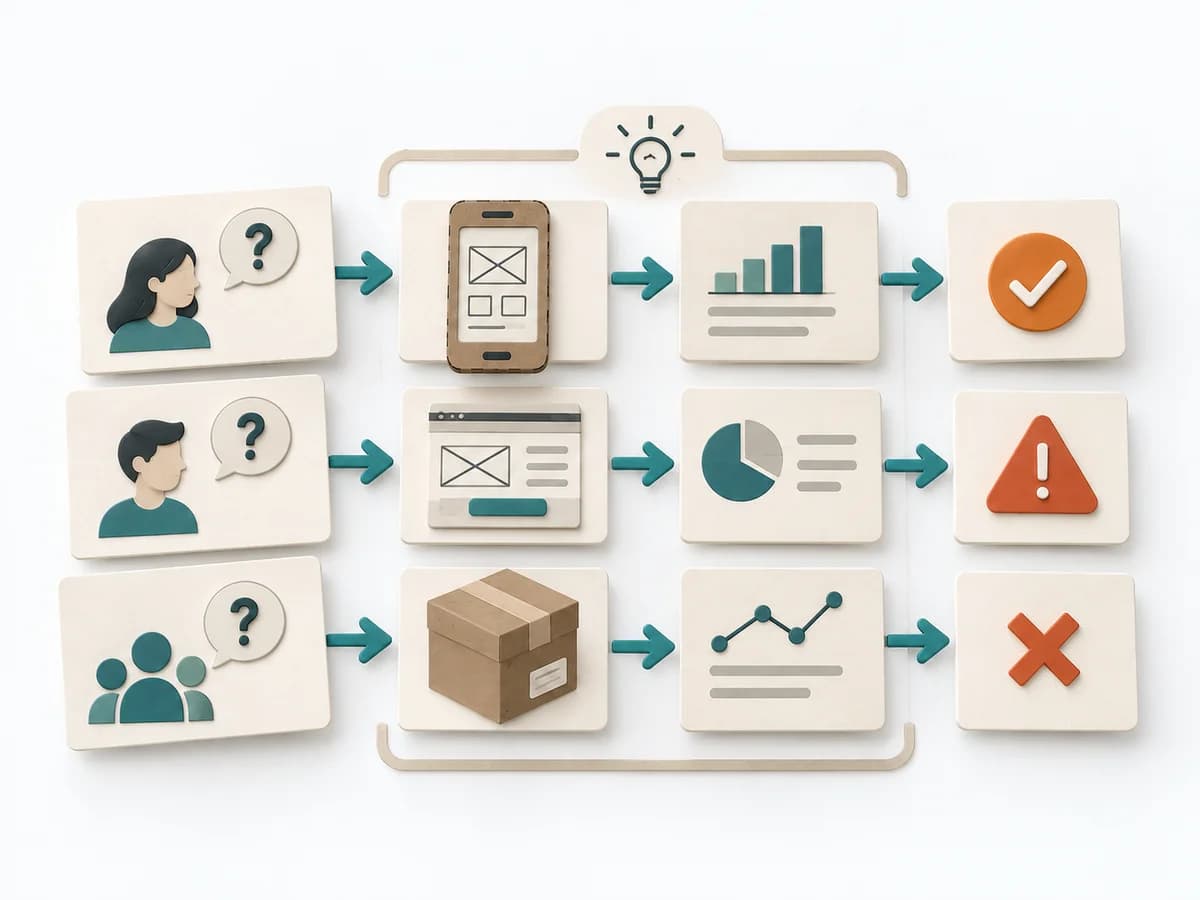 Product Discovery MVP Test Matrix | 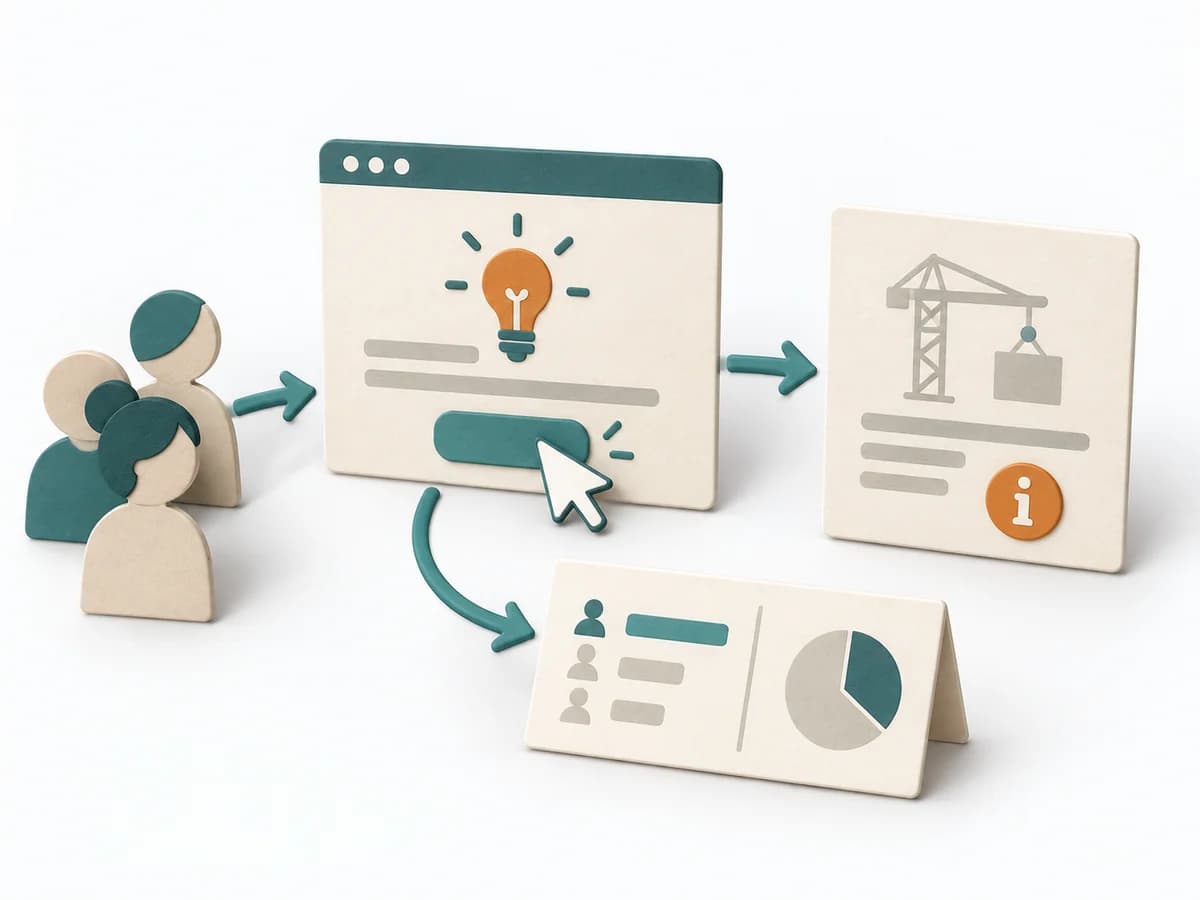 Product Discovery Fake Door Test |
|---|---|---|---|---|
Purposedifferent | When the picture of the problem still needs to become solid, it asks about real situations and consequences. It separates genuine suffering from mere interest in a solution. | Event Modeling connects business workflows with commands, events, and views into one coherent mental model. It helps design behavior, UI, and technical slices from the same underlying logic. | When several minimal variants compete to answer the same question, it makes comparing and choosing between them cleaner. It separates problem, assumption, solution, and evidence. The result is captured as a Test Matrix and a Test Plan. | When demand is still unclear, it measures interest in a feature before it is built. It separates real behavior from polite agreement and deliberately keeps build effort small. |
Complexitysame | Medium | Medium | Medium | Medium |
Timedifferent | 30-60 min je Interview | 2-6 h | 45-75 min | 1-5 Tage |
Participantsdifferent | 5-12 Interviews | 2-8 | 2-8 | Nutzertraffic |
Formatdifferent | Workshop + async | Workshop + async | Workshop | Async |
Outputdifferent | Problem Evidence, Risk Notes, Customer Segments | Event Model, UI Flow, Commands, Read Models | Test Matrix, Test Plan | Click Data, Interest Signal, Learning Decision |
Tagsno overlap | DiscoveryInterviewsValidation | EventsBlueprintDomain-Driven DesignBehavior | ExperimentsValidationDiscoveryOptions | ValidationExperimentsDemandDiscovery |