View methods side by side.
Choose up to four methods. Add them using the search and share the comparison by copying its link.
| Criterion | 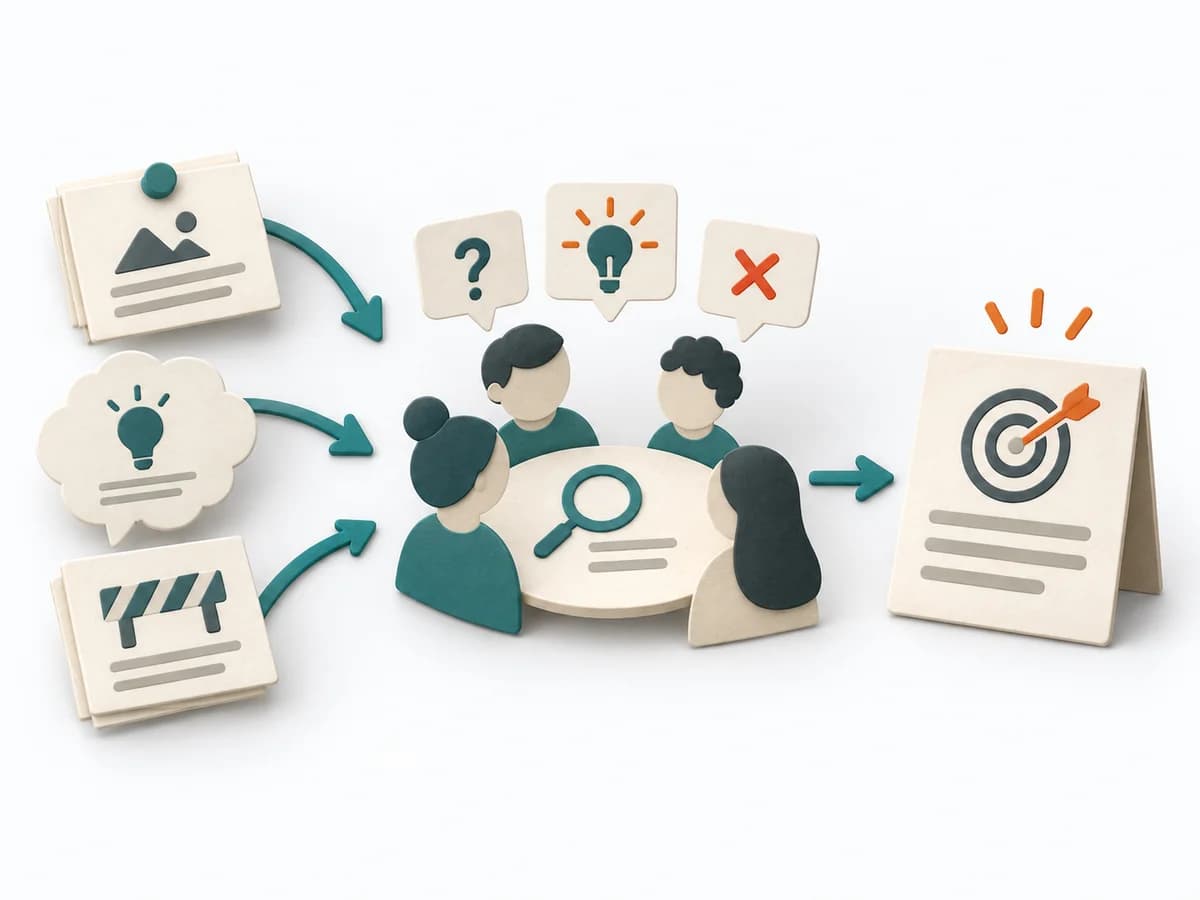 Facilitation Problem Framing Workshop |  Decision Making RAPID |  Decision Making Assumption Surfacing |  Facilitation Stakeholder Salience Model |
|---|---|---|---|---|
Purposedifferent | When a team works on symptoms but the real question stays fuzzy, a Problem Framing Workshop sharpens the view of the right problem. It separates observation, interpretation, and target picture from each other. | In complex management decisions, clarity is often missing about who recommends, who agrees, and who makes the decision. RAPID creates this assignment and stabilizes decisions across several levels. | Plans often contain assumptions that were never openly stated and remain dangerous precisely because of that. Assumption Surfacing makes these silent premises visible and prioritizes which of them carry the initiative or could sink it. | When stakeholders appear to matter very differently, the Stakeholder Salience Model rates their actual priority through power, legitimacy, and urgency. It turns individual contributions into a visible selection. The result is captured as a Salience diagram and a class-based strategy. |
Complexitydifferent | Low | Medium | Low | Medium |
Timedifferent | 60-120 min | 45-90 min | 45-90 min | 60-90 min |
Participantsdifferent | 4-10 | 3-12 | 2-8 | 3-6 |
Formatdifferent | Workshop | Workshop + async | Workshop + async | Workshop |
Outputdifferent | Problem Statement, Scope Boundaries, Assumption List, Next Analysis Questions | RAPID Role Map, Recommendation, Decision Log | Assumption List, Critical Assumptions, Learning Plan | Salience Diagram, Strategy per Class |
Tagsno overlap | FacilitationAlignmentDiscovery | DecisionRolesGovernance | AssumptionsRiskDecisionDiscovery | StakeholdersFacilitationAlignmentGovernance |