View methods side by side.
Choose up to four methods. Add them using the search and share the comparison by copying its link.
| Criterion |  Product Discovery Pretotyping | 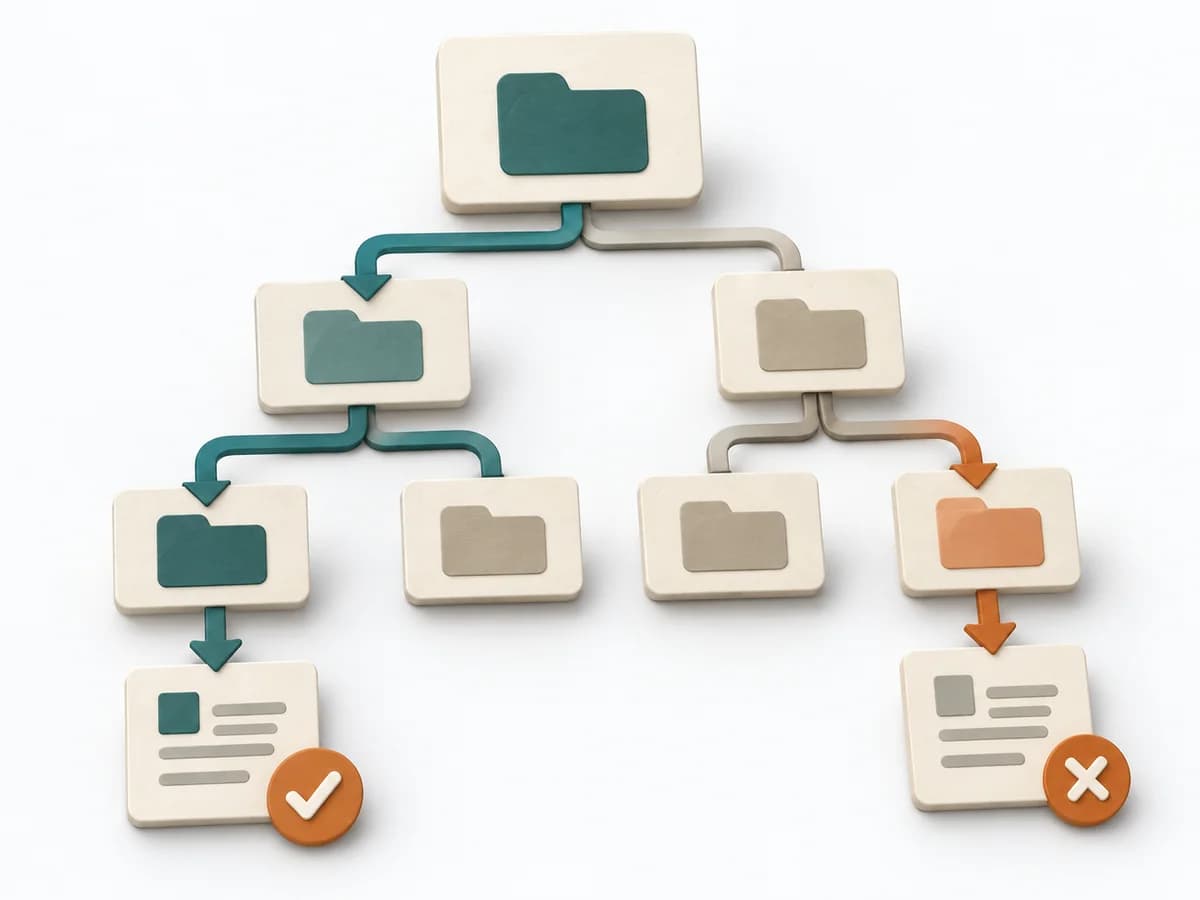 UX Research Tree Testing |  Product Discovery Smoke Test |  Product Discovery Assumption Mapping |
|---|---|---|---|---|
Purposedifferent | Pretotyping clarifies whether a customer problem and solution idea create enough real demand. It separates problem, assumption, solution, and evidence, and captures the result as a pretotyping sketch, test setup, and conversion data. | When a navigation exists but search paths still fail, tree testing checks findability without visual distraction. The method shows whether labels, levels, and paths really lead to the intended destination. | When demand only needs to be roughly verified, it tests interest with minimal effort. It measures whether people would take a next step at all. | When assumptions still sit unordered in the room, it weighs uncertainty against leverage. It makes visible which hypotheses should be checked first. |
Complexitydifferent | Low | Medium | Low | Medium |
Timedifferent | Stunden bis wenige Tage | 1-2 Tage | 1-5 Tage | 45-60 min |
Participantsdifferent | 1-4 | Based on research question | Nutzertraffic | 2-8 |
Formatdifferent | Workshop + async | Async | Async | Workshop + async |
Outputdifferent | Pretotyping sketch, Test setup, Conversion data, Go or no-go decision | Findability Metrics, Path Analysis, Revised IA | Interest Metrics, Conversion Signal, Learning Note | Assumption map, Test backlog, Risk ranking |
Tagsno overlap | ValidationDemandMVP | Information architectureNavigationFindability | ValidationExperimentsDemandGrowth | AssumptionsRiskExperimentsValidation |